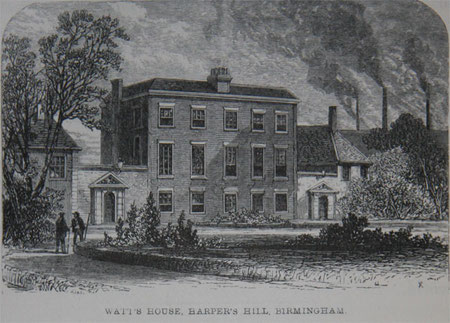
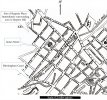
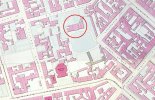
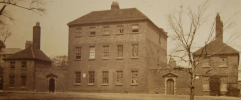
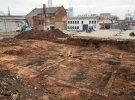
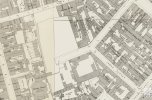
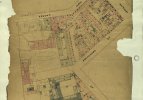
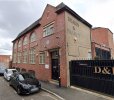
James Watt lived in one wing of a large Georgian villa on an estate in Harpers Hill from 1775 to 1790. I've recently come across details of the sale of a "Harpers Hill Estate" in 1818 which appears to have been occupied by the gunmaker David Blair (there is a separate thread about him on this site HERE) and leased or rented to his former partners Richard and Ramsay Sutherland. Do you think the estate described (below) could have been the one in which Watt had lived?
The Sale Of Harpers Hill Estate 1818 revealing it’s details
A] Advance notification of Sale: Transcript from Aris’s Birmingham Gazette of June 15th 1818
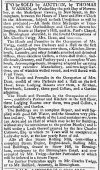
“EARLY next Month will be SOLD by AUCTION, in Lots, by ISAAC FARROR, all
those valuable Premises at Harper’s Hill, Birmingham, formerly in the Occupation of Mr. David Blair, deceased, and lately in the Tenure of Messrs. Sutherlands, Gun Manufacturers, and others; comprising three excellent Dwelling Houses and extensive Manufactory, with large Garden, Lawn, and Shrubbery, occupying in the Whole about two Acres of Land. Particulars will appear in next Week’s Paper.”
B] Sale Details: Transcript from Aris’s Birmingham Gazette of 27th July 1818:-
“HARPER’S HILL ESTATE, BIRMINGHAM.
Comprising handsome uniform Residences, complete Manufactory, large Garden, Shrubbery, &c. in one lot.
To be SOLD by Auction by ISAAC FARROR, at the Royal Hotel, in Temple Row, Birmingham, To-morrow (Tuesday) the 28th of July, between the Hours of Four and Five o’Clock in the Afternoon:—All those highly valuable, well situated, and extensive Premises, with large Gardens, Shrubbery, Lawn, and spare Land, occupying in the Whole two Acres of Ground, advantageously situated at Harper’s Hill, in the most important mercantile Part of the Town of Birmingham, sufficiently retired within itself so as to suit the Purpose of any Person either in or out of Business.
The Buildings present a large handsome modern Elevation, with uniform Wings, lately occupied by Messrs. Sutherland and others as three distinct Residences, [Note: This would previously have included David Blair who had earlier occupied at least one of the residences] but admirably calculated for the Accommodation of two genteel Families, containing in the whole 17 Sleeping Rooms, with convenient Closets, five Parlours, handsome flagged Entrance Halls, and good Oak Staircases, excellent Kitchens, with Pantries, Larders, and Sculleries, complete Wine, Ale, and Beer Cellars, Brewhouses, Coalhouses, Carriage-house, and all other convenient Outbuildings, with a capital Garden, well planted, Shrubbery, Lawn, with a Carriage Sweep, &c. &c.; also an extensive Range of Warehouses and Shopping, at a convenient detached Distance from the Dwelling Houses, unequalled in the Town, the whole of which are in the most substantial Repair, fitted up in a superior Manner, and plentifully supplied with excellent Water, forming together a Property of a most desirable and valuable Description.
This Estate is Leasehold for a Term of Years, 49 of which were unexpired at Lady Day last, subject to a small Ground Rent, and might easily be divided into three good Lots. For further Particulars apply to Mr. Osbaldeston, Solicitor, London Street, London; or to Messrs. [Sutherland], Gun Manufacturers, or the Auctioneer, all of Birmingham.”
The Sale Of Harpers Hill Estate 1818 revealing it’s details
A] Advance notification of Sale: Transcript from Aris’s Birmingham Gazette of June 15th 1818
“EARLY next Month will be SOLD by AUCTION, in Lots, by ISAAC FARROR, all
those valuable Premises at Harper’s Hill, Birmingham, formerly in the Occupation of Mr. David Blair, deceased, and lately in the Tenure of Messrs. Sutherlands, Gun Manufacturers, and others; comprising three excellent Dwelling Houses and extensive Manufactory, with large Garden, Lawn, and Shrubbery, occupying in the Whole about two Acres of Land. Particulars will appear in next Week’s Paper.”
B] Sale Details: Transcript from Aris’s Birmingham Gazette of 27th July 1818:-
“HARPER’S HILL ESTATE, BIRMINGHAM.
Comprising handsome uniform Residences, complete Manufactory, large Garden, Shrubbery, &c. in one lot.
To be SOLD by Auction by ISAAC FARROR, at the Royal Hotel, in Temple Row, Birmingham, To-morrow (Tuesday) the 28th of July, between the Hours of Four and Five o’Clock in the Afternoon:—All those highly valuable, well situated, and extensive Premises, with large Gardens, Shrubbery, Lawn, and spare Land, occupying in the Whole two Acres of Ground, advantageously situated at Harper’s Hill, in the most important mercantile Part of the Town of Birmingham, sufficiently retired within itself so as to suit the Purpose of any Person either in or out of Business.
The Buildings present a large handsome modern Elevation, with uniform Wings, lately occupied by Messrs. Sutherland and others as three distinct Residences, [Note: This would previously have included David Blair who had earlier occupied at least one of the residences] but admirably calculated for the Accommodation of two genteel Families, containing in the whole 17 Sleeping Rooms, with convenient Closets, five Parlours, handsome flagged Entrance Halls, and good Oak Staircases, excellent Kitchens, with Pantries, Larders, and Sculleries, complete Wine, Ale, and Beer Cellars, Brewhouses, Coalhouses, Carriage-house, and all other convenient Outbuildings, with a capital Garden, well planted, Shrubbery, Lawn, with a Carriage Sweep, &c. &c.; also an extensive Range of Warehouses and Shopping, at a convenient detached Distance from the Dwelling Houses, unequalled in the Town, the whole of which are in the most substantial Repair, fitted up in a superior Manner, and plentifully supplied with excellent Water, forming together a Property of a most desirable and valuable Description.
This Estate is Leasehold for a Term of Years, 49 of which were unexpired at Lady Day last, subject to a small Ground Rent, and might easily be divided into three good Lots. For further Particulars apply to Mr. Osbaldeston, Solicitor, London Street, London; or to Messrs. [Sutherland], Gun Manufacturers, or the Auctioneer, all of Birmingham.”
Last edited: