Did not realise there was a fadeout. They invited subscribers to pass story on. Have copied last part of article
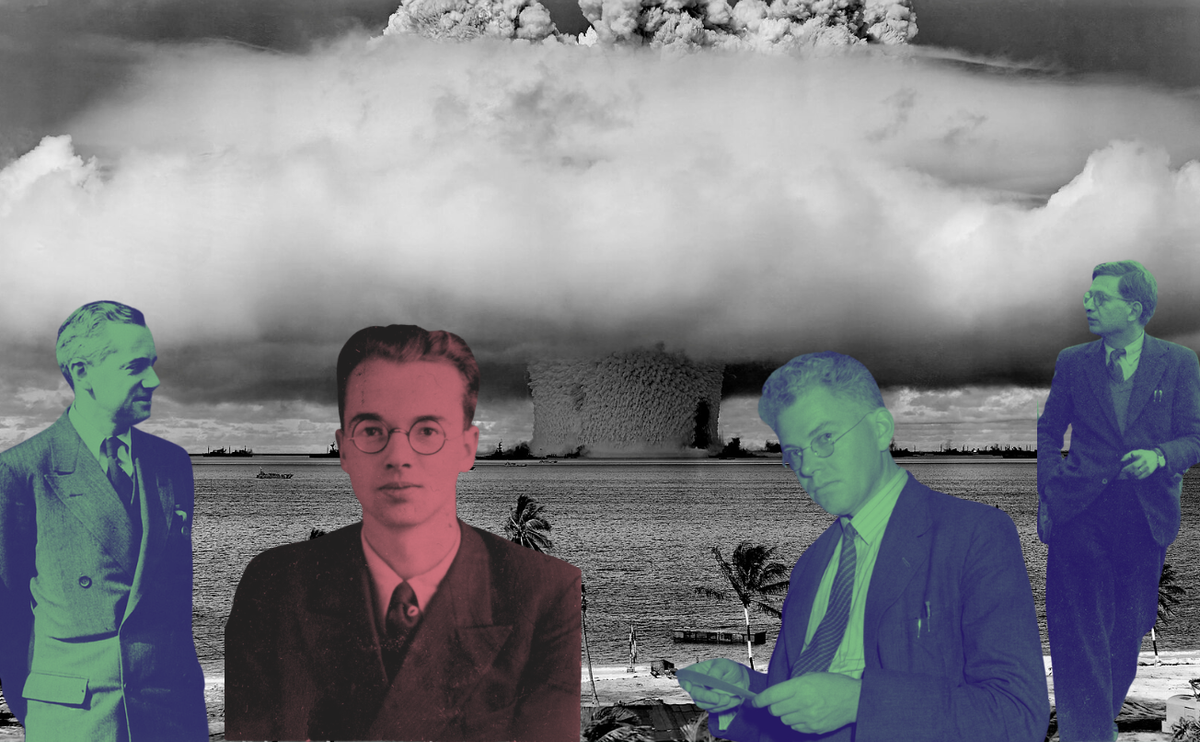
This gave the Peierls the space to take on another lodger at 38 Calthorpe Road. Rudolf’s new partner at the university, Klaus Fuchs, was also a refugee, albeit because of a history of left-wing activity and clashes with the Nazis, rather than being Jewish.
Fuchs had fled to England to continue his studies, but was interned as an enemy alien in the Isle of Man. Eventually released, he moved to Birmingham University in 1941 to work on Tube Alloys.
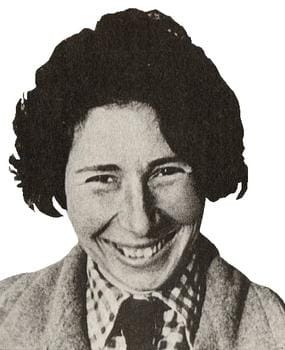
Ursula Kuczynski. Photo: WikiCommons.
Genia Peierls called him “penny-in-the-slot” — a very quiet man who would suddenly become talkative and expansive if asked a question. But she also recalled periods where he would become withdrawn and develop a mysterious cough.
She realised later that these coincided with betrayals. This brilliant physicist responsible for many of the advances in Tube Alloys was also a Soviet spy.
Fuchs would take documents and photos from Edgbaston to his handlers — which included Ursula Kuczynski or ‘Agent Sonya’, “the most influential female spy of all time” — who he would meet in Oxfordshire country lanes.
The Soviet Military Intelligence Director at the time later described Fuchs’ intelligence as hugely important, convincing the Soviets that the British were researching a weapon that would “put humanity on the road to hell”.
The project moves overseas
Meanwhile, Mark Oliphant began to realise that the British, despite being well ahead in technical knowledge, did not have the resources or the spaces safe enough from the Luftwaffe to build a bomb.
He had been pressuring the Americans to take the lead for some time. He was frustrated that his reports had been ignored, and that US science chief Vannevar Bush was sceptical about both the bomb and collaboration with the British.
In 1941, Oliphant travelled from Birmingham to the US under the guise of radar research. In fact he was there to work out why the Americans were so disinterested. He found his reports locked in a safe, unread. Perturbed, he flew to Berkeley to speak directly to his friend Ernest Lawrence, who introduced him to Robert Oppenheimer. His arguments were successful; the Manhattan Project, the US mission to build a nuclear bomb, was born.
In 1943, Winston Churchill and Franklin D. Roosevelt signed the Quebec Agreement, which merged Tube Alloys into the Manhattan Project and handed over the UK’s far more advanced nuclear research. While the deal mandated information sharing, it also gave the Americans a veto over British use of the findings for commercial or industrial use.
Oliphant, Peierls and Fuchs left Birmingham for various sites in the United States. The latter two were present at Trinity, the first atomic bomb test in the New Mexico desert. But when Japan was bombed, they were horrified by the scale of devastation, particularly the attack on Nagasaki. It was unnecessary, they thought, given what had already happened at Hirosh
After the war
It wasn’t until 1950 when Fuchs’ double life was revealed. By then he’d funnelled key documents from the Manhattan Project to the Soviets, including the detailed design of the bombs dropped on Japan. He continued his espionage in the postwar years until he was discovered — while working with Oliphant (who returned to Australia and supervised from afar) and Peirels on the UK’s nuclear programme at Harwell – passing intel to his Soviet spymasters.
Eventually, he was sentenced to 14 years in prison and stripped of his British citizenship. When released in 1959, he emigrated to East Germany.
A year after his arrest, the US Congress stated: “Fuchs alone has influenced the safety of more people and accomplished greater damage than any other spy, not only in the history of the United States, but in the history of nations.” And it all started in a Birmingham houseshare.
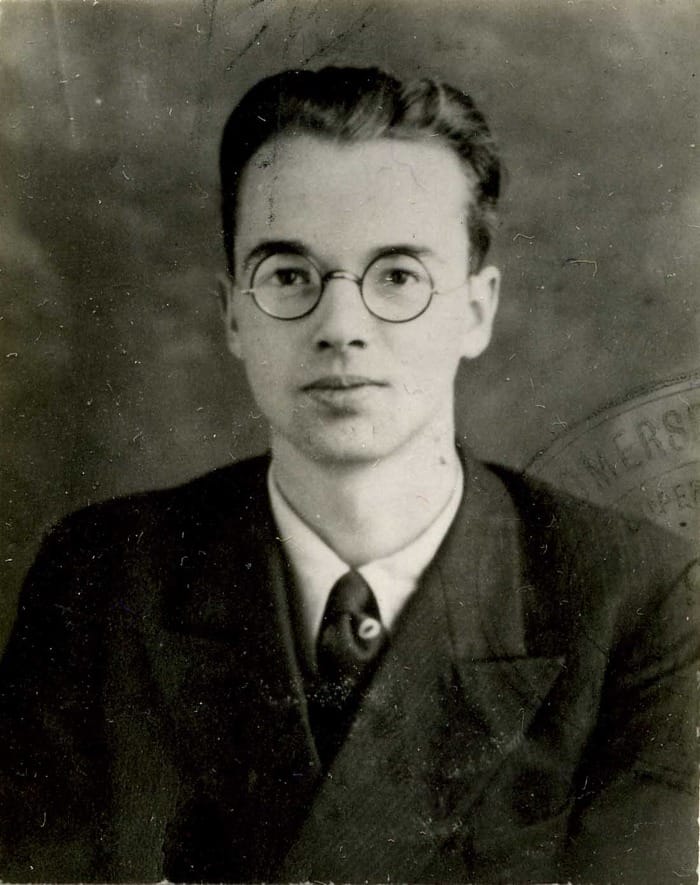
Klaus Fuchs police headshot. Photo: 1951-52 National Archives.
It is still debated today, but it is possible that without Fuchs the USSR would not have been able to conduct its first ever atomic bomb test in 1949. Certainly, it was a great surprise to the CIA.
The revelation was a “shattering blow” for the Peierls, who were unable to understand their friend’s betrayal. Genia had been like a surrogate mother, going as far as buying his clothes, and wrote a tearful letter demanding answers. When Rudolf visited Fuchs in Brixton Prison in 1950, he was astonished by his “arrogance and naivety.”
Peierls himself turned down a Cambridge chair and remained in Birmingham until 1963, when he became Wykeham Professor of Physics at the University of Oxford; he would live out the rest of his years there, accepting a knighthood in 1968.
This went some way to redressing a wrong he had endured postwar, when suspicion fell on him in the wake of Fuchs’ unmasking as a spy. The fallout had seen Peierls forced to leave the British nuclear programme for three years, until he was invited to return.
Later in life he was struck with horror at his own creation. With the threat of Nazism no longer propelling his nuclear work, he became a proponent of arms control, joining the Pugwash disarmament movement. As for Frisch, he also worked at Harwell but spent most of the next 30 years as a professor at Trinity College, Cambridge. Later he would describe the fruits of his work as “a weapon of unparalleled violence, a weapon of mass destruction such as the world had never seen”.
None of this background, or the men themselves — except for Fuchs — appear in
Oppenheimer, Christopher Nolan’s celebrated film following the creation of the atomic bomb. But there’s a good argument that the road to the bomb began in Birmingham, in an unassuming Georgian house, on a leafy Edgbaston street.
Comments