
-
Welcome to this forum . We are a worldwide group with a common interest in Birmingham and its history. While here, please follow a few simple rules. We ask that you respect other members, thank those who have helped you and please keep your contributions on-topic with the thread.
We do hope you enjoy your visit. BHF Admin Team
You are using an out of date browser. It may not display this or other websites correctly.
You should upgrade or use an alternative browser.
You should upgrade or use an alternative browser.
GEC WITTON WORKS
- Thread starter The Baron
- Start date


Martyn
master brummie
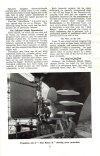
The second John Biscoe was built by Fleming and Ferguson Ltd, Paisley, for the Falkland Island Dependencies Survey (FIDS). According to the Witton News, she was an 'all-electric ship and the whole of her equipment was designed and built by the GEC'.
Launched in 1956, passengers on her maiden voyage included HRH Prince Philip, the Duke of Edinburgh, visiting some of the FIDS research stations during the 1956/57 season.
Initially the ship operated as a cargo vessel to resupply FIDS – later British Antarctic Survey – research stations. Increasingly she supported hydrographic and marine biology surveys, and geological landings. Her final voyage with British Antarctic Survey took place during the 1990/91, returning to Grimsby on 10 May 1991. She was scrapped in 2004.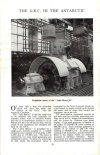
Launched in 1956, passengers on her maiden voyage included HRH Prince Philip, the Duke of Edinburgh, visiting some of the FIDS research stations during the 1956/57 season.
Initially the ship operated as a cargo vessel to resupply FIDS – later British Antarctic Survey – research stations. Increasingly she supported hydrographic and marine biology surveys, and geological landings. Her final voyage with British Antarctic Survey took place during the 1990/91, returning to Grimsby on 10 May 1991. She was scrapped in 2004.
Richard Dye
master brummie
The diesel generator/sets used on that ship and the related controls are very advanced for the time! I say this from my almost 10 years at Cummins who currently a global leader in power generation. I wonder why GEC did not leverage their technology which included controls?The second John Biscoe was built by Fleming and Ferguson Ltd, Paisley, for the Falkland Island Dependencies Survey (FIDS). According to the Witton News, she was an 'all-electric ship and the whole of her equipment was designed and built by the GEC'.
Launched in 1956, passengers on her maiden voyage included HRH Prince Philip, the Duke of Edinburgh, visiting some of the FIDS research stations during the 1956/57 season.
Initially the ship operated as a cargo vessel to resupply FIDS – later British Antarctic Survey – research stations. Increasingly she supported hydrographic and marine biology surveys, and geological landings. Her final voyage with British Antarctic Survey took place during the 1990/91, returning to Grimsby on 10 May 1991. She was scrapped in 2004.View attachment 206027View attachment 206029View attachment 206031

Cabinscooter
knowlegable brummie
Just a bit of trivia. The late Ozzie (John) Osbournes father, also John but known as Jack Osbourne worked at Witton. In the toolroom I believe.
Cabinscooter
knowlegable brummie
White ! collars and shirts too.Love the collar and ties under the overalls!
Cabinscooter
knowlegable brummie
Hi, very belated response I'm afraid. I've only just spotted this message re Switchgear Progress Dept. Did you or anyone remember a John Oakley in Switch Progress? I didn't know John at Witton but met him years later at Elecromagnets Ltd (Boxmag) in the seventies. I may be up the wrong tree though - he may have been in Switchgear Estimating..GEC OUTINGS: THIS ONE IS GEC SWITCHGEAR PROGRESS DEPT OUTING TO BILLINGS AQUADROME NORTHAMPTONSHIRE AROUND MID 1950s
Any one know any one? My Dad is back right, my brother standing in front of him, I know the man seated front right is a Mr Lees. ANY HELP?
ASTON
![GEC_SWITCHGEAR_BILLINGS_AQUADROME[1].JPG](https://birminghamhistory.co.uk/forum/images2/userpics/10049/GEC_SWITCHGEAR_BILLINGS_AQUADROME[1].JPG)
Cabinscooter
knowlegable brummie
(Very belated response I'm afraid. I only recently discovered this 'GEC Witton Works' thread having searched before). I remember 3DO well. I was in 2DOannex (1961/62 and 63/67) and I regularly used to visit a fellow apprentice in 3DO but can't recall his name. As I recall, 3DO was next to the print room which was a daily errand for apprentices. The chap in the photo with a jacket and smoking a pipe looks familiar. I had a friend in PCD, Bill Webb, had a BSA B31 bike, if anyone remembers him.Hi Everyone,
A family discussion led me to this forum. The question was where young couples meet these days. For many people the answer used to be “at work” in large companies that are no longer there.
In 1958 I started a drawing office apprenticeship, which included two years invaluable shop floor training, in 3DO. Six years later, still in 3DO, I met a young lady working in PCD and we have now been married for fifty eight years.
Another product of GEC was engineers. For more than thirty years I was an electrical surveyor with an insurance company, working the Midlands and beyond. I seemed to meet engineers from GEC everywhere and a regular comment was that a GEC apprenticeship was almost a passport to another job.
Hoping that I am not too late to respond to an earlier post by anorak147 regarding George Jenkins. He was the chief draughtsman in 3DO. Like many of his time a strict but respected man. Attached is a photo of George making a presentation to apprentice Eddie Hard for his marriage in 1959. The other photo, from 1963 in 3DO, shows draughtsmen Jack Westbury, Alan Sola and Frank Vincent, plus two apprentices, I'm still findin
Alan Marriott
Last edited:
Richard Dye
master brummie
Yes, and I wonder how many cars there would be in today’s world?Some nice old cars !
Cabinscooter
knowlegable brummie
Most people that had a car tried to park in Electric Avenue if they could. Statistically, extremely unlikely any of those cars there will still be around today I would have thought even though classic cars are now a very popular interest (including with me). After commuting to Witton on a moped for two years I graduated to a three-wheel 'bubble car' which I often parked in Electric Avenue. That is when the battery was ok, otherwise I parked in the car park behind the rectifier works because it was on a slope and I could get a rolling start! I later "progressed" to a Reliant van but that's another story. I think I might have had the Morris Minor before I left Witton but the timeline is hazy on that.Yes, and I wonder how many cars there would be in today’s world?
Alan
Richard Dye
master brummie
I think that many of us parked on a hill so we could either start the vehicle or save the battery, particularly when you had to leave the parking lights onMost people that had a car tried to park in Electric Avenue if they could. Statistically, extremely unlikely any of those cars there will still be around today I would have thought even though classic cars are now a very popular interest (including with me). After commuting to Witton on a moped for two years I graduated to a three-wheel 'bubble car' which I often parked in Electric Avenue. That is when the battery was ok, otherwise I parked in the car park behind the rectifier works because it was on a slope and I could get a rolling start! I later "progressed" to a Reliant van but that's another story. I think I might have had the Morris Minor before I left Witton but the timeline is hazy on that.
Alan

Cabinscooter
knowlegable brummie
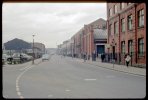
Looking at Google Maps, I think that large car park at the end of Deykin Avenue was where the MWW warehouse now stands bordering the motorway. It still has a nice gentle slope to send you on your way home. It seemed to me at the time that most of the cars leaving the car park were Ford 100Es (Prefect/Anglia etc) with a distinctive sound when the choke was on. There was another small car park at the other end of Electric Avenue but I never used it. When on two wheels I used one of the two bike sheds in Electric Avenue/corner of Deykin Avenue.
Cabinscooter
knowlegable brummie
Is that the same Joe iafrati that became Joe Yates and Married Hilda Smith? I'm trying to trace my grandparents my grandad was Joseph iafrati/yafrati he deedpoled the name to Yates years before I was bornmroldbrummie1 [john hughes]. Keith we did work at the same time ,I well remember your name.As i said i started at GEC jan 59 EDO after 3 months in DO school. Played bowls also,we started a drawing office team in 1969/1970 i was captain and we played in the thursday league but after a few years it broke up and ended up playing for the works "A" team captained by Jonny Heiztman [i think thats how you spell it] They played in the Erdington and district mid week league. Some of the DO team were [myself John Hughes,Pete Evans,Ken Mather,Stan Hughes,Joe Iafrati,John Hogettes and some of the young lads whose names alude me.Do you remember George Maers [i think] was head of contracts, and MR South who was head of insulaion dept, I under stand he murdered his wife,you would never of thought it possible,this info was given to me by Phil Gilbert who was my section leader on Alterantor section after i had left in 1984, Ithink you were all down tyburn road then.
Cabinscooter
knowlegable brummie
On this thread, I've seen references made to a GEC Tyburn Road location which I don't recall. Is this somewhere that was established after 1967 when I left? Whereabouts was it and what was there? I'm curious as a company I worked for 1970 - 74/75, Electromagnets Ltd (aka Boxmag, later to become Boxmag-Rapid), had a satellite factory on Tyburn Road for lifting magnet assembly situated in what is now called Walker Drive next to the large electricity substation (appropriately). Electromagnets main factory was in Bond Street, Hockley. One of the most interesting jobs I had. I wondered if the GEC reference was anything to do with Witton Kramer?
Moor End Lad
master brummie
This is an old post ennech, and you may not be still active after 19 years, but here goes. On my birth certificate of 1952 my father describes his occupation as a transformer draughtsman at GEC Witton. He did his apprenticeship at the GEC under his own father some 10 years earlier before moving to the Spitfire assembly line at Vickers Armstrongs. On becoming 17 he joined the Navy for 3 years, and on discharge in 1947 he rejoined the GEC for several years before ultimately moving to the Birmingham Welding Company in Chester Street, Nechells. His father was a lifer on power station generators in the GEC's Turbo Shop; and his grandfather had been a wax candlemaker there before WWI.Hi,
I was a drawing office apprentice at GEC, starting on the 14th. August 1950. I worked in the transformer department. The part I think I really enjoyed was working in the Foundry School where we made a lot of castings in aluminium that we shouldn't have. I still have a few.
When I was in the foundry I used to get off the bus at Salford Bridge and walk along the canal towpath. there was many an occasion when I was nearly swept into the canal by the towing rope of a horse drawn T. S. Elliot long boat carrying coal.
I would love to hear from anyone who was at Witton at this time.
Last edited:

daimlerman
master brummie
Yes, Jack, Ozzies dad worked in the toolroom. Keith Plumbe and myself, Jeff Egan, were apprentices in the 70's. Keith and I ran a mobile disco and Jack gave Keith an old Mike stand that Ozzie used. It weighed a ton! I think it all got sold on years later.Just a bit of trivia. The late Ozzie (John) Osbournes father, also John but known as Jack Osbourne worked at Witton. In the toolroom I believe.
Cabinscooter
knowlegable brummie
As a Switchgear Drawing Office Apprentice 1960-65, I too, remember the Foundry School very well. I would have been in there 1962/3 ish. We weren't allowed to keep any of the aluminium castings that we made as they were simply melted down again for the next session. It was an eyeopener for me as I had never been in a foundry before. As normal, we apprentices got up to a few antics such as directing the used broken up sand ejected from the machine at one of the group pushed into the corner. I learned a lot about hand moulding and the casting process there. I know one of the group was Fred Hatfield if he reads this or anyone knew him.
Alan Marriott
Alan Marriott

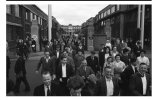
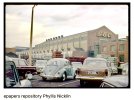
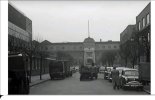

Linda
master brummie
Hello Everyone
I have come across these photos taken in Sept 1953 by my Uncle. He was a toolmaker ,so I am sure theses must have been his colleagues. (I don’t think I have posted them before).
If anyone knows who they are and would like them , please let me know.
Linda
I have come across these photos taken in Sept 1953 by my Uncle. He was a toolmaker ,so I am sure theses must have been his colleagues. (I don’t think I have posted them before).
If anyone knows who they are and would like them , please let me know.
Linda
Last edited by a moderator:

trevor bow
master brummie
I can't see them either.hi linda...i cant see your photos
lyn
Cabinscooter
knowlegable brummie
Great photos Linda. The middle one must be early sixties judging by the cars. Right hand one definitely has a fifties look to it but the left hand one also has a sixties look.
The chap at the front left with the 'tache looks very familiar to me but then chap second from the right looks like John Thaw!
Alan M.
The chap at the front left with the 'tache looks very familiar to me but then chap second from the right looks like John Thaw!
Alan M.
Cabinscooter
knowlegable brummie
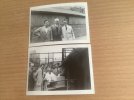
Wonderful photo of the tea lady, I don't recognise anyone or the specific location. It brings back memories of the tea lady that used to come round Switchgear drawing office with a tea urn. Everyone gathered around to fill their mugs. It was tea or nothing, of course.
When I first started as a drawing office apprentice, as a 'Section Lad', one of my tasks was to wash the draughtsman's mugs which would be about ten mugs on our section. All the office section lads would congregate at the sinks - that's about 4 or 5 of us - in the gents (Staff toilet not Manager's toilets). I very soon got a complaint that I was leaving rings around inside the mug as I didn't think this mattered. "You mean I have to put my hand inside your mug to clean it?" I'd had a sheltered life - I had never done the washing up at home!
When I first started as a drawing office apprentice, as a 'Section Lad', one of my tasks was to wash the draughtsman's mugs which would be about ten mugs on our section. All the office section lads would congregate at the sinks - that's about 4 or 5 of us - in the gents (Staff toilet not Manager's toilets). I very soon got a complaint that I was leaving rings around inside the mug as I didn't think this mattered. "You mean I have to put my hand inside your mug to clean it?" I'd had a sheltered life - I had never done the washing up at home!
Last edited:

Enel
master brummie
I can remember this particular chore from my time as an apprentice in 2DO. Some of the draffies mugs were quite disgusting, and once I realised that I’d have to handle them every day, I set to work with some sort of kitchen cleaner. By the time I’d finished, they gleamed, apart from one, which stubbornly resisted. After working on it for several days with bleach and a scouring pad, the ring finally retreated. I had expected to be praised for all my efforts in this particular task - but alas, no one noticed!
As for the tea from the urn, I have never tasted such a foul beverage, either before or since. The ‘tea’ came around twice a day, and would have been a welcome distraction from from those humdrum tasks allotted to the Section junior, had it tasted better. I suspect that this particular beverage was a mix of tea, sugar, and milk all boiled up together before decanting into the urn. Any left over was probably added to, on subsequent days. After about a week of imbibing this strange brew, I found that when taken with a KitKat, it was tolerable; after a couple of weeks, I strangely looked forward to it.
As for the tea from the urn, I have never tasted such a foul beverage, either before or since. The ‘tea’ came around twice a day, and would have been a welcome distraction from from those humdrum tasks allotted to the Section junior, had it tasted better. I suspect that this particular beverage was a mix of tea, sugar, and milk all boiled up together before decanting into the urn. Any left over was probably added to, on subsequent days. After about a week of imbibing this strange brew, I found that when taken with a KitKat, it was tolerable; after a couple of weeks, I strangely looked forward to it.

Radiorails
master brummie
Tea urns were a favourite with the Armed Forces, sometimes it was great, on other occasions almost undrinkable. However it was a matter of being any port in a storm.
With the Fire Brigade and other civil services it was usually quite palatable. In more recent times there was an option of coffee.
With the Fire Brigade and other civil services it was usually quite palatable. In more recent times there was an option of coffee.
Cabinscooter
knowlegable brummie
I don't think I drank tea myself at the time, being at that awkward teen picky stage. Therefore I was totally oblivious to this strange brown stuff that the draffies drank with such seemingly good humour. I was at a stage when I drank very sweet black coffee from a thermos flask. I can remember breaking it when travelling by bus more than once when my regular transport (moped then bubble car) was out of action and the coffee seeping out into my haversack and sandwiches.
Enel, 2DO draffies can't have been as fussy as those on my 2DO annexe section as a single ring in their mugs prompted a complaint.
I was initially on George Gittings section in 2DOA and then Les Hammerton's after my works training and 'graduation' to junior draughtsman.
Enel, 2DO draffies can't have been as fussy as those on my 2DO annexe section as a single ring in their mugs prompted a complaint.
I was initially on George Gittings section in 2DOA and then Les Hammerton's after my works training and 'graduation' to junior draughtsman.
Last edited:
Cabinscooter
knowlegable brummie
Very belated response I'm afraid. I left Witton in 1967 and had various jobs in the UK electrical industry. Ironically, by 1989 I was working for Honeywell Control Systems Ltd, part of which which entailed making regular visits to what was variously called GEC Measurements, GEC Alsthom (I'm never sure whether to include the 'h'), Alstom and also visiting GEC Transformers , all at Stafford. The GEC Transformers Stafford factory was very reminiscent of the Transformer works at Witton if not identical. I believe that when Witton was being closed down. many of the staff were offered jobs at what was then English Electric at Stafford. I doubt if many took this up.
- 1968 English Electric Co taken over by GEC.
- 1970 Although the works still produced diesel engines under the name Ruston Paxman Diesels, which operation had been moved from Lincoln, locomotive manufacture finished in 1970. Output was mainly for marine and stationary applications, but the company was the engine supplier of choice for British Rail Engineering for locos built at Doncaster and Crewe.
- The factory passed through various hands firstly as GEC Alsthom then Alstom, and finally as part of MAN B&W Diesel in 2000. At the end of 2002 the works closed. It is now an industrial estate (appropriately called "Vulcan Industrial Estate") and this can still be seen as one passes on the train. The site is just North of Winwick Junction where the line to Newton Le Willows branches off to the East from the West Coast Main Line.
- NB: Vulcan being associated with fire and ironwork, names such as "Vulcan Foundry" were common in many towns and cities. There was no connection with Vulcan Iron Works in the United States. Len.