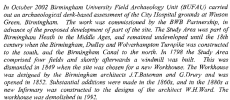
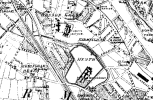
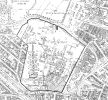
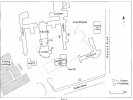
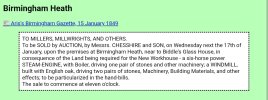
The mill may have only existed for at least 35 years looking at tge derails in post #42 - a very short time. But the extract attached to post #32 puts it at an earlier date, existing for some 50 years.
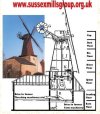
And I've just noticed the use of 'smock mill' in Janices's extract in the post above. They had brick foundations, but given that the mill was sold in entirety, the archaeologists would never have uncovered anything from beneath the workhouse. Here's a description of a smock mill:
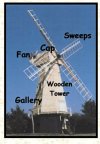
A smock mill is a type of windmill with a stationary, sloping wooden tower—usually with six or eight sides—topped with a rotating cap that turns the sails into the wind.
Design and Structure
• Name origin: The multi-sided wooden body looked like the traditional cloth smocks worn by farmers.
• Tower construction: Built around a wooden frame and covered in weatherboard, clapboard, or thatch.
• Brick base: Often set on a brick foundation to protect the timber from ground moisture and rot.
• Rotating cap: Only the top roof portion turns to catch the wind, unlike older post mills where the entire building rotates.
• Corner posts: Heavy interior corner posts (called "cant posts") angle inward as they rise to support the structure.
History and Uses
• Origin: Developed in the Netherlands during the early 16th century.
• Primary use: Originally used to pump water and drain wetlands, and later adapted for grinding grain into flour.



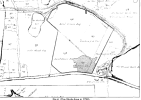
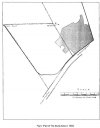
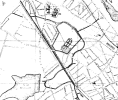
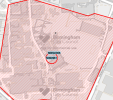
 ) maps of the site.