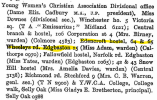
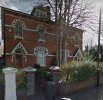
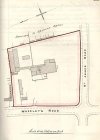
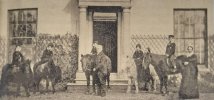
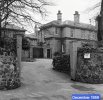
Not sure where this was, but possibly Wheeleys Road Edgbaston. The sign on the wall is the YMCA logo with 'Edencroft' written underneath


 www.google.com
Yes - looks like some flats called Edencroft.

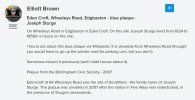
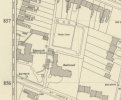
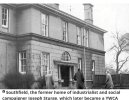
The 'Edencroft' of today is at #64 Wheeleys Road. ( And according to Ell Brown was once the site of Joseph Sturge's home ' Southfields' see below)
I think #65 flats/flatlets still exist.
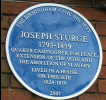
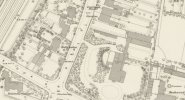
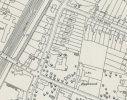
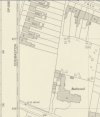
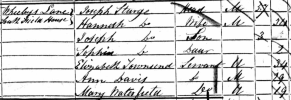
Could just be the enumerator's spelling.I notice it's written 'South Field', two words. Strange that it was never labelled on maps given the status of Sturge. Might refer back to earlier field names I suppose.
This story of "Edencroft" and the suggestion that the house "has an atmosphere" may relate to the murder of a YMCA resident, Stephanie Baird, aged 29, there on 23rd December, 1959. Described as "one of the most gruesome murders in Birmingham's history" it resulted in a massive manhunt, with all police leave (and I believe a major football match) being cancelled. Subsequently Patrick Bryne was arrested and imprisoned for life. His footwear provided important evidence. Those shoes were at one time kept in the City Police's "black museum".View attachment 195117
The late Chris Upton wrote this about the House in 2014:
It’s often said that a house has an atmosphere; personally I don’t subscribe to the idea. A house can be dark or light, brick or stone, small or large. If it has a mood, then it’s we who invest it with that by memory or association.
Take 64 Wheeleys Road in Egbaston, for example, or, as it was more commonly known, Southfield. Wheeleys Road (originally known as Wheeleys Hill) runs alongside Five Ways railway station, with the Birmingham & Worcester Canal at the back of it. It’s leafy, and, in the early 19th century, was practically rural. As far as I can tell, the road takes its name from a local farmer, who owned land here in the late 18th century.
All this was to change in 1823, when Joseph and Edmund Sturge arrived to set up in business in Edgbaston, manufacturing industrial chemicals. The two brothers bought up land between the road and the canal. And it was here too that Joseph built himself a large house and named it Southfield, and lived there for the next 30 years. Indeed, he was at Southfield for the rest of his life.
Southfield, then, was the destination of many a significant Abolitionist, including Harriet Beecher Stowe, author of Uncle Tom’s Cabin. It was, by all accounts, a happy home, and certainly a peace-loving one.
Joseph Sturge died in 1859. By that time Wheeleys Road was no longer a semi-rural retreat, but a desirable pied-a-terre for Birmingham’s industrial and social elite. Richard Cadbury lived at No. 17, and his next-door-neighbour, Frederick Humphreys, was the musical director of the Theatre Royal. Nearby lived George Cadbury.
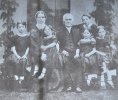
It was at 17 Wheeleys Road that Barrow Cadbury was born, Richard’s son, and the man who was destined to take the chocolate company into the 20th century. When Richard Cadbury died in 1899, Barrow wasted little time in setting up home further down the road. In 1901, then, 64 Wheeleys Road became the residence of Barrow and Geraldine Cadbury, and the future of Southfield as an epicentre for social reform was thus secure.
It was a Cadbury routine, seen in both George and Richard Cadbury, that when they moved house, they donated their previous home to good causes. Barrow and Geraldine were not about to break the tradition. When they moved out of Southfield in 1929, the house was left to the Young Women’s Christian Association. And thus 64 Wheeleys Road became a YWCA hostel. Joseph Sturge’s roomy mansion was sub-divided into 12 bed-sits. And so Southfield continued for the next 30 years as a welcome and much needed retreat for Birmingham’s many women workers.