• Welcome to this forum . We are a worldwide group with a common interest in Birmingham and its history. While here, please follow a few simple rules. We ask that you respect other members, thank those who have helped you and please keep your contributions on-topic with the thread.

    We do hope you enjoy your visit. BHF Admin Team

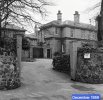
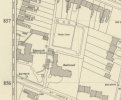
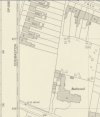
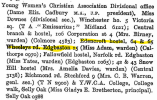
YWCA 'Edencroft' Wheeleys Road

In 1960 phone book it is listed as 64 Wheeleys Road as a hostel
Also 66 Wheeleys Road as flats/flatlets
 
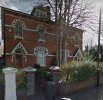
looks like its gone jan...brickwork either side of the old entrance is still the same

 
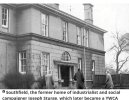
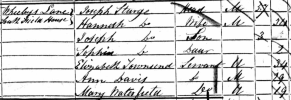
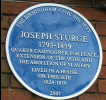
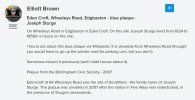
The 'Edencroft' of today is at #64 Wheeleys Road. ( And according to Ell Brown was once the site of Joseph Sturge's home ' Southfield' see below)

I think #65 flats/flatlets still exist.
 

Attachments

  • Screenshot_20240917_113222_Chrome.jpg
    Screenshot_20240917_113222_Chrome.jpg
    130.4 KB · Views: 5
Last edited:
Thanks Janice. #65 and #66 still there next door to Edencroft.
 

Attachments

  • Screenshot_20240917_121909_Maps.jpg
    Screenshot_20240917_121909_Maps.jpg
    499.4 KB · Views: 4
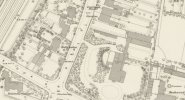
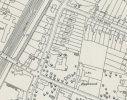
I notice it's written 'South Field', two words. Strange that it was never labelled on maps given the status of Sturge. Might refer back to earlier field names I suppose.
 
Screenshot_20240917_131343_Chrome.jpg

The late Chris Upton wrote this about the House in 2014:

It’s often said that a house has an atmosphere; personally I don’t subscribe to the idea. A house can be dark or light, brick or stone, small or large. If it has a mood, then it’s we who invest it with that by memory or association.

Take 64 Wheeleys Road in Egbaston, for example, or, as it was more commonly known, Southfield. Wheeleys Road (originally known as Wheeleys Hill) runs alongside Five Ways railway station, with the Birmingham & Worcester Canal at the back of it. It’s leafy, and, in the early 19th century, was practically rural. As far as I can tell, the road takes its name from a local farmer, who owned land here in the late 18th century.

All this was to change in 1823, when Joseph and Edmund Sturge arrived to set up in business in Edgbaston, manufacturing industrial chemicals. The two brothers bought up land between the road and the canal. And it was here too that Joseph built himself a large house and named it Southfield, and lived there for the next 30 years. Indeed, he was at Southfield for the rest of his life.

Southfield, then, was the destination of many a significant Abolitionist, including Harriet Beecher Stowe, author of Uncle Tom’s Cabin. It was, by all accounts, a happy home, and certainly a peace-loving one.

Joseph Sturge died in 1859. By that time Wheeleys Road was no longer a semi-rural retreat, but a desirable pied-a-terre for Birmingham’s industrial and social elite. Richard Cadbury lived at No. 17, and his next-door-neighbour, Frederick Humphreys, was the musical director of the Theatre Royal. Nearby lived George Cadbury.

It was at 17 Wheeleys Road that Barrow Cadbury was born, Richard’s son, and the man who was destined to take the chocolate company into the 20th century. When Richard Cadbury died in 1899, Barrow wasted little time in setting up home further down the road. In 1901, then, 64 Wheeleys Road became the residence of Barrow and Geraldine Cadbury, and the future of Southfield as an epicentre for social reform was thus secure.

It was a Cadbury routine, seen in both George and Richard Cadbury, that when they moved house, they donated their previous home to good causes. Barrow and Geraldine were not about to break the tradition. When they moved out of Southfield in 1929, the house was left to the Young Women’s Christian Association. And thus 64 Wheeleys Road became a YWCA hostel. Joseph Sturge’s roomy mansion was sub-divided into 12 bed-sits. And so Southfield continued for the next 30 years as a welcome and much needed retreat for Birmingham’s many women workers.
 
Last edited:
View attachment 195117

The late Chris Upton wrote this about the House in 2014:

It’s often said that a house has an atmosphere; personally I don’t subscribe to the idea. A house can be dark or light, brick or stone, small or large. If it has a mood, then it’s we who invest it with that by memory or association.

Take 64 Wheeleys Road in Egbaston, for example, or, as it was more commonly known, Southfield. Wheeleys Road (originally known as Wheeleys Hill) runs alongside Five Ways railway station, with the Birmingham & Worcester Canal at the back of it. It’s leafy, and, in the early 19th century, was practically rural. As far as I can tell, the road takes its name from a local farmer, who owned land here in the late 18th century.

All this was to change in 1823, when Joseph and Edmund Sturge arrived to set up in business in Edgbaston, manufacturing industrial chemicals. The two brothers bought up land between the road and the canal. And it was here too that Joseph built himself a large house and named it Southfield, and lived there for the next 30 years. Indeed, he was at Southfield for the rest of his life.

Southfield, then, was the destination of many a significant Abolitionist, including Harriet Beecher Stowe, author of Uncle Tom’s Cabin. It was, by all accounts, a happy home, and certainly a peace-loving one.

Joseph Sturge died in 1859. By that time Wheeleys Road was no longer a semi-rural retreat, but a desirable pied-a-terre for Birmingham’s industrial and social elite. Richard Cadbury lived at No. 17, and his next-door-neighbour, Frederick Humphreys, was the musical director of the Theatre Royal. Nearby lived George Cadbury.

It was at 17 Wheeleys Road that Barrow Cadbury was born, Richard’s son, and the man who was destined to take the chocolate company into the 20th century. When Richard Cadbury died in 1899, Barrow wasted little time in setting up home further down the road. In 1901, then, 64 Wheeleys Road became the residence of Barrow and Geraldine Cadbury, and the future of Southfield as an epicentre for social reform was thus secure.

It was a Cadbury routine, seen in both George and Richard Cadbury, that when they moved house, they donated their previous home to good causes. Barrow and Geraldine were not about to break the tradition. When they moved out of Southfield in 1929, the house was left to the Young Women’s Christian Association. And thus 64 Wheeleys Road became a YWCA hostel. Joseph Sturge’s roomy mansion was sub-divided into 12 bed-sits. And so Southfield continued for the next 30 years as a welcome and much needed retreat for Birmingham’s many women workers.
This story of "Edencroft" and the suggestion that the house "has an atmosphere" may relate to the murder of a YMCA resident, Stephanie Baird, aged 29, there on 23rd December, 1959. Described as "one of the most gruesome murders in Birmingham's history" it resulted in a massive manhunt, with all police leave (and I believe a major football match) being cancelled. Subsequently Patrick Bryne was arrested and imprisoned for life. His footwear provided important evidence. Those shoes were at one time kept in the City Police's "black museum".
 
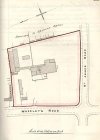
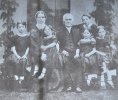
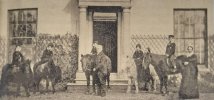
A post to add to previous comments and share information and photographs about "Edencroft" when it was known as "Southfleld" and home to Joseph Sturge (1793-1859) and his family.

"Southfield" was both a family home and a political hub. Within the grounds he had built a meeting room that could seat 200 people. This was linked to the house by a covered walkway and known to his children as the "play room" as it was often used as such. It was where Sunday School teachers and children met but also, to quote J. A. James, a "place of convocation for the sons and daughters of mercy to meet, and concert and execute their schemes of benevolence."

There were many notable visitors. Harriet Beecher Stow (author of Uncle Tom's Cabin, the only book of fiction Joseph ever purchased!) records her visit of 1863 in "Sunny Memories", of walking through extensive gardens and discovering "on one side of the grounds coming upon an old-fashioned cottage, which Mr Sturge formerly kept fitted up as a water-cure hospital, for those whose means did not allow them to go to larger establishments." [Hydropathic treatments were popular then.] She also commented on the closeness of family members during her stay, finding a particularly striking instance. "The grounds of Mr Sturge are very near those of his brother [Edmund Sturge 1808-1840] only a narrow road interposing between them. They have contrived to make them one by building under this road a subterranean passage, so that the two families can pass and repass into each other's grounds in perfect privacy." [In the 1851 census Edmund and his family are shown as living at 106 New Bridge Road.]

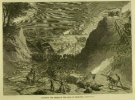
Close to the house in Wheeley's Road was a field, named "Sturge's Field," taken over by Joseph to open to the public - the council refusing to progress such much needed facilities. It met with opposition from the neighbours. After Joseph's death it was known as "Mrs Sturge's Field" and there was indeed cause a complaint about "unruly lads" with the local newspaper commenting that unless the public supported "Mrs Sturge's efforts to maintain order and decency" the field would otherwise be closed. In 1860 a newspaper published a letter stating that "The field is a perfect nuisance to the neighbourhood and a scandal to decency and order." [How long after it survived as a public park I cannot say but it was certainly used for school outings and remained a popular venue for sport into the 1880s. The upper end of the field backed onto the Birmingham and Worcester Canal, which burst its banks there in 1872.]
 

Attachments

  • Southfield site, Birmingham.jpg
    Southfield site, Birmingham.jpg
    15.6 KB · Views: 5
  • Joseph Sturge and Family.jpg
    Joseph Sturge and Family.jpg
    154.3 KB · Views: 5
  • Southfield - the morning ride.jpg
    Southfield - the morning ride.jpg
    168.7 KB · Views: 5
Back
Top