• Welcome to this forum . We are a worldwide group with a common interest in Birmingham and its history. While here, please follow a few simple rules. We ask that you respect other members, thank those who have helped you and please keep your contributions on-topic with the thread.

    We do hope you enjoy your visit. BHF Admin Team

Union Row Congregational Chapel Handsworth

Vivienne14

Kentish Brummie Moderator
Staff member
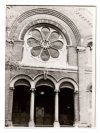
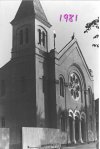
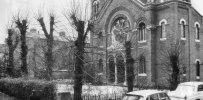
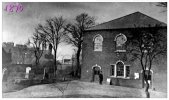
The Congregational Chapel on Union Row in Handsworth was originally built in 1788 and later rebuilt and expanded in 1871 as the Handsworth Congregational Church. It was originally a congregation of the Countess of Huntingdon's Connection.

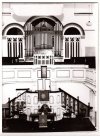
It was erected in 1788 as an independent chapel, was enlarged and improved in 1818 and 1850. The building was remodelled and expanded in 1871 under the direction of the resident pastor. The second, third and fourth photos must have been taken in more modern times after significant remodeling and expansion of the premises. It has the appearance of a substantial church compared with the early chapel building.

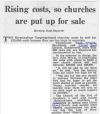
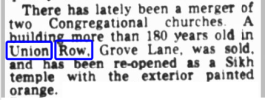
The Union Row congregation eventually combined with the Westminster Road Congregational Church. Together, they formed a new church community on Wilton Road that was dedicated in 1969.

Screenshot_20260828_110459_Chrome.jpg
Screenshot_20260828_110833_Chrome.jpg

Screenshot_20260828_184448_Chrome.jpgScreenshot_20260828_184453_Chrome.jpg

 
Last edited:
From British History Online
Union Row, Handsworth Union Chapel was built in 1788 for Lady Huntingdon's Connexion, and was first used by the Congregationalists in 1806. It was improved in 1819, and in 1851 provided sittings for 580. In 1871 considerable alterations were made, increasing accommodation to 800. They included a new front of brick with Bath and Hollingworth stone dressings, designed in an Italian Romanesque style by G. Ingall of Birmingham. Church membership in 1849 was 90, and the average congregation, in 1851, 350. In 1892 there was a Sunday evening congregation of 380, and by 1897 church membership had reached 190.n 1957 it was 145. The Union Chapel helped with the mission work which resulted in the building of Lodge Road and Winson Green Road chapels
 
as i suspected the bodies of the interred are still underground in the car park...shocking :mad:

The bodies historically buried at the Union Row Chapel Chapelyard in Handsworth remain interred underground, but the burial ground itself is now entirely covered by a parking lot and features no visible memorials or tombstones.
 
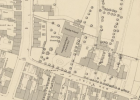
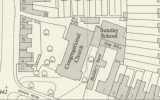
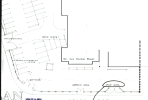
I suspect that because another place of worship has replaced the church on the site, the removal of buried remains isn't required by law. Also, looking at the maps, in addition to the car park, isn't part of the current place of worship actually built over the churchyard (but only partially)? Not sure.

In any case, building a car park over existing graves - although it seems to me incredibly disrespectful - might mean the building work would cause less disturbance to remains, and hence why the car park is located in that position.
 
Last edited:
The planning consent for the carpark stipulates the area is to be used for that purpose only.
Is that so there is no deep digging in the area of the burial ground?
 
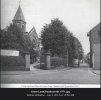
A couple more photos of the replacement of the early chapel. Presumably, the graveyard is behind the fence in the first photo and immediately the left of the church in the second photo.

Screenshot_20260828_215042_Chrome.jpgScreenshot_20260828_214957_Chrome.jpg
 
.....

In any case, building a car park over existing graves - although it seems to me incredibly disrespectful - might mean the building work would cause less disturbance to remains, and hence why the car park is located in that position.


Was there a "no dig grid system" used to construct the car park ? Maybe the planning application covered this?

And does anyone know what happened to the headstones ? I think they were removed from their positions around the 1970s/1980s - but can't confirm that. Maybe they're still somewhere on site ?
 
Last edited:
The clause abut the parking does not actually refer to the graves:
1787999337353.png
There is also this
1787999441324.png
1787999381329.png


There are 15 documents but 14 are plans which seem to be drawings of the gates, frontage etc,
No mention of headstones. Wondering if they went long before this application.
 
The detail with the second photo posted by Viv in post #1 tells us the chapel was sold in 1971
Description:Union Row Chapel, Handsworth, after being rebuilt in 1871 as Handsworth Congregational Church. The chapel was remodelled and expanded by the pastor in residence, The Rev. Robert Ann. A century later the land was bought for £35,000 by the Birmingham Guru Ravidass Cultural Association. The land was cleared and the 'Shri Guru Ravidass Bhawar' Gurdwara was opened on 10th September 1972
 
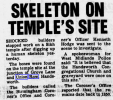
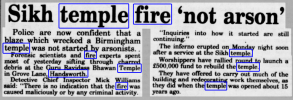
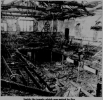
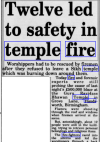
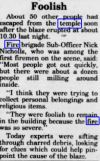
The gravestones were still on the church site until at least the early 1960s, according to someone on Facebook who lived at the caretakers house. Don't know if they were still there from 1972 onwards when the church became a temple of Shri Guru Ravidass Bhawar' Gurdwara. I think it subsequently suffered a fire. The new temple opened in 1992.
 
It looks as if the first "temple" simply utilised the original church. Presumaby this was the building burnt down and replaced with the present building.
1788012164196.png
1788012130266.png
 
Last edited:
Birmingham library holds a register of marriages dating to 1970 but I can't find any record of burials.
Midand Ancestors suggests there are burial records up to 1837 but I'm not sure if that is just when transcribing stops.
 
Last edited:
I suspect that because another place of worship has replaced the church on the site, the removal of buried remains isn't required by law. Also, looking at the maps, in addition to the car park, isn't part of the current place of worship actually built over the churchyard (but only partially)? Not sure.

In any case, building a car park over existing graves - although it seems to me incredibly disrespectful - might mean the building work would cause less disturbance to remains, and hence why the car park is located in that position.
Just came across this statement
  • Desire to Not Disturb: In many cultures and religious traditions, moving a body after burial is considered disrespectful. If the remains are already safely underground, sealing them beneath a road or parking lot is sometimes viewed as less disruptive than digging them up.
  • Preservation in Situ: Modern heritage laws often prioritize leaving archaeological features undisturbed. Covering remains with a protective layer before laying tarmac ensures they are preserved for future generations when better technology might be available.
 
Back
Top