• Welcome to this forum . We are a worldwide group with a common interest in Birmingham and its history. While here, please follow a few simple rules. We ask that you respect other members, thank those who have helped you and please keep your contributions on-topic with the thread.

    We do hope you enjoy your visit. BHF Admin Team

The Oratory, Hagley Road

Last day of Birmingham Heritage Week, so went to the Birmingham Oratory. Was a guided tour, so saw the inside of the building.

For now some exteriors from the car park.

This red brick building leads back to the Cloisters.


The small building with the dome is the Shrine of St Philip Neri. The guide showed us the inside (photos coming soon).


I used to stay with relatives near the Birmingham Oratory when on week end leave when in the RAF at Malvern in 1957/8. I went there many Sunday mornings. Apart from the church being a very beautiful building what remains in my memory was the sheer numbers of people there. You were unable to go in until those already in there had left after their Mass and when you came out, some 45 minutes later, there were many more awaiting their turn to enter for another Mass.
 
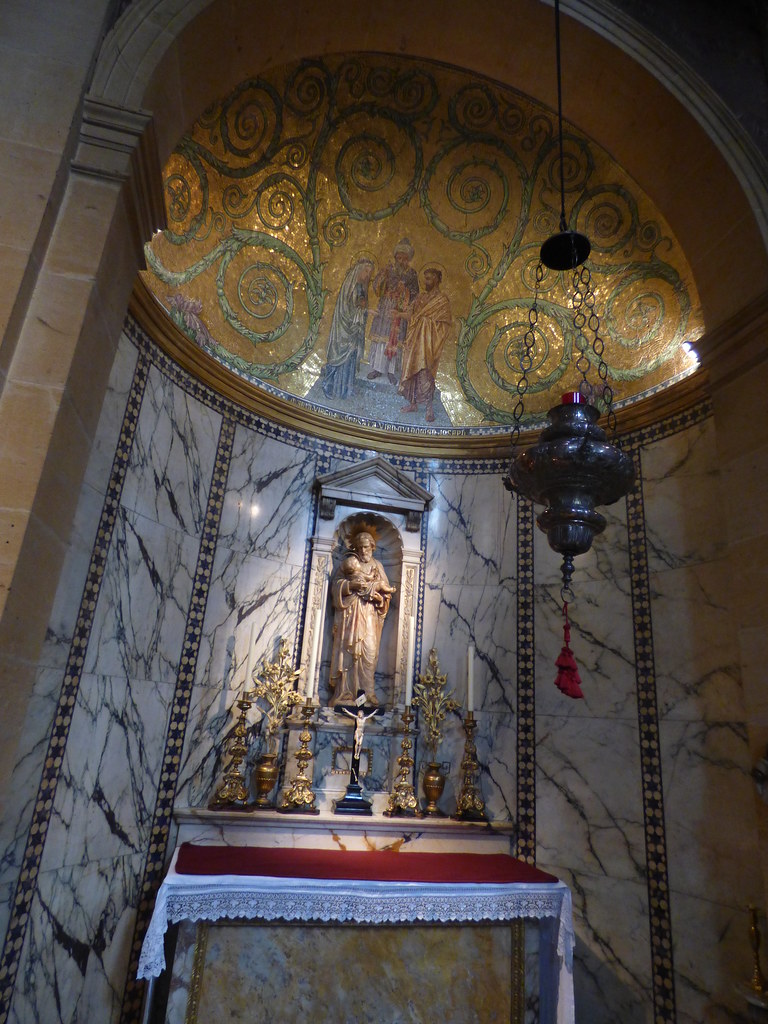
The Oratory is preparing for Blessed John Henry Newman to be made a Saint next month at the Vatican by the Pope. Certainly an impressive interior.

Apparently the giant marble columns came by steamer two at a time from Italy, then went up the canal. Was also a second hand alter, with a pair of columns that were supposed to be for Westminster Cathedral, but got broken and ended up here!
 
Took advantage of last day of Birmingham Heritage Week / Heritage Open Days. I think it was free to explore for around 3 days, and all days had guided tours. My first time inside. Although I've seen it before from the Hagley Road / Plough & Harrow Road. Looks centuries old, but was only really built in the early 20th century (although started in the late 19th after Cardinal Newman had died).
 
I am speaking from memory here of something that I have read, so I may not be correct but I understand that there are 14 different types of marble in this church. I think I read it in Pevsner.
 
Beautiful buildings in their own way. I was at the school for 6 miserable years in the 50s and early 60s none of which were any good at all, useless teachers including sadistic bullies, especially the headmaster. To be fair there one or two decent sorts, mr driffield, Mr Davis (Dado), the physics teacher whose name i don't recall (he helped run the scout trrop) and Mr (Joe) Butler (rough as guts but a warm heart) and the maths teacher (NOT Bob Taylor) who at least seemed to have some sort of understanding of why I was so isconnected from the whole awful pious dump of a place
 
Beautiful buildings in their own way. I was at the school for 6 miserable years in the 50s and early 60s none of which were any good at all, useless teachers including sadistic bullies, especially the headmaster. To be fair there one or two decent sorts, mr driffield, Mr Davis (Dado), the physics teacher whose name i don't recall (he helped run the scout trrop) and Mr (Joe) Butler (rough as guts but a warm heart) and the maths teacher (NOT Bob Taylor) who at least seemed to have some sort of understanding of why I was so isconnected from the whole awful pious dump of a place
Me too Mick, the worst time of my life in the late 50s, early 60s. I found out what gratuitous violence was, in the name of religion. We lived next door as my dad was the caretaker. He was also treated like muck. Sister Vincent was the worst, pulled me around by the hair near my ear, and hit regularly with the edge of the ruler across the hands. It did me a favour, and have been an atheist ever since.
 
I remember the Oratory well, went to Mass there a couple of times as a boy, most beautiful place lots of nuns there I seem to remember!!
 
Wikipedia says the current Oratory church was constructed between 1907 and 1910 to replace the original structure and designed by the architect Edward Doran Webb. In fact a foundation stone was in laid in 1894 by the Bishop of Birmingham and also another foundation stone in March 1904, both designs by Doran Webb.

So there is a question as to what happened in the intervening years ?

 
Wikipedia says the current Oratory church was constructed between 1907 and 1910 to replace the original structure and designed by the architect Edward Doran Webb. In fact a foundation stone was in laid in 1894 by the Bishop of Birmingham and also another foundation stone in March 1904, both designs by Doran Webb.

So there is a question as to what happened in the intervening years ?

Sorry, I love the architecture, but not what it stood for. I'll never recover from that
 
Wikipedia says the current Oratory church was constructed between 1907 and 1910 to replace the original structure and designed by the architect Edward Doran Webb. In fact a foundation stone was in laid in 1894 by the Bishop of Birmingham and also another foundation stone in March 1904, both designs by Doran Webb.

So there is a question as to what happened in the intervening years ?

The stone laid in 1894 by the Bishop of Birmingham (Bishop Edward Ilsley) was for an addition or a structural remodeling of the original Victorian church complex.
Following Cardinal Newman's death in 1890, the Oratory community decided that a grand, permanent structure was needed to serve as an enduring monument. Because this was an entirely new, independent architectural project, a brand-new foundation stone was laid on 25 March 1904


( If I have this correctly, instead of pulling down the old church first and leaving the parish without a place to worship, the architect's (E. Doran Webb's) solution was to build the outer walls and foundations of the new memorial church directly around and over the top of the old church.)
 
Last edited:
Back
Top