-
Welcome to this forum . We are a worldwide group with a common interest in Birmingham and its history. While here, please follow a few simple rules. We ask that you respect other members, thank those who have helped you and please keep your contributions on-topic with the thread.
We do hope you enjoy your visit. BHF Admin Team
You are using an out of date browser. It may not display this or other websites correctly.
You should upgrade or use an alternative browser.
You should upgrade or use an alternative browser.
The Keith Berry Photo Archive - Old Birmingham Page 7
- Thread starter Morturn
- Start date

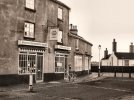
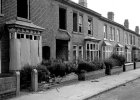
1. Freer Road
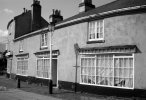
A bit of urban renewal in progress. An old type bay window (like the one in the foreground) is being replaced by a more 'modern' type (like the
shallower bay, next one along). The tenants were all moved out while the renovations, which were very thorough, took place, but they were strongly
discouraged from moving back after completion. Only a couple of streets from Saddam Hussein mosque, renamed only after his downfall.
The fifth house from the left, no. 143, was earlier the home of my grand- parents, Frank and Frances Barson, the famous footballer of Aston Villa and Manchester United, and his wife. We lived opposite them at no. 138.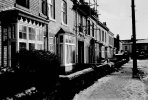
A bit of urban renewal in progress. An old type bay window (like the one in the foreground) is being replaced by a more 'modern' type (like the
shallower bay, next one along). The tenants were all moved out while the renovations, which were very thorough, took place, but they were strongly
discouraged from moving back after completion. Only a couple of streets from Saddam Hussein mosque, renamed only after his downfall.
The fifth house from the left, no. 143, was earlier the home of my grand- parents, Frank and Frances Barson, the famous footballer of Aston Villa and Manchester United, and his wife. We lived opposite them at no. 138.
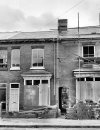
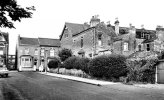
5. Freer Road
At the top of the road, facing the junction with Hampton Road. The houses on the right of the photo have since been demolished and replaced
with more modern structures. At left of the photo, through the alley can be glimpsed the rear of flats on top of the shops in Birchfield Road where two girls were accidentally shot in a gang shooting, one of them killed by her brother.
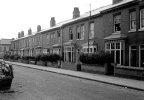
6. Freer Road Taken from Hampton Road facing the opposite direction from that of the last photo.
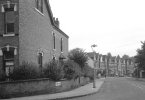
At the top of the road, facing the junction with Hampton Road. The houses on the right of the photo have since been demolished and replaced
with more modern structures. At left of the photo, through the alley can be glimpsed the rear of flats on top of the shops in Birchfield Road where two girls were accidentally shot in a gang shooting, one of them killed by her brother.
6. Freer Road Taken from Hampton Road facing the opposite direction from that of the last photo.
7. Six Ways Aston 1979
The old shops in Aston High Street at Six Ways at night. The building to the left of the three stylish upper windows was originally a branch of the
Birmingham Municipal Bank.
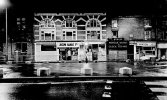
8. Six Ways Aston 1979 The same shops as the last photo, but in daylight.
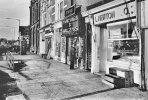
9. Six Ways Aston March 1980 At the top of Birchfield Road, near its junction with Witton Road. Six Ways was a hive of activity when I was growing up but it's quite a desolate place for a pedestrian to be now.
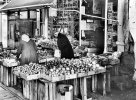
10. Six Ways, Aston Shops in Birchfield Road
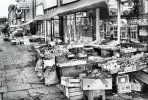
The old shops in Aston High Street at Six Ways at night. The building to the left of the three stylish upper windows was originally a branch of the
Birmingham Municipal Bank.
8. Six Ways Aston 1979 The same shops as the last photo, but in daylight.
9. Six Ways Aston March 1980 At the top of Birchfield Road, near its junction with Witton Road. Six Ways was a hive of activity when I was growing up but it's quite a desolate place for a pedestrian to be now.
10. Six Ways, Aston Shops in Birchfield Road
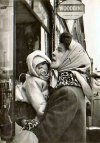
12.Aston Hippodrome Sept 1980
The demolition of Aston Hippodrome finally led to this once-lively area being covered in the Dreary Blanket that has been steadily creeping over much of north Birmingham for around thirty years. On the right was the shop of Mr S Betteson Coombes, the optician from whom in 1983 I bought
the glasses that I wore outdoors until recently In the distance, The Barton's Arms public house was having a face lift.
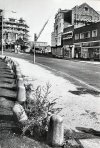
The demolition of Aston Hippodrome finally led to this once-lively area being covered in the Dreary Blanket that has been steadily creeping over much of north Birmingham for around thirty years. On the right was the shop of Mr S Betteson Coombes, the optician from whom in 1983 I bought
the glasses that I wore outdoors until recently In the distance, The Barton's Arms public house was having a face lift.
13. Wellington Road
Near the Perry Barr traffic island. In the centre two shops, Pettit's began, probably the best stocked stationers for miles. They later moved a couple of hundred yards to the island to a modern showroom but sadly didn't stay in business much longer.
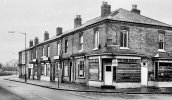
14. Wellington Road Aug 1981 ... at its junction with Westminster Road. 'Mei Fung,' a favourite Chinese take away, was just a few yards further to the right.
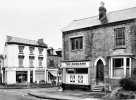
15. Wellington Road 22 Aug 1981 On the No. 11 Outer Circle bus route between Perry Barr and Handsworth Wood.
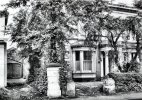
Near the Perry Barr traffic island. In the centre two shops, Pettit's began, probably the best stocked stationers for miles. They later moved a couple of hundred yards to the island to a modern showroom but sadly didn't stay in business much longer.
14. Wellington Road Aug 1981 ... at its junction with Westminster Road. 'Mei Fung,' a favourite Chinese take away, was just a few yards further to the right.
15. Wellington Road 22 Aug 1981 On the No. 11 Outer Circle bus route between Perry Barr and Handsworth Wood.
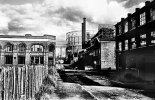
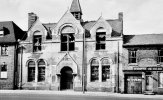
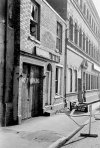
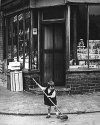
19. Young sweeper 1960s
Photographed in the Newtown area near Frankfort Street and Summer Lane. The existence of these small shops was helped by Retail Price Maintenance, which meant that the price of an item was the same wherever it was purchased, so shops could stock just a few items bought from
wholesalers and still remain viable. Its abolition in the 1960s hugely advantaged shops with the ability to bulk buy and the small trader could no longer compete with the much bigger supermarkets.
Photographed in the Newtown area near Frankfort Street and Summer Lane. The existence of these small shops was helped by Retail Price Maintenance, which meant that the price of an item was the same wherever it was purchased, so shops could stock just a few items bought from
wholesalers and still remain viable. Its abolition in the 1960s hugely advantaged shops with the ability to bulk buy and the small trader could no longer compete with the much bigger supermarkets.
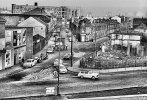
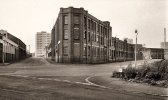
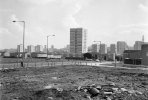
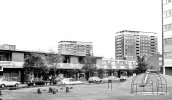
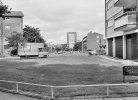
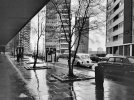
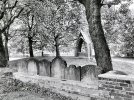


32. Newtown Row 1979
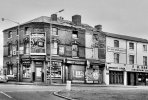
33. Newtown Row 1979 These buildings were demolished to make room for the Post Office sorting depot following the movement from the MailBox in the City (where Radio WM are now) and the former Cheston Road sorting office near Aston Cross.
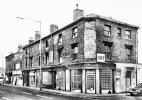
34. Newtown Row 1979 The existence of these small shops was helped by Retail Price Maintenance, which meant that the price of an item was the same wherever it was purchased, so shops could stock just a few items bought from wholesalers and still remain viable. Its abolition in the 1960s hugely advantaged shops with the ability to bulk buy and the small trader could no longer compete with the much bigger supermarkets.
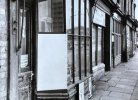
33. Newtown Row 1979 These buildings were demolished to make room for the Post Office sorting depot following the movement from the MailBox in the City (where Radio WM are now) and the former Cheston Road sorting office near Aston Cross.
34. Newtown Row 1979 The existence of these small shops was helped by Retail Price Maintenance, which meant that the price of an item was the same wherever it was purchased, so shops could stock just a few items bought from wholesalers and still remain viable. Its abolition in the 1960s hugely advantaged shops with the ability to bulk buy and the small trader could no longer compete with the much bigger supermarkets.