• Welcome to this forum . We are a worldwide group with a common interest in Birmingham and its history. While here, please follow a few simple rules. We ask that you respect other members, thank those who have helped you and please keep your contributions on-topic with the thread.

    We do hope you enjoy your visit. BHF Admin Team

Sheep Street photos from around 1880.

LindaD

New Member
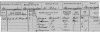
Hello. I live in Norway and am writing a book about my ancestors. My Great Grandfather lived at Court 6, Apartment 16, Sheep Street in Birmingham. He was born in 1865 and lived there until about 1885. His father was George Bennett and he worked as a Site Filer for guns. Henry Alexander (my Great Grandfather) followed his trade and later joined the navy putting his knowledge to good use. My questions are to anyone who reads my post; do you know the history of this street and why it is called Sheep Street? What sort of status did people have who lived in this area? Does anyone know of any gun factories in Birmingham during that time? Lastly, does anyone have any old photos of Sheep Street to share with me? I will be most grateful. Best regards and thank you for your time. Linda
 

Attachments

  • Bennett family - Sheep Street UK.jpg
    Bennett family - Sheep Street UK.jpg
    248.6 KB · Views: 59
I too would be interested in any information of photos of Sheep Street. My g.g. grandfather John Raybould ran the Dog & Duck public house at 40 Sheep Street in 1861 when he was then aged 55 years with his 2nd wife Harriet, and their 2 children
Priscilla age 6, and Agnes 3 and baby Alfred Charles, together with my g.grandmother Mary 21 and John 18 from his first marriage.
 
Yes, I hope somebody spots our appeals. I am deeply interested to learn about the how life was back then in Birmingham. I gather this district would have been for the working class, for my g. grandfather never went to school. He ended up in Kenya, East Africa as a coffee farmer and died there at the age of 47. He married a woman from Farlington, Portsmouth. They had 11 children, but only 6 lived to reach adulthood. Life was tough in Kenya those days. They arrived in Nairobi in 1904. Here is hoping that we get some replies Sylvia :-)
 
There's another thread about Sheep St and surrounding area but there are no photos on there so I'd suppose they are few and far between especially that early.

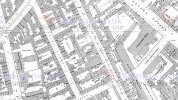
Here is a map though from 1889...

Sheep St.jpg

...and a link to info about Gosta Green, the area where Sheep St was...

 
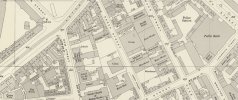
I'm a bit late replying to your enquiry. It seems that Sheep Street was in the Gosta Green area to the north east of Birmingham City Centre (or town centre then as Birmingham did not become a city until 1889). My map (attached) from the 1950s shows Sheep Street and landmarks at the time would have been the public baths in Woodcock Street (to the right) and the Central Fire Station, in the top left corner of the map. The whole of this area and many of the streets including Sheep Street have disappeared to become the campus for Aston University.
In the map you can see the two remaining courts in Sheep Street (in the 1950s) 11 & 12 to the to right side near to the top. Further down on the same side you can see the house numbers 37, 38 & 39. Next is an area with the word "Warehouse" and this may be where your ancestor's court (Court 6) would have been. Sylvia Sayers says that her relative John Raybould ran the Dog & Duck pub at number 40, so that would have been just there, next to number 39.
Taking a look at the map posted by MWS, which is very blurred, it seems that court 6 may have been on the opposite side of the road where Kyle Hall was built around 1893, this was a public hall and used as gymnasium.
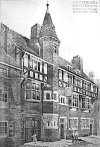
I've attached a photograph of Kyle Hall (which may have been built where court 6 was, maps of Sheep Street from c1893 and c1950, along with a photograph of Aston Road from the north end of Sheep Street and a photograph of some typical court houses from Birmingham in around 1910.
It's worth noting that the census shows the address as 6ct 16H. This means court 6, but the 16 refers to the house number in the court. They would not have been apartments, but back-to-back houses.
I hope this helps.

Kyle Hall - c1893
Sheep Street - Kyle Hall - 1893.jpeg

Sheep Street - map c1889
Sheep Street - map c1889.jpg

Sheep Street - map c1950
Sheep Street - map c1950.jpg

Aston Street - looking south from corner of Sheep Street - 1934
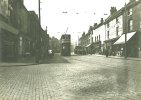
Aston Street - looking south from corner of Sheep Street - 1934.jpg

A typical Birmingham court - Court 10 Cheapside - c1910
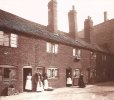
Court 10 - Cheapside, (it’s written on the brickwork) c.1910:12.jpg
 
Yes, I hope somebody spots our appeals. I am deeply interested to learn about the how life was back then in Birmingham. I gather this district would have been for the working class, for my g. grandfather never went to school. He ended up in Kenya, East Africa as a coffee farmer and died there at the age of 47. He married a woman from Farlington, Portsmouth. They had 11 children, but only 6 lived to reach adulthood. Life was tough in Kenya those days. They arrived in Nairobi in 1904. Here is hoping that we get some replies Sylvia :-)
Hello,
I lived at number 10 Sheep Street Gosta Green Birmingham 1950 to 1961 2 bed end terrace house. right next to our house was an abatour, where pigs and sheep were butchered. Think this is why it was named Sheep Street?. Sometime animals would escape and you have the abbatour workers running around trying to catch them. Behind our house was a air raid shelter in front of a building which was a storage for a stationer. Two tier building that was the lenth of the yard of 4 houses. At the other end of the terrace hoses was the Doctors house and on the corner was a motor cycle shop call Motor Sales, they under compulsary purchase order bought all those terrace house and pulled them down 1962/63. Going up the street on our side there was a fenced off area which cars were stored by the Repair garage oposite. My dad had a key to this where he parked our car. Next to that was Sheep street Clinic, dentistry /nit nurse/ sun room and lots more. Next was the Kyle Hall kids club boxing etc. Then a few houses back to back and a shop on the corner grocery i think. And laurence street. Coming back down the other side of Sheep Street two or three houses back to back, then the warehouse which was the Repair Garage. The one small court yard of about 6 houses back to back the house on the street at the start of this court was occupied by asian men, painted red and green. It was called the boegy mans house. Two fronted housed then another court larger with maybe 8 house front in a square. Then another biggish warehouse used by knife sharpening company that kept a large van garrage there every weekday we wait at laurnce street end about 6pm the van would turn the corner its rear door open and us kids would jump on and get a ride down to the yard where they parked it locked up. Finaly on the corner was a recess back and a pub called somthing Castle!!. We played football in the street rode our bikes, my dad work in a gun smith behind the aston universty also the Central Fire Station was on Aston street. Wood cock street swimming bathes two street away. I went to Bishop Ryder infant junior school. In 1961/2 we move close to Aston Cross.
 
what a great memory you have for sheep st...have you seen the 1950s map on post 6 your house is marked and also marked is the bacon curing factory at the back

lyn
 
Back
Top