• Welcome to this forum . We are a worldwide group with a common interest in Birmingham and its history. While here, please follow a few simple rules. We ask that you respect other members, thank those who have helped you and please keep your contributions on-topic with the thread.

    We do hope you enjoy your visit. BHF Admin Team

Pinfolds and Pounds of Birmingham and its suburbs

Vivienne14

Kentish Brummie Moderator
Staff member
Pinfolds were places where stray animals could be held until reclaimed on payment of a fine. These were in use from medieval to Victorian times.

Pinfold Street
There was a Pinfold in Pinfold Street, somewhere near Dudley Street. Pinfold Street takes its name from the "pound" or "pinfold" that existed there prior to 1752. There's mention of the Pinfold on the Pinfold Street thread here:
https://birminghamhistory.co.uk/forum/threads/pinfold-street.45498

Hagley Road
(from Showells Dictionary)
There used to be one "of these receptacles for straying animals near to the Plough and Harrow in Hagley Road,

Smithfield (from Showells Dictionary)
" ... a small corner of Smithfield was railed off for the like purpose when the Cattle market was there established. The "Jacob Wilsons" of a previous date held a field under the Lords of the Manor wherein to graze their captured cattle, but one of the Town Criers mortgaged it, and his successors lost their right to the land which was somewhere about Caroline Street"

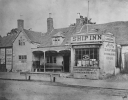
The Bord - alongside the Ship Inn

The parish pound was once located next to The Ship Inn, Camp Hill. It was known as The Bord.

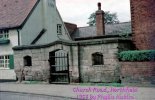
Great Stone Inn Northfield
There was a 17th century pound adjacent to the inn; a sandstone enclosure where stray animals were kept until their owners paid a fee to get them back. This structure still exists today alongside the Inn.

See this thread here for more details:
https://birminghamhistory.co.uk/forum/threads/the-great-stone-northfield.40287

Screenshot_20260818_202731_Chrome.jpg

South Yardley
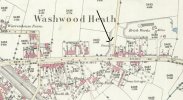
Pinfold Green was common land laying between Stockfield Road and Yardley Road at South Yardley. It would have been the site of the local pinfold.
 
Last edited:
Medieval farming relied heavily on open fields and so livestock could wander onto neighbouring land or unlawfully graze on shared common land. A communal system was needed to control them. The official responsible for locking up the strays, managing their care, and collecting the fines was called the Pinder or Pounder and was paid by the Lord of the Manor. If animals went unclaimed for several weeks, they were taken to a local market, sold, and the profits were split between the captor and the poundkeeper.

Most medieval villages would have had pounds but most will have been lost through urbanisation and development. The Northfield pound is one of the best survivors. There used to be one in Harborne, now lost by development and I think there was one near the church in Kings Norton also now lost or in ruins.
( https://ruralhistoria.com/2023/12/28/the-medieval-pound-most-villages-had-one/ and http://poundsandpinfolds.co.uk.websitebuilder.prositehosting.co.uk/what-are-pounds-and-pinfolds )
 
Last edited:
Viv (in post #1) mentions The Bord next to the Ship Inn, Camp Hill, as a site of a pinfold:
1787690505335.png
"At the time this photograph was taken (c 1860), the "Ship Inn", so called since the early 1800s and previously known as the "Anchor", was very old. The original half-timbered farm building, with stables, barn and dairy was said to originate from 1560 and was a stop for coaches and wagons on the route to Birmingham. The "Bord" - the parish pound, used to hold stray animals until they were claimed by their owners, was situated alongside the building. The building used to sit at the junction of Sandy Lane and Camp Hill but the old inn was pulled down in 1867 and a new building using the original foundations and cellars took its place......"
( See: https://www.search.birminghamimages...ID=10655&PageIndex=7&SearchType=2&ThemeID=172 )

Sadly I suspect it's going to be rural sites that can claim most intact pounds/pinfolds whilst us city dwellers will have to make do with remains lost to development. Thank goodness for Northfield!
 
Last edited:
View attachment 228513
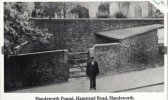
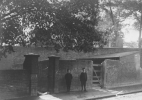
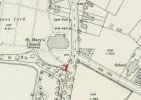
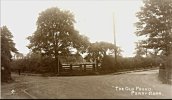
Handsworth Pound 1908 - St Mary's Church in the background,

This seems a relatively upmarket pound in comparison to the one in Northfield because it provides a sheltering roof as well as just enclosure...
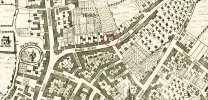
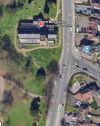
i wonder if this one was round about here..high wall and both showing the tips of headstones


Back
Top