
-
Welcome to this forum . We are a worldwide group with a common interest in Birmingham and its history. While here, please follow a few simple rules. We ask that you respect other members, thank those who have helped you and please keep your contributions on-topic with the thread.
We do hope you enjoy your visit. BHF Admin Team
You are using an out of date browser. It may not display this or other websites correctly.
You should upgrade or use an alternative browser.
You should upgrade or use an alternative browser.
NSU Quickley
- Thread starter mw0njm.
- Start date


Pete. I guess its like the electric bike, too small an engine and also the electric bike will not give you constant power.
PS if I suddenly disappear I have had instructions to make coffee @ 4
PPS I like the look of it, probably just about what I can handle.
PS if I suddenly disappear I have had instructions to make coffee @ 4
PPS I like the look of it, probably just about what I can handle.
Last edited:

lencops
gone but not forgotten
mw0njm, Have a look at this website. Len. https://www.users.globalnet.co.uk/~pattle/nacc/arcindex.htm
Re NSU Quickly, I bought one in 1966 second hand for £5. It was cream in colour and was a 2 stroke. Every 20 miles or so the plug became sooty and I had to stop, wait for it to cool, take it out, clean it with a wire brush and put it back. It went at a reasonable speed for a young lady who wanted independence and not to be tied to buses that finished before I was ready to go home. I sold it for a Honda 50 which was much more reliable.

Bill Parker
master brummie
An interesting company, when I hear that nmae I immediately think about the NSU Ro 80 the first production car witha Wankel rotary engine. I believe NSU became part of what we now know as Audi.

AlanM
master brummie
I had an NSU Quicky in the 70's to restore which I did. Unfortunately, unusual for me, I didn't keep a record of it's reg number. All I know is that it was a Quickly N and it was creamy white. I also had three NSU cars, a 1200TT and two 1000C models. Here's pics of the two 1000Cs.
Alan
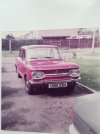
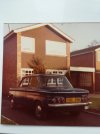
Alan

What a great post, and those photos of the NSU cars are gorgeous. Proper little time machines, aren't they?I had an NSU Quicky in the 70's to restore which I did. Unfortunately, unusual for me, I didn't keep a record of it's reg number. All I know is that it was a Quickly N and it was creamy white. I also had three NSU cars, a 1200TT and two 1000C models. Here's pics of the two 1000Cs.
Alan
View attachment 228621View attachment 228623
Of course, the Quicky was the little moped, my own pal had a Quicky back in the day – a funny little step-through thing that he absolutely adored. He used to buzz about by us on it for years.
The cars, though – those are what really stick in my mind. I think you’re thinking of the NSU Prinz, with that lower half that looked like a pie crust and the chrome trim right at waist height, you couldn't mistake one. Solid little things, I think German made?
I always thought they were superbly put together.
I do recall the RO80 was a car crash story. That rotary Wankel engine was such a novelty at the time. So smooth, so futuristic but my word, it caused them problems. I remember seeing them driving along, all sleek and modern, and then suddenly they'd be trailing blue smoke like an old banger. It was veins on the rotors wearing out. Replacing them was a pain, and expensive with it. Fair play to NSU, though, they honoured every warranty claim, often replacing whole engines for free, but it left them financially crippled.
Now, I always had it in my head that BMW bought NSU out – but I've since learned it was actually Audi (via Volkswagen) that did the deal back in 1969. Still, BMW definitely benefitted because a lot of NSU's top engineers ended up at BMW shortly afterwards. So I like to think that NSU's brilliant build quality helped shape those more luxurious BMWs we see today. It's a nice thought, anyway.
On the motorcycle front, I remember both Ducati and Triumph having a go at rotary engines too. The Ducati was a stunner – I think it had a twin-rotor engine – and it looked like something from a sci-fi film. The Triumph version is hazier in my memory, but I know they carried on developing it even after the Meriden factory closed down. They moved the project to a small place in Shenstone, and they actually did quite well with it.
The ironic thing is that rotary engines turned out to be much better suited to constant speeds than the stop-start life of a car. So Triumph ended up building them for aircraft – drones, I believe.