• Welcome to this forum . We are a worldwide group with a common interest in Birmingham and its history. While here, please follow a few simple rules. We ask that you respect other members, thank those who have helped you and please keep your contributions on-topic with the thread.

    We do hope you enjoy your visit. BHF Admin Team

National Trust Back to Back houses Inge Street & Hurst Street

as stockkie said might not be a bug.but a other wee beestie that likes the taste of you.. they loved the old horse hair plaster in the b2b houses
.If you've discovered bed bug eggs For upholstered furniture, a steamer can be a good option. Steam forms from water at 212°F, which is hot enough to instantly kill any bed bugs and their eggs.
 
well thomas you clearly have not studied social history...i was born in my nans back to back and lived there until i was 6 and my brother was 3....1 bedroom...1 attic shared by my mom ..dad..brother and nan ..1 tiny living room...cooker in the living room and coal fire...small pantry..shared toilets in the yard and shared dustbins..the houses were damp and very badly built which caused all sorts of problems..none of this was the fault of the people who lived in these houses..most people were very proud of the little they had and even living in poverty kept them very clean and tidy...my nan being a widow held down 3 jobs just to make ends meet her husband served in ww1 and died just before the start of ww2 leaving nan to raise 3 daughters by herself..nan lived in her back to back from about 1907 until about 1968...she just did not want to leave and was one of the last to leave her home due to demolition of what was called the slum clearances ..we continued to visit nan until she moved and i can honestly say i can not remember ever being unhappy living there..yes we can call them slum houses but please do not get the idea that the people who lived in them were slum people because it simply is not true...comments like yours can be very hurtful and can cause offence to those who through no fault of their own grew up in badly built houses and came out the other side...a testimony to their great strength of character and die hard attitude...
 
well thomas you clearly have not studied social history...i was born in my nans back to back and lived there until i was 6 and my brother was 3....1 bedroom...1 attic shared by my mom ..dad..brother and nan ..1 tiny living room...cooker in the living room and coal fire...small pantry..shared toilets in the yard and shared dustbins..the houses were damp and very badly built which caused all sorts of problems..none of this was the fault of the people who lived in these houses..most people were very proud of the little they had and even living in poverty kept them very clean and tidy...my nan being a widow held down 3 jobs just to make ends meet her husband served in ww1 and died just before the start of ww2 leaving nan to raise 3 daughters by herself..nan lived in her back to back from about 1907 until about 1968...she just did not want to leave and was one of the last to leave her home due to demolition of what was called the slum clearances ..we continued to visit nan until she moved and i can honestly say i can not remember ever being unhappy living there..yes we can call them slum houses but please do not get the idea that the people who lived in them were slum people because it simply is not true...comments like yours can be very hurtful and can cause offence to those who through no fault of their own grew up in badly built houses and came out the other side...a testimony to their great strength of character and die hard attitude...

lyn
As someone that lived on the same street as you Lyn, I take great offence at Thomas's response. To even suggest that it may have been the people and not the houses, is ignorant, insulting & condescending. The term slum, is derogatory and very misapplied in the case of the back to back housing. As been said in previous posts, poverty reigned, and these houses were built with this mind. Just the basics...give em' just the basics...and that's what got. Families were large and accommodations were small, quite the opposite to what we have today.
Dave A
 
As someone that lived on the same street as you Lyn, I take great offence at Thomas's response. To even suggest that it may have been the people and not the houses, is ignorant, insulting & condescending. The term slum, is derogatory and very misapplied in the case of the back to back housing. As been said in previous posts, poverty reigned, and these houses were built with this mind. Just the basics...give em' just the basics...and that's what got. Families were large and accommodations were small, quite the opposite to what we have today.
Dave A
You had to live in this type of accommodation or around it to even understand it.

When I was a child, we had our own back yard and toilet.

But what I never saw when I lived in this so called " slum area " was dumped rubbish and litter all over the place.

Nick .
 
As someone that lived on the same street as you Lyn, I take great offence at Thomas's response. To even suggest that it may have been the people and not the houses, is ignorant, insulting & condescending. The term slum, is derogatory and very misapplied in the case of the back to back housing. As been said in previous posts, poverty reigned, and these houses were built with this mind. Just the basics...give em' just the basics...and that's what got. Families were large and accommodations were small, quite the opposite to what we have today
 
You had to live in this type of accommodation or around it to even understand it.

When I was a child, we had our own back yard and toilet.

But what I never saw when I lived in this so called " slum area " was dumped rubbish and litter all over the place.

Nick .
I agree up to a point, Nick. The people who lived in Back to Backs even as children are growing older. But poverty still exists, we need empathy and knowledge to understand how the poor live if we did not live in poverty ourselves. In earlier times nothing was wasted, every scrap of paper, string and elastic band was kept. Mother was a gardener and would send me out on the streets of Bearwood with a bucket and shovel if there were horses about. It sounds ridiculous, but it is a way of managing the absence of money. Wallpaper was pinned to the walls with drawing pins.

Poverty is kept secret, so mom was not a visiter to neighbours, nor did she encourage them to visit her. We kept ourselves to ourselves. We did keep ourselves clean. We had home cooked food. We had our own outside toilet and cold water tap inside. This was a step up from my Aunt who lived in a cottage with an earth closet with water from a communal dipping well.

I didn't see the Monty Python sketch as a child. The comics were Cambridge types. We might say these days they should have checked their privilege. I appreciate my life experience. I know poverty still exists in Birmingham and elsewhere. Bad luck resulted in mom being a widow. I had a holiday in a children's home by the sea which has always reminded me of how fortunate I was compared to the lads for whom it wasn't a holiday. Derek
 
I agree up to a point, Nick. The people who lived in Back to Backs even as children are growing older. But poverty still exists, we need empathy and knowledge to understand how the poor live if we did not live in poverty ourselves. In earlier times nothing was wasted, every scrap of paper, string and elastic band was kept. Mother was a gardener and would send me out on the streets of Bearwood with a bucket and shovel if there were horses about. It sounds ridiculous, but it is a way of managing the absence of money. Wallpaper was pinned to the walls with drawing pins.

Poverty is kept secret, so mom was not a visiter to neighbours, nor did she encourage them to visit her. We kept ourselves to ourselves. We did keep ourselves clean. We had home cooked food. We had our own outside toilet and cold water tap inside. This was a step up from my Aunt who lived in a cottage with an earth closet with water from a communal dipping well.

I didn't see the Monty Python sketch as a child. The comics were Cambridge types. We might say these days they should have checked their privilege. I appreciate my life experience. I know poverty still exists in Birmingham and elsewhere. Bad luck resulted in mom being a widow. I had a holiday in a children's home by the sea which has always reminded me of how fortunate I was compared to the lads for whom it wasn't a holiday. Derek
Derek, I think our use of words may differ but what we are saying is similar. The fact that poverty was all round us if we had asked the residents "are you in poverty" how many would have said yes?
They may have said we are living "hand to mouth".
My father had good well-paid job, one of few families who had a car in the mid-fifties.
The kids I played with, nor the parents ever made any comment that our family were better off than most.

But we were kids playing in the street, on a wet days playing with lollypop sticks in the gutters. And had little thought of money.

The nice thing about the winter, was you could go up to the coal yard, for coal in a wheelbarrow and get sixpence to deliver it. At end of day had a few shillings in my pocket. To be asked by mom and dad where did you get that money from? Was able to buy some sweets.

You are correct poverty still exists and it's not going away, but it's not the poverty I remember from the fifties and sixties.

I'm proud of my background, it's made me the person I'm today.

Nick Phillips
 
You are welcome Covroad. I think we need to record social history for later generations. Do write down your memories and post on here. Derek
One of my regrets is that I always intended to sit down with my wife’s grandmother with a tape recorder to capture her stories of growing up in Birmingham, marrying having children and bringing them up in Small Heath (by the Blues) , ‘making do’ was the term she often used. Got through WW2 bombings of the area, and post war Birmingham.
I have her stories in my head, such as the BSA being bombed from the air, the whistle of the incendiary bombs dropping . Going to work the next day as though nothing had happened.
So I echo your comments to capture and record memories so they can be shared .
 
Derek, I think our use of words may differ but what we are saying is similar. The fact that poverty was all round us if we had asked the residents "are you in poverty" how many would have said yes?
They may have said we are living "hand to mouth".
My father had good well-paid job, one of few families who had a car in the mid-fifties.
The kids I played with, nor the parents ever made any comment that our family were better off than most.

But we were kids playing in the street, on a wet days playing with lollypop sticks in the gutters. And had little thought of money.

The nice thing about the winter, was you could go up to the coal yard, for coal in a wheelbarrow and get sixpence to deliver it. At end of day had a few shillings in my pocket. To be asked by mom and dad where did you get that money from? Was able to buy some sweets.

You are correct poverty still exists and it's not going away, but it's not the poverty I remember from the fifties and sixties.

I'm proud of my background, it's made me the person I'm today.

Nick Phillips
Thanks Nick, that's interesting. I think we have much to agree upon. You could fall further into absolute poverty in the 50s and 60s I'm sure. I bought a copy of Chris Upton's book on Back to Backs, I'll see what he says about their origins and earlier experiences there. But knowledge isn't only to be found in books The direction of this thread has been interesting and brought out some amazing material. Derek
 
well thomas you clearly have not studied social history...i was born in my nans back to back and lived there until i was 6 and my brother was 3....1 bedroom...1 attic shared by my mom ..dad..brother and nan ..1 tiny living room...cooker in the living room and coal fire...small pantry..shared toilets in the yard and shared dustbins..the houses were damp and very badly built which caused all sorts of problems..none of this was the fault of the people who lived in these houses..most people were very proud of the little they had and even living in poverty kept them very clean and tidy...my nan being a widow held down 3 jobs just to make ends meet her husband served in ww1 and died just before the start of ww2 leaving nan to raise 3 daughters by herself..nan lived in her back to back from about 1907 until about 1968...she just did not want to leave and was one of the last to leave her home due to demolition of what was called the slum clearances ..we continued to visit nan until she moved and i can honestly say i can not remember ever being unhappy living there..yes we can call them slum houses but please do not get the idea that the people who lived in them were slum people because it simply is not true...comments like yours can be very hurtful and can cause offence to those who through no fault of their own grew up in badly built houses and came out the other side...a testimony to their great strength of character and die hard attitude...

lyn
Amen to that Lyn!
 
Thanks Nick, that's interesting. I think we have much to agree upon. You could fall further into absolute poverty in the 50s and 60s I'm sure. I bought a copy of Chris Upton's book on Back to Backs, I'll see what he says about their origins and earlier experiences there. But knowledge isn't only to be found in books The direction of this thread has been interesting and brought out some amazing material. Derek

The people who lived in them were people like us, in my own case my parents and grandparents. My grandmother was born on a barge in Tipton Basin, but she became a domestic servant. Eventually she moved to leafy Edgbaston and as servants do, lived in shared accommodation in the attic.

She married the gardener who taught her to read and write. As a couple they could not live in, so they lived in Parker Street and walked to work each day. Eventually they were able to move to Reservoir Terrace off Osler Street Ladywood. This was an improvement as there was a small garden and they could enjoy the views of Rotten Park Reservoir. They lost two children, then raised my mother and her sister who attended school.

My Aunt moved to the countryside on marriage. My mom kept house for her invalid mother. Mom lived with Dad there until after the war he was able to take out a mortgage and move to Bearwood. And so I was born.

I am proud to say these are my people. Some of the houses were eventually 'little palaces'. There was a tremendous community spirit among the old neighbours I met. It is important to recognise that my Grandmother did 'better herself' from living on a barge (the canals were in recession then). They were able to attend Birmingham Botanical Gardens often. I've lived in a two up and two down house with one cold tap and no inside toilet, heated by a coal fire in the living room.

It would be easy to respond to your post with anger, but I think you need to show some empathy.
My dear neighbours opposite lived just like you describe, a widower and his mum till at least 1990. They both had ulcerated legs. Cold tap, outside loo except they knocked a door through to it off the kitchen, walls peeling, pitted oilcloth, lethal gas cooker, always on for a cup of tea for me or anybody who visited or helped them out. No washing machine. The mum slept on a camp bed in the front room she couldn't do the stairs. They used to help me out!
 
My dear neighbours opposite lived just like you describe, a widower and his mum till at least 1990. They both had ulcerated legs. Cold tap, outside loo except they knocked a door through to it off the kitchen, walls peeling, pitted oilcloth, lethal gas cooker, always on for a cup of tea for me or anybody who visited or helped them out. No washing machine. The mum slept on a camp bed in the front room she couldn't do the stairs. They used to help me out!
Thank you for your memory of your neighbours, Nico. We need to remember things like this. Derek
 
over the years quite a few people have asked what exactly is a back to back house..petes link above explains it perfectly but i was just thinking that what a fire hazard they were too..the best way i can explain to people who have never lived in one is to imagine 2 people standing back to back...the houses were joined with just one wall...the front house was facing the street the back house facing the yard...they only had 1 door to get in and out...as you entered a back to back house you went straight into a tiny living room..in the living room up the corner was a door leading up to 1 bedroom and 1 attic..we have read many newspaper reports on the forum of many tragic fires because if a bad fire broke out in the living room while everyone was asleep the only means of escape was from the bedroom windows...

lyn
 
over the years quite a few people have asked what exactly is a back to back house..petes link above explains it perfectly but i was just thinking that what a fire hazard they were too..the best way i can explain to people who have never lived in one is to imagine 2 people standing back to back...the houses were joined with just one wall...the front house was facing the street the back house facing the yard...they only had 1 door to get in and out...as you entered a back to back house you went straight into a tiny living room..in the living room up the corner was a door leading up to 1 bedroom and 1 attic..we have read many newspaper reports on the forum of many tragic fires because if a bad fire broke out in the living room while everyone was asleep the only means of escape was from the bedroom windows...

lyn
Birmingham Back-to-Backs is misleading as the first house you enter, the watchmakers, has a big living room and bay window. They have also converted 11 houses in the court to connect internally, so you can go upstairs to upper floors and walk through to what would have been another house by an internal door. It is difficult to get a sense of scale or orientation. All the windows face the yard, except for a look into an unrestored room facing Inge street and a section of blind wall towards the end of the tour. But the house is arranged so that tours can take place sequentially. I think that the watchmaker's house isn't a representative back-to-back, if indeed it is one. The complex is also three stories high. I wonder how this corresponds to the experience of older members who lived in a back-to-back?
 
Last edited:
Birmingham Back-to-Backs is misleading as the first house you enter, the watchmakers, has a big living room and bay window. They have also converted 11 houses in the court to connect internally, so you can go upstairs to upper floors and walk through to what would have been another house by an internal door. It is difficult to get a sense of scale or orientation. All the windows face the yard, except for a look into an unrestored room facing Inge street and a section of blind wall towards the end of the tour. But the house is arranged so that tours can take place sequentially. I think that the watchmaker's house isn't a representative back-to-back, if indeed it is one. The complex is also three stories high. I wonder how this corresponds to the experience of older members who lived in a back-to-back?
In all fairness, the description back-to-back is really a generic term for a style of construction. There were a number of variations on the theme of the basic principal of building cheap and not so cheerful accommodation to house the working class and to pack them in a densely as possible.

The argument about museum object authenticity is always going to be as long as it is short. To present the past in a present setting will always involve some compromise that will always attract the attention of the “it was not like that in my day” person. There are a couple of back-to-backs in the Black Country Museum that the public cannot go upstairs because it would not be safe.

My recollection of the Birmingham back to back was that most were three story’s.
 
It is possible to become allergic to horse-hair especially if the surface of the plaster is broken. There are builders who specialise in restoration, if needed.
There may be a theoretical risk of an allergic reaction to animal hair, but the risk I recall was from anthrax. Spores from anthrax can lie dormant for several hundred years. It’s a very nasty bacterial infection.
 
In all fairness, the description back-to-back is really a generic term for a style of construction. There were a number of variations on the theme of the basic principal of building cheap and not so cheerful accommodation to house the working class and to pack them in a densely as possible.

The argument about museum object authenticity is always going to be as long as it is short. To present the past in a present setting will always involve some compromise that will always attract the attention of the “it was not like that in my day” person. There are a couple of back-to-backs in the Black Country Museum that the public cannot go upstairs because it would not be safe.

My recollection of the Birmingham back to back was that most were three story’s.
Thanks Morturn, another reason to revisit the Black Country Museum as there is always plenty to see. In my mind, I thought Reservoir Terrace was two stories, but as I last saw the place in 1963 and we didn't invite ourselves inside, I might well have misremembered.

I welcome the National Trust's turn to working class history and looking back to the first post in this thread it seems that they gathered stories and people from the immediate area to be representative rather than the people who lived in Court 15 over the years. That's fair enough. Derek
 
Thanks Morturn, another reason to revisit the Black Country Museum as there is always plenty to see. In my mind, I thought Reservoir Terrace was two stories, but as I last saw the place in 1963 and we didn't invite ourselves inside, I might well have misremembered.

I welcome the National Trust's turn to working class history and looking back to the first post in this thread it seems that they gathered stories and people from the immediate area to be representative rather than the people who lived in Court 15 over the years. That's fair enough. Derek
The National Trust has been saving stately homes ever since it was set up. The Birmingham Back to Backs were an unusual project for them. The NT was very much all about the great man theory of history as if everyday people did not make history. They did not expect the attention, or the visitor numbers the back-to-backs generated. 30k people in the first year. I recall them saying it was a blip and would not continue the following year. It did of course as people sort to engage with a past that they could relate too. The popularity of the open museums like Beamish, Black Country Museum and Ironbridge should have told them that.

Just by coincidence, I was thinking exactly the same, a visit to the Black County Museum is well overdue.
 
i remember going with dad to fetch a settee and dressing table on a handcart from nans in washwoodheath back to nechells.and trying to get it through the door... talk about right said fred.

 
Last edited:
Was in a French back to back.It was beautiful inside. It had a yard at the front the owner had made in to a pretty garden.It was a shop in WW2 produce sold from the kitchen window. The oriel Window in the outhouse looked out on to a farm yard.
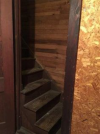
The stairs were really steep and spiralled I had trouble as I have big feet, pressing on to the wooden staircase walls, there was no hand rail. A lot of them still are just stuck on to each other at right angles with no backs.
My cousin here's cottage had a rope to hang on to to go up the stairs.
 
over the years quite a few people have asked what exactly is a back to back house..petes link above explains it perfectly but i was just thinking that what a fire hazard they were too..the best way i can explain to people who have never lived in one is to imagine 2 people standing back to back...the houses were joined with just one wall...the front house was facing the street the back house facing the yard...they only had 1 door to get in and out...as you entered a back to back house you went straight into a tiny living room..in the living room up the corner was a door leading up to 1 bedroom and 1 attic..we have read many newspaper reports on the forum of many tragic fires because if a bad fire broke out in the living room while everyone was asleep the only means of escape was from the bedroom windows...

lyn
The horror stories of oil lamps being knocked over and setting the place ablaze were passed down to later generations.
 
whe had a parafine heater in the living room.becouse it was always cold mom put the replacement bottle in the back.but it was not seated correct,so it flooded and ignigted the hot parafine fumes i was in so i dint think i just picked it up and threw it out side.
mom said it was silly thing to do. i could have been injured. ..i think it was better than the house burning down
 
Yes, you would remove the sashes and put a couple of ladders up the wall outside to guild the wardrobe up as you pulled it up with ropes. Someone would be pushing up at the bottom.
With a couple of pieces of old sacking or carpet to stop the back being rubbed on the ladders
learnt that when I helped my mates family move into HeyBarnes road
 
With a couple of pieces of old sacking or carpet to stop the back being rubbed on the ladders
learnt that when I helped my mates family move into HeyBarnes road
That's how my Nan's wardrobe went in. I moved in put in new windows had to smash it up to get it out.
 
I know the back to backs did not have baths fitted, people used the tin bath. In the social houses there were cast-iron baths, they weighed a ton. It used to take two of use to pick them up and move them inside.
 
Back
Top