• Welcome to this forum . We are a worldwide group with a common interest in Birmingham and its history. While here, please follow a few simple rules. We ask that you respect other members, thank those who have helped you and please keep your contributions on-topic with the thread.

    We do hope you enjoy your visit. BHF Admin Team

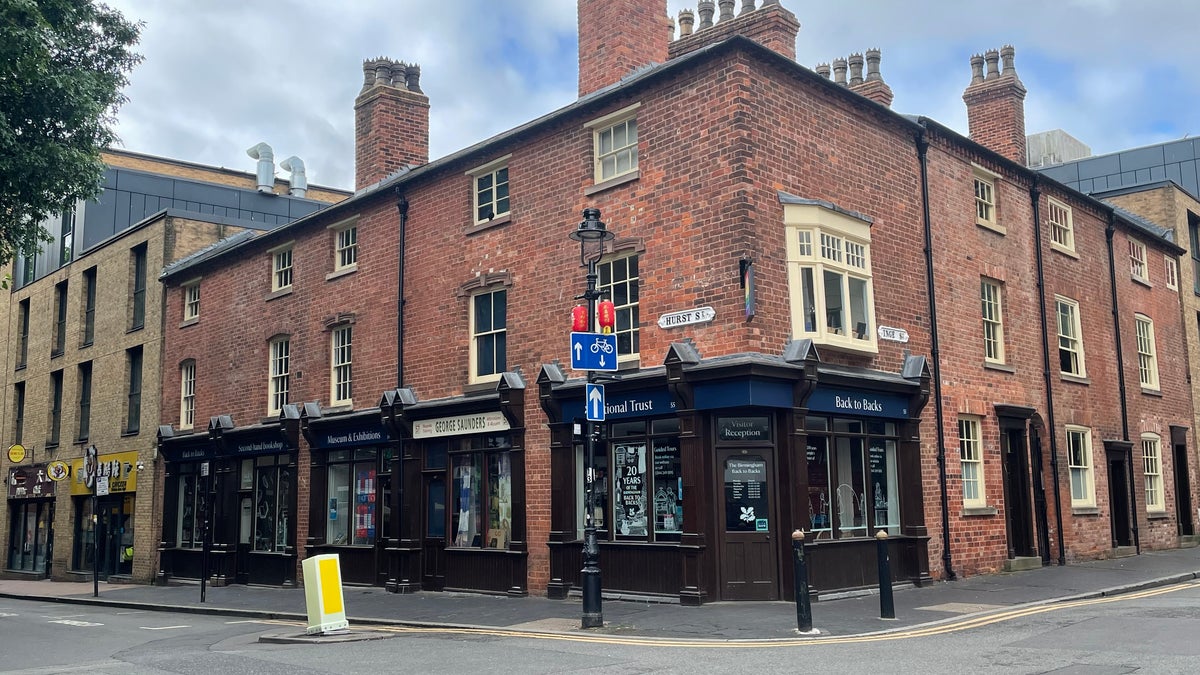
National Trust Back to Back houses Inge Street & Hurst Street

In my recollection it was often to be found underneath wallpaper, usually green and had a very strong smell.
The smell was most likely the glue size used either to make the distemper or used on the walls prior to wallpapering over the distemper.

Glue size was made from boiled up bones. We used to say it was made from boiled up horses. The smell when you made it up was horrendous.
 
Generally, distemper was used as it was a cheap solution for wall coverings as it had animal based glue in its make up . It was not that durable and marked / flaked easily, but was seen by most local authorities as a cheap, and available supply of wall paint to brighten the back to back and terraced type council housing stock at those times.
I only know this as a building design course I attended many years ago had a ex council housing manager on and distemper and it use came up in a discussion.
 
my first dog bought from pimms in the bham market had distemper and whent mad she had to be out to sleep:sob:

Distemper paintor is an ancient type of paint that can be traced back to the earliest eras of human history. It is an early form of whitewash made of water, chalk, and pigment, and it is often bound with an animal-based glue-like egg or the adhesive qualities of casein, a resin that comes from solidified milk.
Historically, distemper has been a popular interior paint for homes. In fact, it has been used since antiquity for painting walls and other types of house decoration. It is easily marked, but cannot get wet. Because it's not waterproof, it has been used almost exclusively for interior surfaces.
 
When I first started work in 1961 the painters had been using Walpamur water paint that came in a square cardboard box, it's texture was like butter, it had to be beaten in a tub and other things added to it before it could be used and applied with a whallop brush! Emulsion paint had only just arrived on the market for the first time so was ready to use straight out of the tin ( plastic containers came later on)
 
When I first started work in 1961 the painters had been using Walpamur water paint that came in a square cardboard box, it's texture was like butter, it had to be beaten in a tub and other things added to it before it could be used and applied with a whallop brush! Emulsion paint had only just arrived on the market for the first time so was ready to use straight out of the tin ( plastic containers came later on)
You may also recall Nine Elms Ceilingite another distemper that had to be prepared prior to application. It had a nice small of almonds

Im19490422ABN-Farmiloe.jpg
 
Interestingly, in the cholera epidemics of the mid nineteenth century, abstinence from drink (alcohol) and whitewashing the walls was suggested as a means of protection against cholera.
 
We had some toxic wallpaper for a set built for Pebble Mill in the early 1980's, it was a hand blocked William Morris pattern and probably cost a ludicrous amount of money. It was much wider than standard wallpaper and it had to be trimmed by hand using a 6ft steel straight edge. It smelled strongly and had powder coming off it and after using it on the set two of us has red blotches all over our hands that took a week to clear up.
 
I've never been to Back to Backs, so I've booked myself in. I saw the outside of Mom's house in Reservoir Terrace before they pulled it down and inside a much renovated one of her friend's also in Ladywood. It will be interesting to see the story they tell and how the building is presented. I expect it will be clean and tidy and rather idealised like the servants' quarters in bigger houses.
 
We had some toxic wallpaper for a set built for Pebble Mill in the early 1980's, it was a hand blocked William Morris pattern and probably cost a ludicrous amount of money. It was much wider than standard wallpaper and it had to be trimmed by hand using a 6ft steel straight edge. It smelled strongly and had powder coming off it and after using it on the set two of us has red blotches all over our hands that took a week to clear up.
By coincidence it is the William Morris wallpapers that have proved to be quite toxic
 
Many old houses had kitchen chimneys which usually were for the wash tub - called a 'copper' (in Devon anyway) as that was what the bowl was usually made from. Some chimneys it seems were for cast iron fire grates which had an oven and a warmer plus a top hob.
View attachment 144988 These can be seen at the Black Country Museum.
I wonder how many here have black leaded them in the past or when visiting grandparents or other older relatives were asked to help?
View attachment 144989
If you liked steam then this was the place to be. It was a whole mornings job in a way, fire had to be lit, water heated to very hot - none of the low temperatures (which don't kill many bugs) of today.
I can still see my dear mother-in-law working hard with the wash - always on Monday of course.
The more modern - at the time before electric washing machines - was a gas boiler, often with a copper bowl.
View attachment 144990
The fire grates, washing bowls and gas appliances were most likely made in Birmingham or the Black Country. I guess there is a thread about them.

we had all 3 mom black leaded our range. there was tub like in pic 2 in the brew house outside, and the council boiler that had a rubber pipe conecting it to a fitting on the wall. no H&S then
 
By coincidence it is the William Morris wallpapers that have proved to be quite toxic
I went for lunch once with my colleagues in an ancient boarded building. It had remnants of the original wallpaper with notices not to touch as it was toxic. There was an episode of Doc Martin dealt with this with Miryam Margoyles's character getting poisoned and hallucinating from the old flock wallpaper.
 
My late Wife and I lived in a back house in the 50's in a court yard in Aston, a living room a bedroom and a leaking attic it was terrible, rotting window frames, damp with peeling wallpaper, mildew, outside toilets, 4 shared by 12 houses, freezing cold in the winter. The only good thing was the cheap rent allowing us to save a deposit for a 'real' house that much quicker, it was paradise to have a kitchen, bathroom indoor toilet 3 bedrooms and warmth. Those restored houses in Hurst Street are nothing like the real thing, they are practically rebuilt. Eric
Born in one in 1944, up a courtyard, and lived there for 14 years.All you said, plus bed bugs and mice! Both of which my dad regularly hunted! We lived in Bishop Street near the markets. It did make me very grounded though and taught me to appreciate how relatively well off I became.And to feel empathy to the homeless or people in crap housing.Consequenyly I saved to buy my own house in Halesowen before I married.
It was all about the area you lived.Posh people called them Bomb Sites we called them Bombed Pecks.
Yes,a peck's a peck. Absolutely.
 
The scullery of a back-to-back house in Hockley, and the living room of a back-to-back house in Small Heath.

(From the above Thesis by Emma Dwyer, 2014. Pictures taken by Bill Brandt for the Bournville Trust in 1939)

View attachment 156629View attachment 156628
Th
When the National Trust first opened those houses they invited an old lady, a former resident, to have a look and she was disgusted at how their "experts" had perceived living conditions in those times pre WW2.
There were no fancy lace curtains, pretty wallpaper, all nicely plastered walls etc she said, just cold, damp walls, rotting window frames and draughty rooms. Her and her siblings always hungry with runny noses from a cold that went on for weeks. Seeing their neighbour have debt collectors take everything except one bed and one chair because they were behind with the rent.

I remember a big search they made for a correct chimney pot of all things whilst someone was busy inside making it look pretty.
I realise health and safety are involved but as someone who worked in TV scenery I had to age and weather sets accordingly. They should therefore have engaged a scenic painter to replicate the peeling paint and wallpaper, stained and damp walls and ceilings, broken glass in some windows with paper stuck over it. A Typical NT restoration unfortunately.
Great article.Says exactly what I felt when I visited them a few years ago.And I was born half a mile away in Bishop St. in 1944, so I remembered exactly what they were like.
 
Whitewash was made by soaking quicklime (CaO) in water.Applying this to wood was sufficient to kill most bacteria on the surface
 
Whitewash was made by soaking quicklime (CaO) in water.Applying this to wood was sufficient to kill most bacteria on the surface
Tallow , in my time as an apprentice electrician we would use tallow as a lubricant for threading conduit . After a day of cutting and thread tube the smell would permeate your clothes.
You would always plan to complete all cutting and threading as early as possible in the week to avoid going out on a Friday night without the fragrance of tallow on you
 
Tallow , in my time as an apprentice electrician we would use tallow as a lubricant for threading conduit . After a day of cutting and thread tube the smell would permeate your clothes.
You would always plan to complete all cutting and threading as early as possible in the week to avoid going out on a Friday night without the fragrance of tallow on you
We used to buy tallow candles for our saws too.
 
Born in one in 1944, up a courtyard, and lived there for 14 years.All you said, plus bed bugs and mice! Both of which my dad regularly hunted! We lived in Bishop Street near the markets. It did make me very grounded though and taught me to appreciate how relatively well off I became.And to feel empathy to the homeless or people in crap housing.Consequenyly I saved to buy my own house in Halesowen before I married.

Yes,a peck's a peck. Absolutely.
What did you do to get rid of the bed bugs
 
Not a back to back, no back, but I discovered my birth father's family had lived with 10 children in a farm cottage which came with a job. There was no living room as the downstairs bit was a barn, then a small room with the stairs in, kitchen with an over mantle and a scullery. Two bedrooms upstairs, The front door was up a flight of steps right on the road the back door opened on to a field with a pond with the back of the pigsty at right angles leading off the cottage. Water was fetched from a spring. The children used to run and jump off the pig sty roof to clear the pond till one fell in and almost drowned. My Birth Granny rescued them.
 
Incidentally my old house, built in 1906 had a very small back garden with a shared entry by 4 people, pretty common I suppose but my old neighbour told me there was one water pump on her yard shared by the 4 houses that had rear entry access. They used to have little iron railings on the forecourts at the front which were sawn off and melted down for the war effort but were totally useless but said to be good for morale!
 
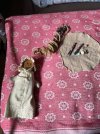
Visited for the first time yesterday. The doll is made from a shoe, skipping rope from bobbins. Peggy dolls. View from button makers window. His stock of glass eyes out of sight in the drawer. A tour with a party of 8 including guide. Most of us old Brummies familiar with damp and outside toilets though we had no first hand experience in living in a Back-to-Back as I know others here have. The tour moves from house to house and the set is dressed with props brought in from National Trust Stock. An engaging guide who encouraged questions. I looked down the cellar and we went to the unrestored front of the property in Inge St which had crumbling plaster and filth. Plenty of discussion of vermin, disease and infant mortality. There were a couple of sound recordings of people who had lived there. On the whole not a bad representation of working class life given they don't have the space of the Black Country Museum.
 
Back
Top