• Welcome to this forum . We are a worldwide group with a common interest in Birmingham and its history. While here, please follow a few simple rules. We ask that you respect other members, thank those who have helped you and please keep your contributions on-topic with the thread.

    We do hope you enjoy your visit. BHF Admin Team

National Trust Back to Back houses and memories of them

i can remember 2 of us at the top of the bed and one at the bottom of a big bed crammed into a small bedroom the pillows were double size and mom called them bolsters and we was covered with a big eiderdown and a great coat,a big jug and bowl on the dressing table to wash in
our brewhouse was down the rd next to the loo/
the wooden cloths horse left brown stains on the cloths
A great coat - thats a term from the old days. More often than not I think it belonged to someone that had been in the Army.
 
love mrs hadley still washing the old fashioned way in 1970...nice video pedro i had not seen it...great thing about the birmingham back to backs is that they have not moved since the day they were built..

lyn
I have been talking to many over the years, how so many babies were lost during washing day. And not just washing day. So sad. Women worked so hard well everyone did but there were no concessions for them then
 
Hi all!

I am looking for information about the people who once resided in what is now the National Trust's Back-to-Back property at the corner of Inge Street and Hurst Street. The National Trust gives some information on the Mitchell's, the Oldfield's, and claims that a Jewish family, the Levy's, also lived there. I have looked through some of the census records and cannot seem to find any record of the Mitchell's living in Court 15, only at 24 Hurst Street and 53 Inge Street! As for the Levy's, the record shows that they lived at 28 Hurst Street, not in the NT property itself!

I am writing a project for a National Trust internship on "home beyond the four walls" and was hoping to find some evidence of community formed in the courtyards of the back-to-back homes. If anyone has any information regarding the NT property, or stories of community in any Birmingham back-to-back then I would be very grateful to hear it.

Thank you!
I heard recently that the house numbers were changed but I don’t know when that was. Might this account for differing numbers?
 
I heard recently that the house numbers were changed but I don’t know when that was. Might this account for differing numbers?
Welcome to the forum, Toothypegs! Generally houses were renumbered when the courts ceased to be referred to. But I think that the names and personal stories in 'Back to Backs' have been selected and arranged to form a representative narrative. They cover a wide time period and it would be interesting to go through the census records systematically.

But I think that different elements were put together to make a representative story of inner city Birmingham. The current museum has been rebuilt and arranged to tell a symbolic story to lead visitors through local history.
 
Welcome to the forum, Toothypegs! Generally houses were renumbered when the courts ceased to be referred to. But I think that the names and personal stories in 'Back to Backs' have been selected and arranged to form a representative narrative. They cover a wide time period and it would be interesting to go through the census records systematically.

But I think that different elements were put together to make a representative story of inner city Birmingham. The current museum has been rebuilt and arranged to tell a symbolic story to lead visitors through local history.
Derek, can you clarify what is meant by “when courts ceased to be referred” means? The rest of your comments, totally agree! Thank you….
 
Derek, can you clarify what is meant by “when courts ceased to be referred” means? The rest of your comments, totally agree! Thank you….
Richard, the courts or courtyards were sometimes given names or sometimes numbers. Both appear on maps and in addresses, like the census. The courts ceased to be part of the official address sometime in the early 20C. I'm not sure when though.

There is a thread on the numbering of houses with Mikejee's informed comment:
https://birminghamhistory.co.uk/for...cks-courts-and-houses-and-street-names.53233/

So with back-to-back houses each house would have two numbers so 3/244 would be read as house number 3 in the terrace at the back of house 244 in the street. (To use Eric Gibson's example in that thread.)

The names of courts can cease to be used and more regular numbering introduced within a decade or two. Working out who lived where and in which court or terrace can be very difficult.

In the National Trust Back-to-Backs Chris Upton's book Living Back to Back is very useful. His research formed the narrative in the leaflets and information boards there. Court 15 has various houses connected together.
http://www.birminghamconservationtrust.org/our-projects/bct-finished/back-to-backs/

The present address of Back-to-Backs is 55-63 Hurst Street/50-54 Inge Street as it is on a corner plot.

If I've blundered in my explanation then do correct me anyone. I knew Ladywood which did not have named or numbered 'courts' at least in the early 1960s, but back to backs in terraces.

Derek

 
Last edited:
Richard, the courts or courtyards were sometimes given names or sometimes numbers. Both appear on maps and in addresses, like the census. The courts ceased to be part of the official address sometime in the early 20C. I'm not sure when though.

There is a thread on the numbering of houses with Mikejee's informed comment:
https://birminghamhistory.co.uk/for...cks-courts-and-houses-and-street-names.53233/

So with back-to-back houses each house would have two numbers so 3/244 would be read as house number 3 in the terrace at the back of house 244 in the street. (To use Eric Gibson's example in that thread.)

The names of courts can cease to be used and more regular numbering introduced within a decade or two. Working out who lived where and in which court or terrace can be very difficult.

In the National Trust Back-to-Backs Chris Upton's book Living Back to Back is very useful. His research formed the narrative in the leaflets and information boards there. Court 15 has various houses connected together.
http://www.birminghamconservationtrust.org/our-projects/bct-finished/back-to-backs/

The present address of Back-to-Backs is 55-63 Hurst Street/50-54 Inge Street as it is on a corner plot.

If I've blundered in my explanation then do correct me anyone. I knew Ladywood which did not have named or numbered 'courts' at least in the early 1960s, but back to backs in terraces.

Derek
Thank you for that explanation! Actually I thought it was quite good.
I have seen mikes comments which I thought was helpful as was Eric’s.
Thank you again!
 
Find My Past Podcast in collaboration with the National Trust. Episode 2: Birmingham Back to Backs.
(scroll down to Episode 2 and press Arrow, not listen now )

 
Find My Past Podcast in collaboration with the National Trust. Episode 2: Birmingham Back to Backs.
(scroll down to Episode 2 and press Arrow, not listen now )

Find My Past Podcast in collaboration with the National Trust. Episode 2: Birmingham Back to Backs.
(scroll down to Episode 2 and press Arrow, not listen now )

I found this podcast very interesting as I was born in the area covered and recognised all the street names,Essex Street,Horsefair,Dudley St.etc.I was actually born in Bishop St
which is the last street at the bottom of Hurst Street where the back to backs are. It was lovely to hear all these places from the past being broadcast on a national podcast.
 
I found this podcast very interesting as I was born in the area covered and recognised all the street names,Essex Street,Horsefair,Dudley St.etc.I was actually born in Bishop St
which is the last street at the bottom of Hurst Street where the back to backs are. It was lovely to hear all these places from the past being broadcast on a national podcast.
I thoroughly enjoyed the day doing the recording with Find My Past and Suzannah Lipscomb. It bought parts of my family history to life in a way that I couldn't have imagined.
 
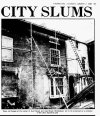
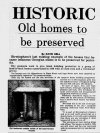
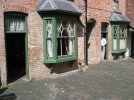
An article written when listed building status was sought in 1988. I don't think the bay windows were retained as part of the restoration. Pity, as the panes had some nice detailing.

I wondered if the addition of the bays was a Victorian addition. And if removing them took them back to their original 1789 style of windows.
Screenshot_20251125_090516_Chrome.jpgScreenshot_20251125_090522_Chrome.jpg

Screenshot_20251201_143737_Maps.jpg
 
Last edited:
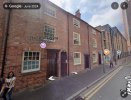
That's great, thanks Mort and William. Glad to see the windows are still there. Does anyone know if these would have been later (Victorian?) added features to the original 1780s houses ?

The reason I ask is, I know some back-to-backs were part of a modernisation programme in the 20th century but wondered if other attempts to modernise them went further back than that.
 
Last edited:
was at a castle open day a few years ago in chirk, when a woman guide said to me have you been to the back to backs in brum? "been! i said i was born in one and remember the bed bugs" she was stuck for words
I hope you told her the NT restoration is pure fantasy and does't reflect the hard times and struggle that many tenants suffered. No damp stains creeping up or down the wallpaper ?, no cardboard over a broken window because the landlord would not repair it?. Nicely painted windows and doors outside. It's far too pretty pretty.
l worked on Pebble mill TV scenery and had to replicate the sets of all sorts of buildings by ageing them accordingly using special paint effects but l guess they just use construction painters and decorators.
 
I hope you told her the NT restoration is pure fantasy and does't reflect the hard times and struggle that many tenants suffered. No damp stains creeping up or down the wallpaper ?, no cardboard over a broken window because the landlord would not repair it?. Nicely painted windows and doors outside. It's far too pretty pretty.
l worked on Pebble mill TV scenery and had to replicate the sets of all sorts of buildings by ageing them accordingly using special paint effects but l guess they just use construction painters and decorators.
One set of grandparents (I have four due to my personal circumstances) lived in a back to back. Their's had no back to it at all. All the windows were at the front the coal cellar was accessed from the front. They were nomadic as they got a cottage with a job often. One I was able to go inside where they had lived, did have a back which was a rough field a tiny pond and a spring. The front was dangerously near the road with treacherous steps up and no hand rail. A small scullery and a tad bigger room with a fireplace, we were told it was the. kitchen, plus a 3rd tiny room which had the stairs in it. Don't know about upstairs it was too dangerous to go up but there were 10 children. It looks like the upstairs went over the top of next door which was the pig stye.
 
I hope you told her the NT restoration is pure fantasy and does't reflect the hard times and struggle that many tenants suffered. No damp stains creeping up or down the wallpaper ?, no cardboard over a broken window because the landlord would not repair it?. Nicely painted windows and doors outside. It's far too pretty pretty.
l worked on Pebble mill TV scenery and had to replicate the sets of all sorts of buildings by ageing them accordingly using special paint effects but l guess they just use construction painters and decorators.
i sure did i told her it was shear hell living in them slums, and the time the bedroom ceiling falling on us 3 kids in one bed icovering us in bugs dead rats etc in a small damp mouldy room no loo no bathroom to have wiz you put your coat on and went down the road to a loo in the washing earia where you sat on a wood plank and used newspapers to wipe your six. mrs you dont now what hardship is you would not last a day so do not say the good old days
my sis and i had consumtion she went away to deven convelecent home
 
i get where you are coming from izzy i myself was born in my nans back to back and lived there until i was 6..continued visiting nan until she moved out in the late 60s.. but the whole point of the back to backs is that they are all original buildings in situ... i dont know if you have ever visited but ive been many times over the years and they still have that old smell and one or 2 rooms are left just as they were when the last tenant moved out especially the tailors with all his tools of his trade and the tour guides make it quite clear that life was no picnic...luckily they had a lot of donations of original household items to fill the houses with and i think have done a splendid job given the guidlines they had to adhere to...due to health and safely they had to draw the line at one or two rats running around the yard :D i still cant help but think that birmingham missed a trick or two about 50 years back by not developing a large site around the back to backs as an outdoor museum dedicated to the social and industrial history of birmingham (the city of a 1000 trades) my vision would have been having the back to back houses in the centre and then surround them with our industrial buildings..they could have easily have dismantled plenty old buildings and rebuilt them when they were still standing and had the chance...what a wonderful tribute to the city and its people that would have been..and lets not forget it was the national trust that saved the back to backs not the council who in my opinion have still not learned any lessons or have little or any vision at all in the preservation of our history..

lyn
 
Last edited:
I've merged two threads about the National Trust Back-to-Back houses into this one thread. There may be earlier unseen posts.
 
Back
Top