Thank you Paige. I hope you find him. Do come back to us and let us know how you get on or if we can help you. If you are Canadian the records in Birmingham archives are copied there. I think there are about 88,000 children recorded so far, but many more were emigrated.Hi, yes his name was Donald Bingham 08/07/1913 and was on the ship Newfoundland. I believe his mother died not long after child birth so I assume this may be why he was sent there.
Thank you I will have a look through the website!

-
Welcome to this forum . We are a worldwide group with a common interest in Birmingham and its history. While here, please follow a few simple rules. We ask that you respect other members, thank those who have helped you and please keep your contributions on-topic with the thread.
We do hope you enjoy your visit. BHF Admin Team
You are using an out of date browser. It may not display this or other websites correctly.
You should upgrade or use an alternative browser.
You should upgrade or use an alternative browser.
Middlemore Children’s Emigration Homes
- Thread starter Dennis Williams
- Start date

MWS
from Bham
Hi, yes his name was Donald Bingham 08/07/1913 and was on the ship Newfoundland. I believe his mother died not long after child birth so I assume this may be why he was sent there.
Thank you I will have a look through the website!
Son of Ernest and Ada? Her death appears to have been reg. Dec qtr 1914.
Donald is still with his father and brothers in 1921.
This Birmingham play about the Middlemore homes is available, via Balsall Heath History Society, on YouTube. It's quite a long play but well worth the watch!!

nutjobdubai
Brummie babby
My grandfather, tow siblings and two cousins were sent in 1909. I spent a few years tracing them and eventually found a whole new extended family, in New Brunswick, I never knew existed. I went over in 2015 and re-traced some of his steps using old maps and also went to the farms where he worked. I have the utmost respect for all those kids. I have still not stopped researching but I'm having a sabbatical because it can easily take over your life. To be continued .....

Pedrocut
Master Barmmie
“Between 1885 and 1916, Sir John Middlemore's Children's Emigration Homes resettled more than 3,000 indigent British youth from the streets of Birmingham to Maritime farms. While their transition was anything but easy, these emigrants were more than mere reactionaries to circumstance. Fifty-four per cent of New Brunswick's Middlemore boys volunteered for military service with the Canadian Expeditionary Force with the onset of the Great War (almost one in six were underage). While motivations for enlistment varied, many Middlemore boys had an overwhelming need to return to the familiarity of home and to reconnect with family members once left behind…”
The Middlemore Boys::Immigration, Settlement, and Great War Volunteerism in New Brunswick. CURT MAINVILLE
The Middlemore Boys::Immigration, Settlement, and Great War Volunteerism in New Brunswick. CURT MAINVILLE
Thanks Pedrocut, an interesting recent paper that can be downloaded and read free of charge. Which is a change for academic publications. Derek“Between 1885 and 1916, Sir John Middlemore's Children's Emigration Homes resettled more than 3,000 indigent British youth from the streets of Birmingham to Maritime farms. While their transition was anything but easy, these emigrants were more than mere reactionaries to circumstance. Fifty-four per cent of New Brunswick's Middlemore boys volunteered for military service with the Canadian Expeditionary Force with the onset of the Great War (almost one in six were underage). While motivations for enlistment varied, many Middlemore boys had an overwhelming need to return to the familiarity of home and to reconnect with family members once left behind…”
The Middlemore Boys::Immigration, Settlement, and Great War Volunteerism in New Brunswick. CURT MAINVILLE
nutjobdubai
Brummie babby
My grandad, William Danks and his two elder siblings, John Joseph and Isabella Margaret. Shipped out on the SS Carthaginian in May 1909. Their two cousins james Thomas and Mary Nellie followed them a year later. In 1933 John Joseph's sons were sent out after his death. So sad!
Attachments
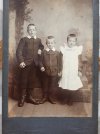
Thank you for sharing your photos and family story. It is good that you were able to visit Canada and find that you have family there. There is a lot of research going on in Canada into the contribution British Home Children have made to the growth of the Canadian state in the early 20C. I hope the Danks did well, but as you say it is terribly sad. DerekMy grandad, William Danks and his two elder siblings, John Joseph and Isabella Margaret. Shipped out on the SS Carthaginian in May 1909. Their two cousins james Thomas and Mary Nellie followed them a year later. In 1933 John Joseph's sons were sent out after his death. So sad!
Reasons as to why children were sent away varied. Some were genuinly orphaned whereas others lived in such abject poverty, they were often starving and suffered from malnutrition. My Wyre (also known as Weir) family had 6 children sent to Canada in 1923 with a 7th who was too ill to travel following the following year.
Their father was invalided in the first world war and could not work, causing the poverty. Mum had many children to look after and could not work either. They lost a daughter as an infant in 1921 and by this time, Mum had taken to the bottle. The story goes that the council arrived at the home one night and seized the children and took them to Middlemore and later to Canada. On arrival they were all separated and went to different homes.
In the 1980's, Kenneth Bagnell wrote 'The Little Immigrants' and this tells the poignant story of the Wyre/Weir children. Horace the eldest was as an adult to search for his siblings and found many of them.
Their father was invalided in the first world war and could not work, causing the poverty. Mum had many children to look after and could not work either. They lost a daughter as an infant in 1921 and by this time, Mum had taken to the bottle. The story goes that the council arrived at the home one night and seized the children and took them to Middlemore and later to Canada. On arrival they were all separated and went to different homes.
In the 1980's, Kenneth Bagnell wrote 'The Little Immigrants' and this tells the poignant story of the Wyre/Weir children. Horace the eldest was as an adult to search for his siblings and found many of them.
Dedicated to all who experienced Child Immigration 1618-1967
Forgotten Children
by Walter Richard Williams
Forgotten Children
by Walter Richard Williams
| Can anybody hear me I'm neither brave nor bold, I'm just a child from Birmingham I'm only 9 years old, We're standing on the cold deck Franconia is her name, they say it's high adventure but it doesn't feel the same, Mommy's taken poorly Daddy just can't work, Injured in the Great War fighting in the dirt, We're sailing off across the sea, a better life they say There's seven of us children, but Mommy and Daddy stay. Please don't forget us Mommy, please bring us back some day, Don't leave us in this wilderness, don't hurt us Lord we pray. We're going on holiday, across the ocean blue, but something just don't seem right, shouldn't Mommy and Daddy too, They say we'll all learn farming, Whatever that may mean, We'll love the pigs, hug the sheep, and keep the stable clean, They mention things like "young blood", to help the country grow, Beatrice 3, Louis 10, seven birthdays in a row, I lost them at the station, they said it's for the best, I don't like the look of this they're taking off my vest. Please don't forget us mommy Please bring us back some day, Don't leave us in this wilderness, Don't hurt us Lord we pray. | I'm told I'm fit and healthy they put me on a train, for what seemed like forever I traveled in the rain, A man was there to meet me, He didn't seem to care, That I was cold and hungry in the middle of nowhere, "work hard" he said, and then you'll eat, Co's that's the way things go So wipe them tears from your eyes You're Mommy and Daddy know, "I'll teach you how to farm" he yelled, then beat me with a stick, I've had not food for 3 long days Oh Mommy I feel so sick. Please don't forget us Mommy, Please bring us back some day, Don't leave us in this wilderness Don't hurt us Lord we pray. 60 years we've been here they never told us why, After 30 years I found the rest. I couldn't even cry, Some were lucky, some were not but one thing we all shared, Our families had forgotten us and no-one really cared. We can't go back to England, as no-one knows we're here, Maybe the day will come about Some family will appear. Then we can tell our story, Orphans we are not - Just forgotten children Of this lonely plot..... |
The first chapter in the book by Kenneth Bagnell, The Little Immigrants, tells the story of Horace Weir for whom this poem was written.
an online excerpt of this book can be seen at:
"The Little Immigrants"
an online excerpt of this book can be seen at:
"The Little Immigrants"


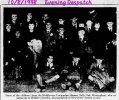
A group of Middlemore children who went out to British Columbia. Not a great photo, but it might spark some memories or possible names.
Source: British Newspaper Archive
Source: British Newspaper Archive
Some girls and boys at Middlenore home. Pity they aren't named. Hopefully, they had good lives wherever they finally settled. 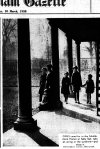
Source: British Newspaper Archive
Source: British Newspaper Archive
Pedrocut
Master Barmmie
A group of Middlemore children who went out to British Columbia. Not a great photo, but it might spark some memories or possible names.
View attachment 217241
Source: British Newspaper Archive
Could the boys in this post be the same ?
Quite possibly Pedro given the date. I can't help but think how strong these children had to be. Were the groups of Middlemore children who went out together usually split up with regards to their final locations ?
Pedrocut
Master Barmmie
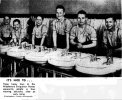
By 1938 Middlemore had changed from an overall “end to end” care system to become a feeder into a larger migration system. In 1935 Middlemore came to an agreement with the Fairbridge Society to recruit from “Special Areas” in northern England. The children would arrive at the Fairbridge Prince of Wales Farm school in Vancouver Island, which had been set up in 1935. They would be first accommodated and trained before being placed out.
The children in the pictures above left Liverpool at midnight on the 14 August 1938 in the ship “Dutchess of Richmond.” They arrived at Southampton on the Tuesday morning before sailing to Montreal. Lord Stanley, the Dominions Secretary, boarded at Southampton to travel to open an exhibition in Toronto.
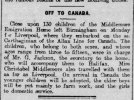
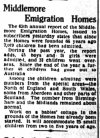
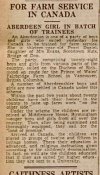
The 12th August 1938 report in the Aberdeen Press and Journal is shown below, and gives the name of one of the girls as 13 year old Pearl Daniel.
[LATER CORRECTION….The report gives the ship as the Dutchess of Richmond, but Pearl appears open Ancestry Passenger lists on the Dutchess of York that sailed on the 11 August 1938]
The children in the pictures above left Liverpool at midnight on the 14 August 1938 in the ship “Dutchess of Richmond.” They arrived at Southampton on the Tuesday morning before sailing to Montreal. Lord Stanley, the Dominions Secretary, boarded at Southampton to travel to open an exhibition in Toronto.
The 12th August 1938 report in the Aberdeen Press and Journal is shown below, and gives the name of one of the girls as 13 year old Pearl Daniel.
[LATER CORRECTION….The report gives the ship as the Dutchess of Richmond, but Pearl appears open Ancestry Passenger lists on the Dutchess of York that sailed on the 11 August 1938]
Last edited:
There were schemes for British adults to go out to Canada as farm workers, too. Maybe some children ended up working with British workers. I hope the opportunities they got were better than if they'd remained in England. And the possibility of a university education, even if at most for only a chosen few, would have been completely out of the question here.
Pedrocut
Master Barmmie
A group of Middlemore children who went out to British Columbia. Not a great photo, but it might spark some memories or possible names.
View attachment 217241
Source: British Newspaper Archive
Going back to this picture, the caption says some of the children from Middlemore Homes at New Street Station on the 10th August 1938 bound for British Columbia. They sailed on the ship Dutchess of York (Canadian Pacific Line) which would sail to Quebec and Montreal on the 11th, the next day.
The article in post 109 from the Aberdeen Press has mistakenly named the ship as the Dutchess of Richmond which sailed on the 14th August. However the number of children is given as 28 and includes the name Pearl Daniel who appears on the list for the Dutchess of York below…
The passenger list for this ship can be found on Anxcestry UK.
Davies, Kenneth – age 12
Kyte-Powell, Ralph – age 13
Newell, John – age 13
Lukins, Barbara – age 11
Fenton, Joseph – age 13
Fenton, Robert – age 11
Milne, John – age 8
Dobbs, Amelia – age 10
Caldwell, Margaret – age 8
Daniel, Pearl – age 13
Gunnell, Ronald – age 9
Hancock, Ronald – age 7
Spittles, Gladys – age 5
Coyne, Florence – age 33 (likely escort / adult)
Stockbridge, Trevor – age 12
Tipler, Philip – age 11
Hunt, Ivor – age 1
Florendine, Eva – age 11
Florendine, Thomas – age 8
Florendine, Zillah – age 21 (likely older trainee / domestic)
Florendine, Susan – age 19 (likely domestic / helper)
Turner, George – age 9
Strawbridge, Brian – age 9
Mein, Ernest – age 7
Meers, William – age 8
Meers, Thomas – age 6
Cockburn, Robert – age 8
Mein, June – age 11
Mein, Jenny – age 9
Cockburn, Eunice – age 12
This is 30 (2 helpers ?)…and the article says 28 from various parts of the country, and includes the name Pearl Daniel.
Some so very, very young. On the one hand I find this very upsetting, on the other the biggest hope is that these children had better lives in Canada. Good to see some siblings were obviously kept together.
Thanks Pedro. The more names typed into this thread, the better as they will be picked up by Internet searches for other people researching (possibly 'lost') family members.
Thanks Pedro. The more names typed into this thread, the better as they will be picked up by Internet searches for other people researching (possibly 'lost') family members.
Last edited:
Pedrocut
Master Barmmie
Indeed it is upsetting. Middlemore Homes seems to have changed after the death of John Throgmorton Middlemore around 1924. Canada had changed their immigration policies and children were also sent via the Fairbridge Society to Australia and other parts. The Society features a lot in the abuse scandals. In the 1938 list above there are only two children from Birmingham, showing that the Holmes were becoming a feeder for other institutions.
Paul Cadbury became chairman for Middlemore Holmes and was involved with the Eugenic Society.
Paul Cadbury became chairman for Middlemore Holmes and was involved with the Eugenic Society.
That probably explains the mention of university in the 1930s press cutting (post #109) and I did wonder why a child with a hyphenated name would appear on the list as well a baby merely 1 years old (post #113) . Presumably, there was a specific and targeted selection of youngsters going on after John Middlemore passed away. If this is the case, I can't imagine this would have continued after the experience of WW2. (And I think, in any case, migrating the children was paused during WW2). The emphasis changed afterwards with the 1949 Children's Act and very few children were sent to Canada and Australia.
Last edited:
Pedrocut
Master Barmmie
Patricia Skidmore in her book (Too Afraid to Cry: A Home child Experience) tells the story of her mother as a Home Child. “This is a story of my mother, Marjorie, who was one of the thousands upon thousands of children who were removed from their families, their communities, and their country to be placed in one of the British colonies to provide “white stock” and cheap labour for that colony.” It includes her passage through Middlemore Homes in 1937.
In 1937 Marjorie’s family had been living in Whitley Bay since the early 1920s. Marjorie’s father had left his family and the area to look for work. He did find employment around London but had not returned home for the past four years. From time to time he sent some money to his wife and their nine children, but it was rarely enough to sustain them.
In February 1937, with the permission of Marjorie’s father, Marjorie, two sisters, and a brother were removed from their mother’s care by one of Britain’s many emigration societies, the Fairbridge Society….The society placed the four children in the Middlemore Emigration Home, over two hundred miles southwest of Whitley Bay, in Selly Oak, Birmingham. There they waited their turn to be tested to see if they were mentally and physically fit enough to be accepted for emigration to Canada. Six months later, ten-year-old Marjorie and her eight-year-old brother were sent to the Prince of Wales Fairbridge Farm School on Vancouver Island, British Columbia.
I can relate more if anyone is interested.
In 1937 Marjorie’s family had been living in Whitley Bay since the early 1920s. Marjorie’s father had left his family and the area to look for work. He did find employment around London but had not returned home for the past four years. From time to time he sent some money to his wife and their nine children, but it was rarely enough to sustain them.
In February 1937, with the permission of Marjorie’s father, Marjorie, two sisters, and a brother were removed from their mother’s care by one of Britain’s many emigration societies, the Fairbridge Society….The society placed the four children in the Middlemore Emigration Home, over two hundred miles southwest of Whitley Bay, in Selly Oak, Birmingham. There they waited their turn to be tested to see if they were mentally and physically fit enough to be accepted for emigration to Canada. Six months later, ten-year-old Marjorie and her eight-year-old brother were sent to the Prince of Wales Fairbridge Farm School on Vancouver Island, British Columbia.
I can relate more if anyone is interested.

Keith R
master brummie
2 relative brothers aged 7 and 10 were sent by Middlemores to Canada in 1903 as mother had left home...as it turned out temporarily.....and even though they travelled together they were sent to different farms.I would like to think they had a better life and both fought in WW1 for Canada....married and I think at least one inherited the farm.....One sad thing though was on one's forms entering the Army he states he never knew who his Mom and Dad were......too late but hope their descendants know their life stories......not blaming anyone in Birmingham as times were so different then and I have found out that so many people think their surnames are so and so but in fact so many children given MMNames when in fact the fathers were not registered.
Last edited:

MWS
from Bham
Not sure if this belongs here but the sad plight of children sent to Canada...

 www.bbc.co.uk
Remembering the British Home Children sent to Canada all alone
Many of those sent away under the British Home Children migration scheme sailed via Liverpool.
www.bbc.co.uk