• Welcome to this forum . We are a worldwide group with a common interest in Birmingham and its history. While here, please follow a few simple rules. We ask that you respect other members, thank those who have helped you and please keep your contributions on-topic with the thread.

    We do hope you enjoy your visit. BHF Admin Team

Joe Hillmans in Paradise Street

Dennis Williams

Gone but not forgotten
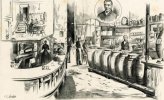
Once again I'm trampling over ground already expertly tendered by my heroine Lyn (and the usual suspects). How did I miss this gem? But may I redraw your attention to some fascinating stuff on the buildings previously occupied by the Post Office in Paradise Street? The Joe Hillman's photos were originally posted by Frothy, and I owe him one for not shouting at me for showing them again? The Whybrow thumb print is plain to see. The narrative is from Jo McKenna's Central Birmingham Pubs book. It is very edifying to me, a card carrying pub freak, to see that this Hostelry was nicely situated next door to Corbett's Temperance Hotel. Oh sweet irony! Our Joe sounds quite a star, perhaps he should have been on Britain's Got Talent....

So let the pictures speak...but don't forget to visit the diamond of a Thread below before you go. Cheers to everyone who contributes to my education on this great City of ours. I just love it.

https://forum.birminghamhistory.co.uk/showthread.php?t=28440
 
Hi Dennis - that first photo in the first post is dated 1886 I believe, very early for a photo of this area. Rest of the details are great too, thanks for gathering and sharing. Do you have any details on Corbett's Temperance Hotel?
 
Last edited:
Hi Dennis - that first photo in the first post is dated 1886 I believe, very early for a photo of this area. Rest of the details are great too, thanks for gathering and sharing. Do you have any details on Corbett's Temperance Hotel?

Thank you Aidan, the early photo is culled from John Whybrow's masterpiece of the day 'How Does Your Birmingham Grow'. I am afraid I never frequent Temperance Hotels. I can't seem to get a decent pint... but I will research your man Corbett forthwith. Be back soon.
 
Was wondering if the view in post #6 shows the standard way of storing ale and porter at a merchant's premises. I've never seen a similar arrangement anywhere else where the barrels are stood in this way.

I remember Yate's Wine Lodge on Corporation Street used to lay their barrels horizontally in a row, on a slight tilt, with the tap accessible at arms height.
yes that certainly fits with my recollections too Viv , the bunghole at the top with the shive to vent it and the Keystone on the for for the tap.
 
I have certainly never seen them in that position if being accessed,
From https://www.beerandbrewing.com/dictionary/V1uMnJOFbY:
Barrels are typically fitted with several openings for filling, cleaning, and emptying, as well as for air to enter the barrel as the liquid is drained. The opening for cleaning, sanitizing, and filling is called a belly bung. The opening for emptying the barrel via a tap or a beer engine is called a keystone, kept shut with a stopper. See beer engine and cask. During tapping, the keystone stopper gets pushed into the beer. For venting, a classic British cask has a shive with a center hole for a stopper called a tut and a hard wooden peg called a spile, the latter being hammered into the tut. The spile can be removed and reinserted during poring to vent the cask.
But looking closely none of the barrels appear to be being accessed. there are bottles, glasses etc on top, and on the far left what appears to be a measuring cylinder. Ifn it was being accessed then there would have to have been an access hole opoen. Perhaps they were just old barrels being used as a counter or table
 
Back
Top