• Welcome to this forum . We are a worldwide group with a common interest in Birmingham and its history. While here, please follow a few simple rules. We ask that you respect other members, thank those who have helped you and please keep your contributions on-topic with the thread.

    We do hope you enjoy your visit. BHF Admin Team

High Street Erdington

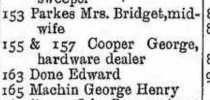
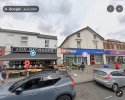
Correction to my post #391. Apologies, but The Lindens was at #163-#165 and this (see Streetview) would have been the position (today Betfred). It seems to have Victorian features above the shop. It, along with many other properties, was owned by the Machin family.

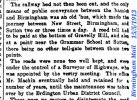
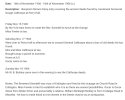
Below is an auction notice of all their properties, and it includes 20 two storey Easy Row cottages numbered #115- #153 (this refers to High Street numbering), We're given the measurements of the total frontage (nearly 70 yards and area of 4,720 square yards). This lot takes some working through, but we might find some more useful pointers.

It doesn't say specifically if the 'ancient' cottage was owned by the Machins, or that it was included in the numbering of #115-#153, but there's a good chance it was owned by them given that George H Machin took possession of the tollgate board found in the old cottage. As church warden he then passed it on to Canon Swindell.

Source: British Newspaper Archive Screenshot_20251208_184103_Chrome.jpg
 

Attachments

  • Screenshot_20251208_192804_Chrome.jpg
    Screenshot_20251208_192804_Chrome.jpg
    168.9 KB · Views: 3
Last edited:
Correction to my post #391. Apologies, but The Lindens was at #163-#165 and this (see Streetview) would have been the position (today Betfred). It seems to have Victorian features above the shop. It, along with many other properties, was owned by the Machin family.

Below is an auction notice of all their properties, and it includes 20 two storey Easy Row cottages numbered #115- #153 (it refers to High Street numbering), We're given the measurements of the total frontage (nearly 70 yards and area of 4,720 square yards). This lot takes some working through, but we might find some more useful pointers.

It doesn't say specifically if the 'ancient' cottage is owned by the Machins, but chances are it is I suspect.

Source: British Newspaper Archive View attachment 215605
i thought it was viv but was not sure enough to say so...thanks for the correction

lyn
 
A couple of other bits and bobs I've found out. George Machin was a Director of the First Aston, Handsworth, and Erdington Model Building Society in 1897.

The Machin family had a small brick making business. In 1890, G H Machin (named as brick maker) owned the Six Ways Tea Warehouse, Erdington for which he acquired a licence.

I think he also served on the local council.

So on the face of it, Machin was very involved in the local community. But as a businessman, he also had a vested interest in building projects and the financing of them
 
Last edited:
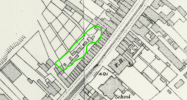
I think this (blue dot) was #163 - #165 High Street and named The Lindens. If so, it means Woolworths was built over the passageway to the right of the Lindens.

Barnabas Road was built directly alongside the line of the NE edge of this building (red dot). So this building position would have been covered over when Woolworths built it's store. Therefore, was this structure (red dot) the old 'ancient' cottage in Benjamin Stone's 1890s photo ?

The only other alternative for the old cottage position would be the building just to the south (yellow dot) where the land was also built over for the Woolworth store.

If you use Lyn's mapping tool link in post #382, you'll see what I'm trying to explain- hopefully!

Screenshot_20251208_175943_Samsung Internet.jpg
 
Last edited:
I think this (blue dot) was #163 - #165 High Street and named The Lindens. If so, it means Woolworths was built over the passageway to the right of the Lindens.

Barnabas Road was built directly alongside the line of the NE edge of this building (red dot). So this building position would have been covered over when Woolworths built it's store. Therefore, was this structure (red dot) the old 'ancient' cottage in Benjamin Stone's 1890s photo ?

The only other alternative for the old cottage position would be the building just to the south (yellow dot) where the land was also built over for the Woolworth store.

If you use Lyn's mapping tool link in post #382, you'll see what I'm trying to explain- hopefully!

View attachment 215615

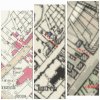
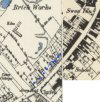
Here is the OS 25 in Map surveyed in 1888 which gives a little more detail.

IMG_0197.jpeg
 
Apologies for the standard of these photos of Easy Row - The photo is taken from Saxton's Bygone Erdington and the map is from Birmingham Library. Easy Row is just at the bottom of the map, disappearing onto the next one. Barnabas Road wasn't there then.
 

Attachments

  • Easy Row from EHS.jpg
    Easy Row from EHS.jpg
    1.3 MB · Views: 9
  • Easy Row.jpg
    Easy Row.jpg
    202 KB · Views: 9
That’s interesting Lady P.
The picture shows a tramway, and so would maybe show the frontages on High Street and Easy Row may be accessed via the entrance on the left ?
 
Janice post #412 shows Easy Row much clearer than my map. I think Easy Row was definitely on the High Street not at the rear. There are more buildings behind the Row so I'll see what Saxton has to say on the subject. I'm taking the book back this evening so will have a look before then.
 
Turning Lady P’s map round the street coming in on the left is New Street, so we are moving some way from Woolworths and Barnabus Road.

The further you go back in time the more distinct Easy Row becomes, until around 1910 when the numbering was encorporated into High Street.

IMG_0226.jpeg
 
Looks as if it was the name for a row of cottages on what became the High Street.
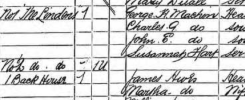
I found it on 1881 census under Sutton Road which I assume became the High Street.
 
Last edited:
Hi Janice, I hadn't seen Sutton Road with reference to the High Street before but it was the road to Sutton so I suppose that makes sense. Especially when you look at the by-pass which was named 'New' Sutton Road.
 
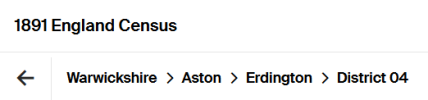
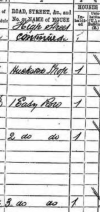
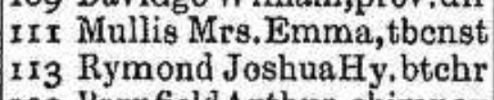
I was tracking the butcher - Joshua Rymond and in 1881 found his father listed on Sutton Road but the page before his entry reads
1765286200424.png
So I assumed Sutton Road was renamed High Street at some point
 
The question about Sutton Road is interesting as it looks to get a mention some 20 odd years after High Street.

If you look on the OS Maps…In 1887 High Street extended up to the old Chester Road. On the 1902 OS High Street extends to somewhere near Erdington Abbey and becomes Sutton Road up to the Chester Road.
 
Back
Top