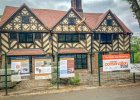
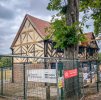
I popped out today to take a look at the Golden Lion in Cannon Hill Park. This Grade II listed building was built in the 16th century and has survived attacks from both Royalists in the English Civil Wars and, later, from suffragettes.
It was relocated to the city's Cannon Hill Park in 1911, where it was erected as a shelter with an open back and no windows on the first floor. In recent years, however, it fell into disrepair and became shrouded in scaffolding.
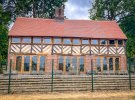
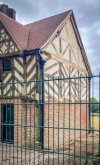
The first stage of the renovation—making the building wind- and weather-tight—is now almost complete. By sheer coincidence, the contractor called onto the site while I was there, so I had quite a long chat with him. We discussed the principle of honest renovation: all of the new work—replacement timber, leadwork, and so on—is boldly on show, not hidden.
The glass in the front is particularly interesting. It was bought from a glassmaker who ceased trading in the late ’50s but had held on to the last batch of this style. It bore a striking resemblance to the wartime glass that was fitted to bomb-damaged houses in WWII.
All of the leadwork on the fountain heads is sand-cast lead, done in the same way as a church roof. The laths for the plasterwork were made from riven oak, and the infill was lime plaster, as was the repointing. The building can breathe again now.
I was very impressed by the quality of the workmanship. It was both a showcase and a timely reminder of the value of the construction industry—and the skilled tradespeople who work in it.



 birminghamheritageweek.co.uk


