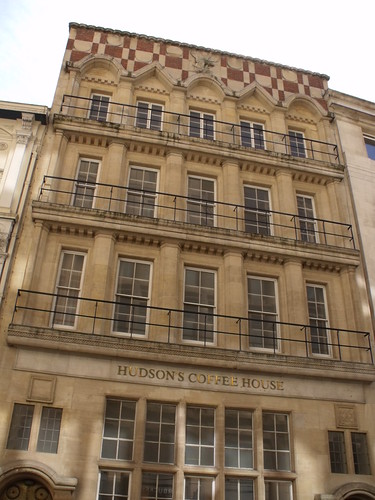
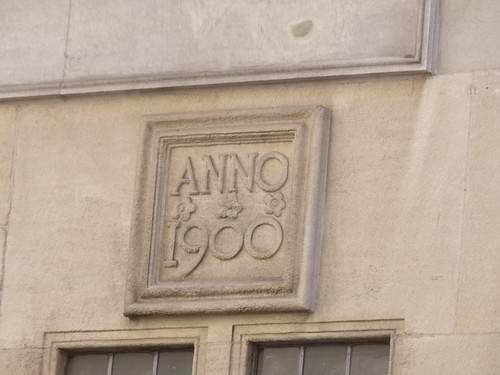
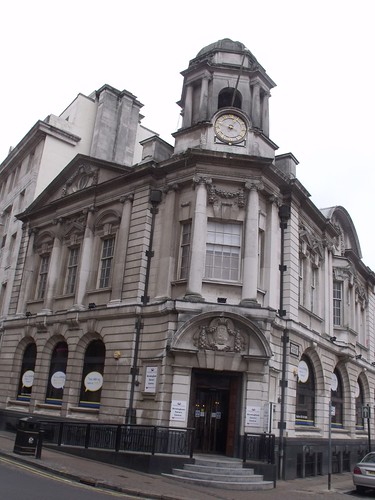
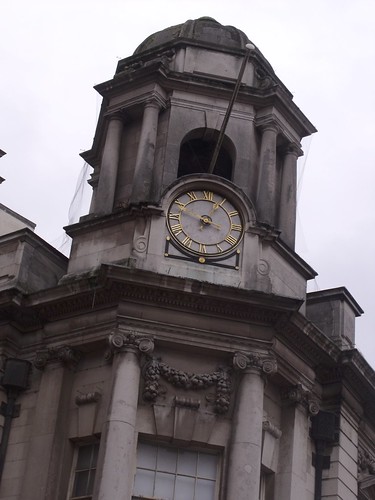
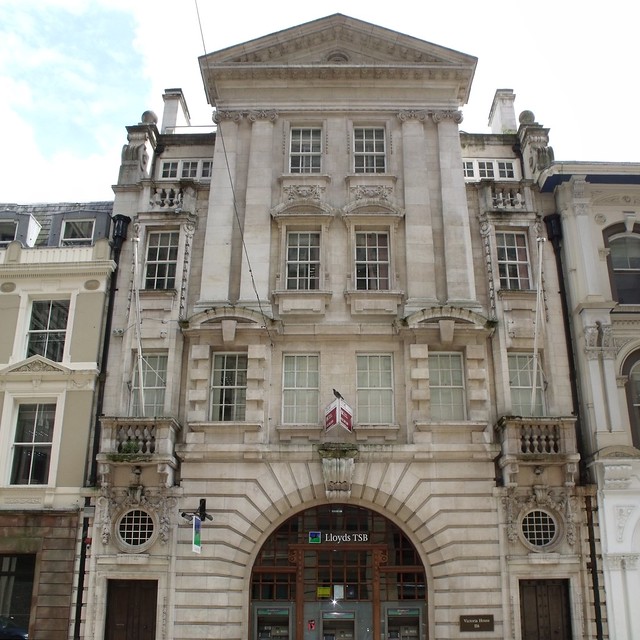
Nos. 122-124 are the former Eagle Insurance offices, by W.R. Lethaby & J.L. Ball, 1900. One of the most important monuments of the Arts and Crafts Free Style in the country. The design is essentially Lethaby's; Ball was the executant. Pevsner saw it as an early example of functionalism.
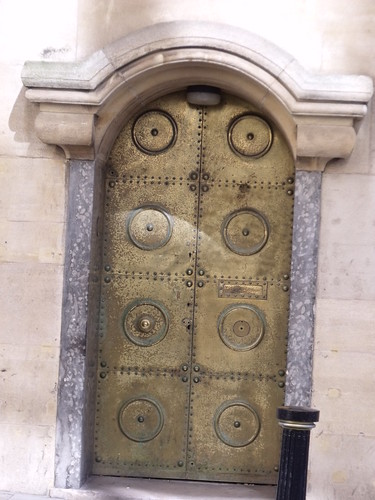
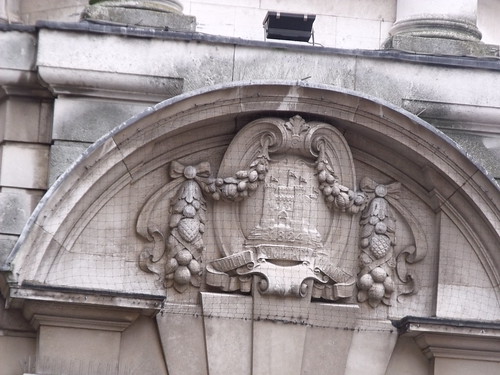
Recent research has emphasized Lethaby's interest in symbolism and primitive forms, described in his Architecture, Mysticism and Myth (1892). most obvious here in the eagle, symbolizing the sun god. The structure of loa-bearing walls, concrete floors, and steel joists is expressed directly and simply in the facade. Ground floor banking hall lit by a large mullion-and-transom window carried down to the ground. The doorways have segmental hoods and three-part mouldings deriving from Buddhist temples. Glowing bronze doors with moulded discs representing the sun. Above, three floors of offices with a grid of chamfered pilasters between chunky cornices again with three-part mouldings. Over the top floor a dramatic motif of alternating round- and triangular-headed arches.
Godfrey Rubens suggests a re-working of the basic round and pointed architectural shapes Ruskin identified in The Nature of Gothic; Alexandra Wedgwood noticed the primitive, Anglo-Saxon appearance of the triangular heads. Finally a parapet of two layers with a chequer design of alternating wide and narrow brick and stone panels, with more sun discs and an eagle relief in the centre.