• Welcome to this forum . We are a worldwide group with a common interest in Birmingham and its history. While here, please follow a few simple rules. We ask that you respect other members, thank those who have helped you and please keep your contributions on-topic with the thread.

    We do hope you enjoy your visit. BHF Admin Team

Colmore Row

Nice arcade restoration. Like the idea of the lighting using the Victorian fittings and like the new beams too. The modern end before this most recent renovation was a bit faceless from what I can remember of it. Also I seem to think originally there was no glass in the Temple Row end. But could be wrong on that. Lovely entrance on Temple Row. Thanks for updated photos Ell. Viv.
 
View attachment 67755I have happy memories of Colmore Row from when I started work at Royal Mail in 1953, it was in Town Three Div; and was in
fact split into three walks as they were called. Most of your work was done in the office because the area was
mainly buisiness calls. A driver used to take of the mail out to buildings.A grand set of blokes to work with, mainly ex/service, would help anyone, what a shock I got when I transfered to Burton under the Overspill scheme!!
 
No problem.

Don't remember the previous Colmore Row frontage, but think the current one fits in with Colmore Gate.

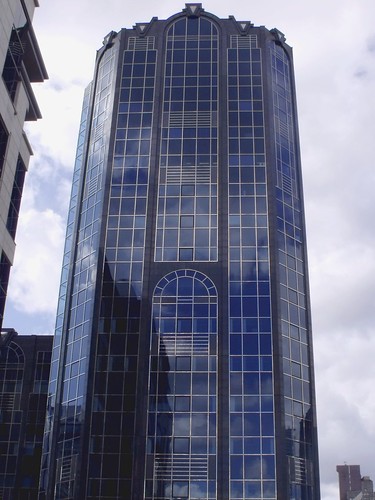
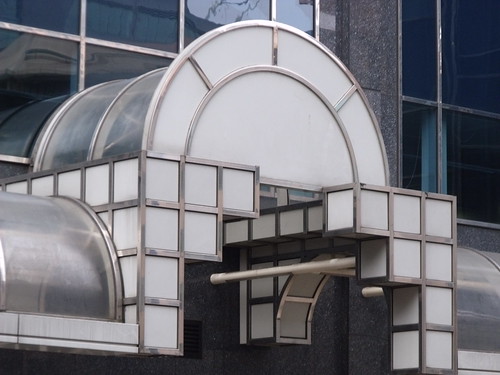
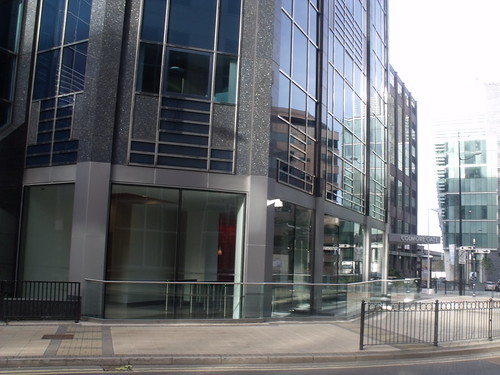
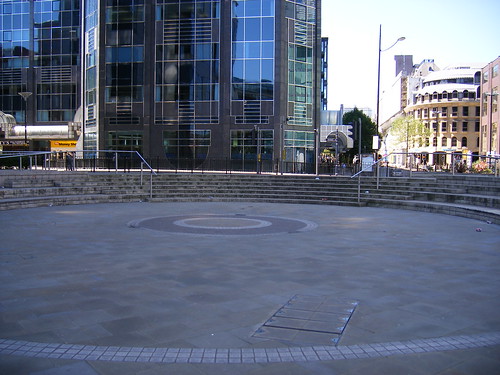
Colmore Gate and the modern facade of the Great Western Arcade


Colmore Gate, 9 Colmore Row by ell brown, on Flickr


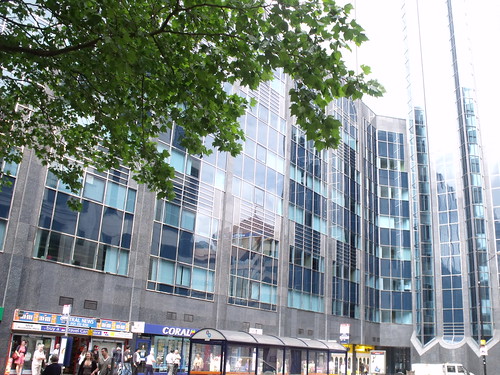
Colmore Gate (No 1 Colmore Square on the left) by ell brown, on Flickr

From Pevsner Architectural Guides: Birmingham by Andy Foster

Colmore Gate, shops and offices of 1990 - 92 by the Seymour Harris Partnership, with a fourteen-storey tower. Silver reflective glass and more blue pearl granite. The mullions defining the centre of each side end at the top in half-rounds, like Cass-Gilbert-period New York. Very dominating from Colmore Row and the Cathedral churchyard. Built for the Church Commissioners.
Last year they changed the reception area. Have a look at my set on Flickr (link above) for the changes they made.
 
Wonderful photos,wonderful memories.
I loved the arcade when I first started work in 1957 at a firm of Solicitors in Waterloo Street.
I used to do embroidery and there was a brilliant shop in the arcade where they sold every colour silk you can think of.
Later I worked in St Pauls Square and used to pass the Grand Hotel to go through the churchyard to catch my bus home.
I once bumped into Shirley Bassey as she came out of the hotel,well in fact she bumped into me and was most apologetic.
I always loved the old buildings in that area of the city but time moves on and some of the new ones are very impressive.
 
smashing memories alberta...and fancy bumping into the great shirley bassey...

lyn..
 
Yes Alberta I too love so many of B'ham's old buildings, especially for their craftsmanship. It's regrettable that some have disappeared, but like you say, we must move with the times. Reading Ell's extract from Pevsners guide makes me realise there're lots of interesting new designs popping up. I think (?hope) lessons were learnt from some of the 60s mishaps. I've not seen Colmore Gate in the flesh, but I like the overall look. The top of the building is a nice feature and the arches add interest. The 'blue pearl granite' sounds lovely! The materials being used give it a much airier feel. And of course there're lots of reflective surfaces on these modern buildings to make the best of all the sunshine we get here!!

Just read that the Great Western Arcade originally came to a dead end in Temple Row but in the early 1880s its line was continued as the North Western Arcade right through to Corporation Street. Is that the arcade that goes alongside the House of Fraser? Viv.
 
No don't get that either. The first stained glass window photo from your Flickr contact is a nice view. You get the beauty of the stained glass without interrupting the view of Bull St. That view I still recognise! Thanks. Viv.
 
Alberta , I used to go the same route as you to catch my bus, I met Roy Orbison outside the Grand Hotel, he stood talking to us for ages although a taxi was waiting for him..A lovely man.
 
Just read that the Great Western Arcade originally came to a dead end in Temple Row but in the early 1880s its line was continued as the North Western Arcade right through to Corporation Street. Is that the arcade that goes alongside the House of Fraser? Viv.

There still is a North Western Arcade. It is a bit more modern though. Seems to date from the 1960s or 70s (might have been refurbished in the last decade or so). It goes down a hill towards Corporation Street.

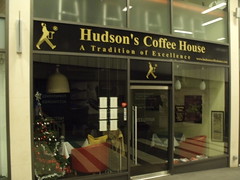
I've only taken photos of Hudson's Coffee House in there.


Hudson's Coffee House - North Western Arcade by ell brown, on Flickr
 
Lyn
Was it on his first tour you chatted to Roy Orbison ? If so, you can always claiim you were the inspiration for "Pretty Women" !
 
Now for the historic buildings between St Philip's Cathedral and Victoria Square.

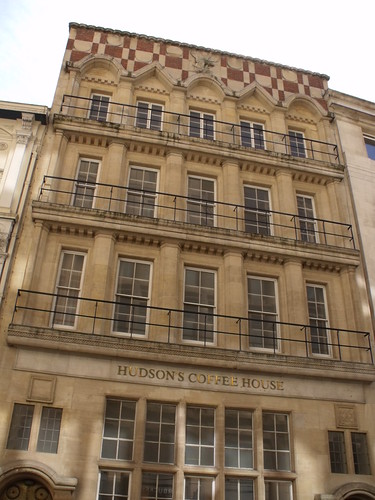
Starting with 122-124 Colmore Row - now Hudson's Coffee House - It is a Grade I listed building


122-124 Colmore Row - Hudson's Coffee House by ell brown, on Flickr

Nos. 122-124 are the former Eagle Insurance offices, by W.R. Lethaby & J.L. Ball, 1900. One of the most important monuments of the Arts and Crafts Free Style in the country. The design is essentially Lethaby's; Ball was the executant. Pevsner saw it as an early example of functionalism.

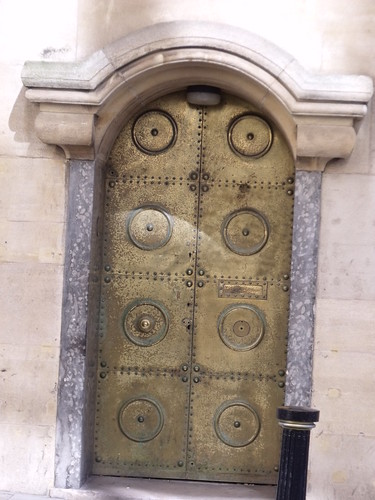
Recent research has emphasized Lethaby's interest in symbolism and primitive forms, described in his Architecture, Mysticism and Myth (1892). most obvious here in the eagle, symbolizing the sun god. The structure of loa-bearing walls, concrete floors, and steel joists is expressed directly and simply in the facade. Ground floor banking hall lit by a large mullion-and-transom window carried down to the ground. The doorways have segmental hoods and three-part mouldings deriving from Buddhist temples. Glowing bronze doors with moulded discs representing the sun. Above, three floors of offices with a grid of chamfered pilasters between chunky cornices again with three-part mouldings. Over the top floor a dramatic motif of alternating round- and triangular-headed arches.

Godfrey Rubens suggests a re-working of the basic round and pointed architectural shapes Ruskin identified in The Nature of Gothic; Alexandra Wedgwood noticed the primitive, Anglo-Saxon appearance of the triangular heads. Finally a parapet of two layers with a chequer design of alternating wide and narrow brick and stone panels, with more sun discs and an eagle relief in the centre.

From Pesvner Architectural Guides: Birmingham by Andy Foster

1900, by Lethaby and Ball for the Eagle Insurance Company. Stone with a little brick. Four storeys; 5 bays. Ground floor with a large 5-light mullioned and transomed window and symmetrical doorways left and right with simple 2-light windows and sculptured plaques above. First, second and third floors each with uniform sash windows between pilasters. The 3rd floor windows with a frieze of Romansque derivation in their heads and alternating semi-circular and triangular pediments above. Attic storey with chequer work pattern in which are set plain blank discs and, centrally, an eagle. Original metal doors and much of the interior furnishings and fittings remain.
From 122 AND 124, COLMORE ROW B3 on Heritage Gateway

A few details


122-124 Colmore Row - Hudson's Coffee House by ell brown, on Flickr


122-124 Colmore Row - Hudson's Coffee House - glowing bronze doors by ell brown, on Flickr


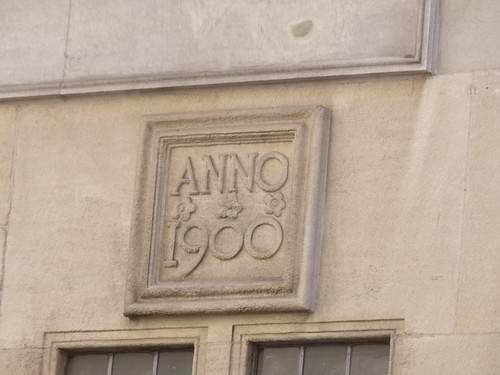
122-124 Colmore Row - Hudson's Coffee House - Anno 1900 by ell brown, on Flickr
 
On the corner of Waterloo Street - looking onto Victoria Square is 130 Colmore Row

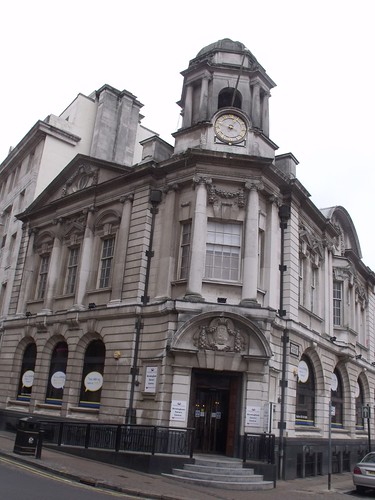
Now the Birmingham Carers Centre - it was originally occupied by the Alliance Assurance.


Birmingham Carers Centre - 130 Colmore Row - formerly the Alliance Assurance by ell brown, on Flickr

No. 130 by Goddard & Co. of Leicester, 1903, for the Alliance Assurance. Two ample storeys in Wrenaissance style. Good domed corner turret, and a canted bay to Waterloo Street. Juicy garlands.

From Pesvner Architectural Guides: Birmingham by Andy Foster


A few details

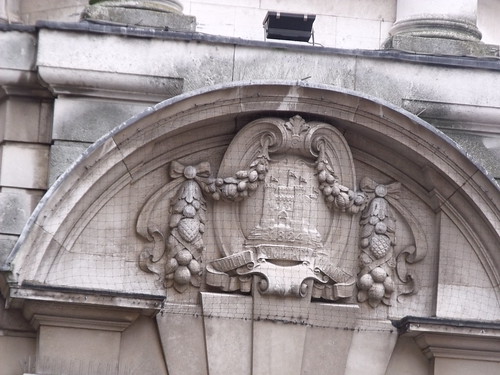
Coat of arms of the Alliance Assurance


Birmingham Carers Centre - 130 Colmore Row - formerly the Alliance Assurance - coat of arms of the Alliance Assurance by ell brown, on Flickr

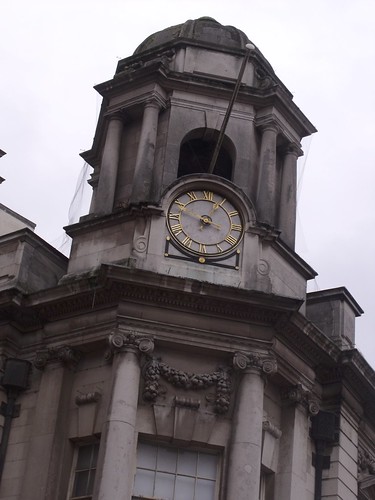
Clock tower


Birmingham Carers Centre - 130 Colmore Row - formerly the Alliance Assurance - domed corner turret with clock by ell brown, on Flickr
 
thanks for the pics ell..a couple of years back i went into the carers building its worth a look...

lyn
 
No problem.

They have really cleaned up no. 130.

Seems like a lot of Assurance / Insurance companies were located at this end of Colmore Row.
 
The Eagle Insurance/Hudsons Coffee House looks much older than 1900. Great building. Hard to believe this and B'ham Carers Centre were built only 3 years apart. Useful to see the background info too, very good quick reference. Thanks Ell.
 
Is strange that a building from 1900 got a Grade I listing, as usually they have to be much older than that (at least more than 100 years old).

They had good architects in the late Victorian into the Edwardian period.

No problem Viv.
 
ell it does not surprise me so much as they tried without success to list the central library...

lyn
 
They should have listed the old now demolished Victorian library 40 years ago (bit late now).

Only room to survive is the Shakespeare Memorial Room (it will be dismantled again and put into the new library right at the top).
 
oh dont start me off about the original library ell...its a sore point...some of the spiral staircase is now at the black country museum but minus the hand rails which they could not save..

lyn
 
Ell, they just have to be good buildings representative of their era to be listed, they do not have to be more than 100 years old. Many buildings from the 1930's have been listed - I suspect the Fort Dunlop building is, but cannot be absolutely sure.
 
Listed Building on Wikipedia

  • Grade I: buildings "of exceptional interest, sometimes considered to be internationally important".
  • Grade II*: "particularly important buildings of more than special interest".
  • Grade II: buildings that are "nationally important and of special interest".

Government general policy is to list all buildings erected before 1700 "which survive in anything like their original condition" and most buildings of 1700–1840. More selection is exercised among buildings of the Victorian period and the 20th century. Buildings less than 30 years old are rarely listed, and buildings less than 10 years old never.
 
I note that it states ' Government general policy' (Wilki is not always right, by any means), but this can be ignored, and in many cases IS ignored. I can show you an early 1800's house in Lichfield which is just being left to rot (it may have even been demolished by now, I have not seen it for some months). There is a house in Lichfield Street, Tamworth, built sometime during the 1700's and that is also seemingly being just left to fall down. Built in header bond brickwork in two colours it seems to me a fine example, but after use as a restaurant some years ago it is now vacant and certainly not up for sale. Listing depends on the owner. Anyone can list a building, but if the owner refuses to accept listing there is nothing that can be done about it - at least that used to be the case. I used to work for a firm of Building Surveyors who were in Waterloo Street, and our speciality was restoration of listed buildings. From Birmingham, our largest instruction was a house built between 1742 and 1746 which was in Shropshire. Another office restored many of the buildings in Bath, including what was the Abbey National. All this meant we were in constant touch with English Heritage, because nothing could be touched without their say so.
 
More buildings on Colmore Row - this time mainly banks

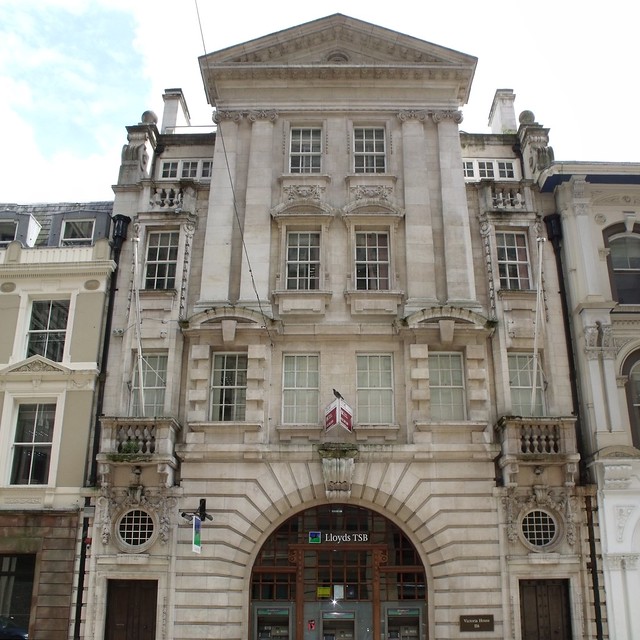
114 - 116 Colmore Row - now a Lloyds TSB


114 - 116 Colmore Row - Lloyds TSB by ell brown, on Flickr


114 - 116 Colmore Row - Lloyds TSB by ell brown, on Flickr

From Pevsner Architectural Guides: Birmingham by Andy Foster

Nos. 114-116 is a full blown Barosque weddingcake of 1912 by Paul Waterhouse, for the Atlas Assurance. A big portico is hoist aloft above much rustication, circular windows, garlands and all the panoply of commerce. An extreme contrast to Lethaby: pure scene-painting with regular office floors behind, but very effective. The facadism is expressed by Mannerist detail: the large lunette window on the ground floor directly below the portico, and the two small, heavily blocked windows immediately under the pilasters.


It is Grade II listed as Standard House on Heritage Gateway

COLMORE ROW
1.
5104
City Centre B3
Nos 114 and 116
(Standard House)
SP 0686 NE 33/17 13.11.81
II GV
2.
Early C20, in an Edwardian Baroque style. Stone. Two storeys plus another 2 plus
attic represented by a giant portico standing on the segmental pediments of 2
windows with heavy Gibbsian surrounds, and recessed outer bays. The ground floor
with a large central arched opening with immense keystone set in banded rustication
and 2 entrances, each with a circular window with garlands and a heavy balcony above.


Listing NGR: SP0679586940
 
Back
Top