• Welcome to this forum . We are a worldwide group with a common interest in Birmingham and its history. While here, please follow a few simple rules. We ask that you respect other members, thank those who have helped you and please keep your contributions on-topic with the thread.

    We do hope you enjoy your visit. BHF Admin Team

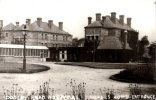
Birmingham Infirmary Nurses Home Dudley Road 1888

Vivienne14

Kentish Brummie Moderator
Staff member
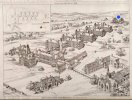
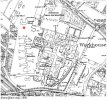
The nurses' quarters (Nurses Home) built in 1888, provided purpose-built accommodation for nurses of the workhouse infirmary and were included as part of the original 1888 Infirmary site. The buildings are shown on Ackerman's drawing below (blue dot). A map dated 1890 is also attached with the Nurses Home marked (red dot).

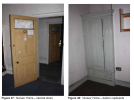
The Nurses Home buildings are now earmarked for demolition as part of redevelopment of the old Dudley Road/Western Road Workhouse/Infirmary (Birmingham City Hospital) for new housing.

Screenshot_20261013_090841_Chrome.jpg

Screenshot_20261010_162729_Chrome.jpg
Screenshot_20261013_084714_Samsung Browser.jpgScreenshot_20261013_090348_Chrome.jpg
 
Last edited:
An 1880s view of nursing and their conditions at the Infirmary. The second paragraph describes some aspects of the Nurses Home, including personal 'cubicles'. This is from a Birmingham Daily Post article:

The staff of the infirmary immediately concerned with the treatment of the patients consists of four resident and two visiting medical officers, and seventy-nine nurses. This does not appear to be an extravagant provision when it is remembered that the-sick population of the institution this week numbers 1,186, and that during last winter it ran up to about 1600. The nursing staff includes seven pupil nurses, each of whom pays a fee of £20, and gives her services for twelve months. The impecunious ratepayer will be glad to know that the number of these fee-paying nurses is increasing, and that it is hoped that before long half the staff will be of this class. This, which would mean an income of about £600 a year from fees and the saving of half the present amount of nurses' salaries, would be a small but gratifying set-off against the sins of extravagance which are laid to the charge of the Infirmary Committee. The nurses all take their turn at night duty, for which about twenty-two are required. Nearly all the remainder are required for day duty, which lasts from seven in the morning till nine in the evening. The nurses, however, are allowed three-quarters of an hour for lunch, an hour for dinner, and two hours for recreation each day, and each has the privilege of going out from four till ten once a week.

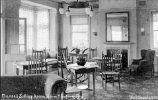
None of the nurses take their meals in or near the wards, a pleasant messroom being provided on the ground floor of the infirmary and the Nurses' Home, where the matron and her assistants reside, is a distinct building. A very cosy place is this home. Each nurse has a small but comfortably furnished cubicle to herself for a sleeping apartment; there is an elegantly appointed common sitting room, and a thoughtful provision in the shape of a visitors' room is made for the reception of friends of the nurses. The matron and assistant matron of course have private apartments of their
own. There is a large staff of male and female attendants for the administrative and domestic work of the infirmary, very little of which is allowed to take up the more valuable time of the nursing staff.

 
From the Heritage report
The research has shown that a nurses’ home was built at the same time as the workhouse infirmary, a short distance to the north, arranged on the axis of the infirmary spine corridor. The two principle wings have survived in a largely unaltered state, both internally and externally also As relatively unaltered, original parts of the workhouse infirmary, the original wings are considered to have higher local significance.
1791894809128.png

The southern link block between the original pair of wings was largely rebuilt in the 1920/30s In the same period, the Nurses’ Home was substantially extended northwards with imposing four storey blocks that created an enlarged, enclosed courtyard. The architectural quality of the massing and elevations of the extensions is competent although the interiors are very plain. The re-built link block at the southern end contains a pair of pleasant panelled rooms with mock-Tudor fireplaces. None of this is particularly out-of-the-ordinary or historic. Consequently, these additions to the original Nurses’ Home are considered to be of relatively low local significance.
 
Last edited:
Thanks Janice. Such a shame the 1880s two wings of the Nurses Home are to go. The history of such places seems to count for very little. Makes it all the more important that we record it, as we are doing here on BHF.
 
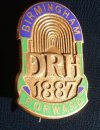
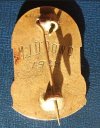
This nurses badge is interesting in its design as well as the accompanying informative note about nursing: SRNs, SENs, uniforms etc.

The nurse it belonged to, M.J. O'Dowd, would have worn it in 1939. Doubtless she would have spent some time in the Nurses Home, likely during training and possibly when qualified.

The hospital's quarter mile corridor depicted on the badge was a short distance from the Nurses Home. The Nurses quarters seem to have been purposely built in alignment with the hospital corridor (which gave access to its 9 wards via the quarter mile corridor). It suggests a clear message in badge form of a DRH nurses area of operation.

Screenshot_20261013_141007_Samsung Browser.jpgScreenshot_20261013_141052_Samsung Browser.jpg
Screenshot_20261013_141023_Samsung Browser.jpg
 
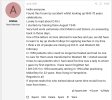
A couple of nursing memories from another thread. I shall add any others over time. Screenshot_20261013_140453_Samsung Browser.jpg

Re the badge mentioned in post #5. Comments apply to Summerfield Hospital nearby, too
Screenshot_20261013_140828_Samsung Browser.jpg
 
Two outstanding Infirmary matrons, both founding schools of nursing.

The first Matron (or Lady Superintendent) at the new Infirmary was Anne Gibson who had trained in the Nightingale School. She was supported in post by a number of Nightingale Nurses and Probationers. Whilst working at the workhouse Infirmary Anne Gibson founded the Nurse Training School. She retired in 1912, and died in 1926.


In 1925, Miss Olga Snowden was appointed Matron. She did much to improve the facilities and standards at Dudley Road Infirmary, founding the Olga Snowden School of Nursing, before her retirement in 1947.
 
Back
Top