• Welcome to this forum . We are a worldwide group with a common interest in Birmingham and its history. While here, please follow a few simple rules. We ask that you respect other members, thank those who have helped you and please keep your contributions on-topic with the thread.

    We do hope you enjoy your visit. BHF Admin Team

Birmingham 1838 - 1938

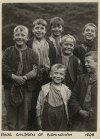
Those children were very shabbily dressed but it seems that were "well scrubbed", probably for the photograph, but also their faces showed that they were reasonably fed. 1898 was well before the advent of junk and fast food availability.
 
The average life expectancy would have been around 47 years. Almost one third ( 228.8 per thousand) of children did not reach the age of five and looking at how impoverished these kids are and with WWI most of these would have not lived beyond 1940.

Assuming that average of the children who didn't reach the age of 5 was 2.5 then the life expectancy of everyone else was a touch over 60.
 
Assuming that average of the children who didn't reach the age of 5 was 2.5 then the life expectancy of everyone else was a touch over 60.
You are calculating the average for people who survived to age 5. But life expectancy includes everyone. If you are on a lifeboat with 10 people, and 2 people die on day 1, you don't calculate the average survival time by only counting the 8 who lived. You count all 10. Excluding the children who died is not 'correcting' the average—it is changing the definition of the statistic entirely.
 
With a high infant mortality rate lowering the life expectancy figure it tends to give the impression that there were very few old people in days gone by. Which wasn't the case and taking out that large percentage of infant mortality shows that if you did get pass those risky early years you would have a reasonable expectation of a longish life,

A different statistic I agree.
 
I completely agree that there were old people, i spend quite a lot of time in cemetery's and am always amazed to see the grave marker of a 90 year old, so I am not denying that. But you are describing 'life expectancy at age 5,' which is a different statistic entirely. Life expectancy at birth includes everyone. Yes, if a child made it to 5, their odds improved, and they might live to 55 or 60. But that does not change the fact that for every one of those survivors, there were several children and young adults who died early, pulling the average for everyone born down into the 30s or 40s. The cemetery shows the survivors—it hides the massive number of children who didn't make it.
 
Back
Top