• Welcome to this forum . We are a worldwide group with a common interest in Birmingham and its history. While here, please follow a few simple rules. We ask that you respect other members, thank those who have helped you and please keep your contributions on-topic with the thread.

    We do hope you enjoy your visit. BHF Admin Team

Aston Hall

Like many older men I don't have much of a sense of smell. This is often a blessing. I have smelled tallow candles, so if Aston Hall used these for authenticity, then they do smell horribly.
If they used tallow candles in the distant past, the smell should linger. The small of historic building that Lyn refers to could be a blend of candles, fireplace smoke and rot or dampness. The candles smell is basically a gas that would permeate fabrics and wood for that matter.
 
I went to one Candlelight evening in December about 15 years ago. It was magical but also the coldest night of the year brrrrr! Luckily I’d taken some whisky miniatures…. Purely for medicinal reasons of course…. !
yes of course it was Lynn we believe you;):D
 
Like many older men I don't have much of a sense of smell. This is often a blessing. I have smelled tallow candles, so if Aston Hall used these for authenticity, then they do smell horribly.

i have a fantastic sence of smell :eek:my mom always said my nose was too near my :grinning:
 
Last edited:
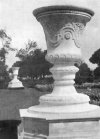
As pointed out above by Viv (HERE) the "Great Vases" on the upper terrace of Aston Hall are still in reasonable shape. They were designed by The Birmingham Civic Society (BCS) and carved by a master and students of the School of Art (Birmingham) and were placed in position in 1927:

great vasesA.jpg Vases on the West Terrace of Aston Hall in 1927

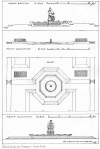
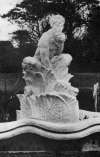
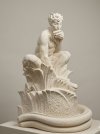
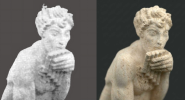
In 1927 the BCS had designed the formal layout of the gardens which the City built using government grants and a workforce recruited from local unemployed and residents but these grants were not available to fund a fountain and so the BCS contributed £250 (equivalent spending power today of about £20,000) towards erecting a fountain of Pan as a central feature of the gardens west of the Hall. Designed by the BCS it was carved in Portland stone by William Bloye and unveiled by Sir Gilbert Barling (Vice President of the Civic Society) on May 26th 1934. It was vandalised in 2005 and Pan's head lost.

1790974800018.png BCS sketch design for the fountain

1790974857161.pngxxxxxxxxxxxxxxxxxxxxxxxxxxxxxx 1791015172102.jpeg

xxxxxxxPan Fountain in 1934xxxxxxxxxxxxxxxxxxxxxxxxxDigital image made from the original photograph as if seen in Portland Stone

Ref: Hayward, W. The Work of the Birmingham Civic Society from June 1918 to June 1946, pp 67-82
 

Attachments

  • 1790974896719.png
    1790974896719.png
    438.4 KB · Views: 14
Last edited:
As a little girl I was fascinated by the Dolls House in the Nursery. I used to dream about it…
We visited Aston Hall a few weeks ago. Guess what? No dolls house ! It’s been sold to an American private collecter.
Another dream shattered… but I still enjoyed the visit reliving wonderful childhood memories.
Sadly the cafes closed but I’m not sure if it’s permanent. Perhaps they can’t get the staff due to finances. If I lived local I’d work there free of charge!
 
As a little girl I was fascinated by the Dolls House in the Nursery. I used to dream about it…
We visited Aston Hall a few weeks ago. Guess what? No dolls house ! It’s been sold to an American private collecter.
Another dream shattered… but I still enjoyed the visit reliving wonderful childhood memories.
Sadly the cafes closed but I’m not sure if it’s permanent. Perhaps they can’t get the staff due to finances. If I lived local I’d work there free of charge!
The council who have taken over the running of Aston Hall, said that they wouldn't be selling off any of the "family silver". I trust that still applies? I would have thought that opening the café, would help to meet running cost too, surely someone who lives locally, would be willing to run this and to gain some work experience for their CV?
 
Technically, Aston hall is now run by the Birmingham Museums Trust, and not by the council. This, as in the case of other cities, was done tp ensure the safeguarding of the museums. If it had not been done, then when the council had its recent problems, the Hall could have been sold by financial gothic administrators and ended up as the showcase British home of some foreign organisation (though that would be an extreme example and ). . That said, it would be interesting to know how, when and why the doll's house was sold
 
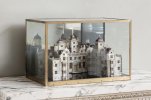
Screenshot 2026-10-03 at 15.38.03.jpeg
Mother of Pearl Model of Aston Hall, Birmingham, Late 19th Century. I found this image on an internet auction site, listed at £34,000 but 'unavailable'. I wonder if it was simply on loan to Aston Hall? Possibly it was restored in 2015??
Sad that so much of Birmingham history is lost to us, broken like the statue of Pan, or destroyed.
 
Regarding ‘my’ dolls house haha I found this online……

  • The History: It was an exceptionally rare, early 19th-century cupboard-style doll's house standing nearly 7 feet tall. It was commissioned and carefully furnished between 1830 and 1843 by Miss Elizabeth "Bessie" Wilkinson of Aston Hall to comfort her nieces and nephews after her sister tragically died in childbirth. It featured nine meticulously appointed rooms filled with rare miniatures, including original watercolours painted by Bessie herself. [1, 2]
  • What Happened to It: The house was kept by family descent for generations until 2010, when it was sold via a private treaty. It changed hands again in June 2022 when it was put up for auction by the fine art auctioneers Woolley & Wallis. It carried an estimate of £20,000–£30,000 and was ultimately sold to a private collector. [1]
 
Regarding ‘my’ dolls house haha I found this online……

  • The History: It was an exceptionally rare, early 19th-century cupboard-style doll's house standing nearly 7 feet tall. It was commissioned and carefully furnished between 1830 and 1843 by Miss Elizabeth "Bessie" Wilkinson of Aston Hall to comfort her nieces and nephews after her sister tragically died in childbirth. It featured nine meticulously appointed rooms filled with rare miniatures, including original watercolours painted by Bessie herself. [1, 2]
  • What Happened to It: The house was kept by family descent for generations until 2010, when it was sold via a private treaty. It changed hands again in June 2022 when it was put up for auction by the fine art auctioneers Woolley & Wallis. It carried an estimate of £20,000–£30,000 and was ultimately sold to a private collector. [1]
That's more like a dolls' house! So it was simply on loan. I must have seen it, but I have no recollection. Probably distracted by swords and cannon balls!
 
Back
Top