• Welcome to this forum . We are a worldwide group with a common interest in Birmingham and its history. While here, please follow a few simple rules. We ask that you respect other members, thank those who have helped you and please keep your contributions on-topic with the thread.

    We do hope you enjoy your visit. BHF Admin Team

Birmingham Workhouse Dudley Road Western Road opened 1852

Yes we always heard and said " if you go in there you wont come out"......always thought they meant Selly Oak Hospital as it always happened to relatives.
 
what we must remember is that the workhouses were there for a good reason...people went there out of sheer desperation due to things like no jobs and no jobs meant they could not afford to pay the rent or eat...women left widows with half a dozen children to look after but no way of doing it with no working husband around...yes the workhouse may have been a daunting place to enter but they at least provided men women and children with a roof over their heads and food to eat..most workhouses also had an infirmary for medical attention which they would otherwise not be able to afford to pay for and they provided work as well...also remember that most people did survive the workhouse and come out and make good of their lives so surely this had to be better than roaming the streets with nowhere to go and no food to eat...workhouses are part of our social history and in todays world seemed harsh but we cant change history..

even today we still see poverty and desperation on our streets so has it really changed that much

lyn
 
I have read with great interest the thread on the Birmingham Workhouse.

The parish was the main administrative body for local services until the nineteenth century. It was responsible for law & order, upkeep of roads and the poor. They were run by people who could read, write and keep accounts.

Parliament imposed duties on the parishes. It made them responsible for collecting voluntary monies to look after the poor in 1536. In 1601, after several acts about the poor, Parliament made each parish fully responsible for looking after the poor of their parish and allowed parishes to levy a rate to fund this. These duties would remain largely unchanged until the nineteenth century and the passing of the Poor Law Amendment Act 1834, which allowed parishes to join together and build a “union” workhouse.

Let us not forget that the “poor law administration” was controlled by the rich and the powerful. On paper the aims were laudable; the reality was often different. In many cases it was simply a question of keeping the costs of looking after the poor to a minimum. Workhouses were a way of providing for the poor at a central location at the minimum cost; a policy continued by building Union Workhouses. They were horrible places.

This is a quote from “Historic UK” which sums it up much better than I ever could:

The Victorian Workhouse was an institution that was intended to provide work and shelter for poverty stricken people who had no means to support themselves. With the advent of the Poor Law system, Victorian workhouses, designed to deal with the issue of pauperism, in fact became prison systems detaining the most vulnerable in society.

The harsh system of the workhouse became synonymous with the Victorian era, an institution which became known for its terrible conditions, forced child labour, long hours, malnutrition, beatings and neglect. It would become a blight on the social conscience of a generation leading to opposition from the likes of the Charles Dickens. [https://www.historic-uk.com/HistoryUK/HistoryofBritain/Victorian-Workhouse/]
 
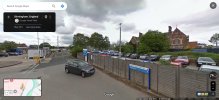
couple of shots here of the archway of tears the entrance to the workhouse before demo in 2017

lyn

thumbnail - 2024-09-20T204139.662.jpgthumbnail - 2024-09-20T204111.459.jpg
 
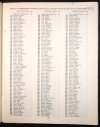
We have wifes Mother born at 44 Dudley Road and at Library of Brum I had to see the workhouse infirmary records and her GMother entered day before and left after 10 days.....so it was just the hospital and not workhouse.....this was May 1923.
Then we had the Death Cert of wifes Mothers youngest sister (who was born in 1924) who died in May 1927 at 1 Western Road so by reading all the posts here it MUST have been the workhouse. Her home address is a Cheapside court but not sure which parents court this was. The family were either split up or just about to at this stage with Wifes Mother and oldest Sister going to different places from hereon.....the mother ended up in Newcastle Under Lyme and Father to Tower St area.We started doing family tree to try and find out about Wifes Mother who never knew either parent. The searches continue. I need to see some school records if that is possible to locate her to an area.
 
Has anyone any idea of where Western Road patients were buried if they died when they lived long term and had no relatives to bury them .
Did two 3 months placements when I was a pupil nurse 1967. 1968. The truth of once you became a patient there you did not get out in most cases was very true.
I nursed 2 patients that had been badly affected by the Spanish flu pandemic and lived there latter years in Western Road and I guess died there.
 
Has anyone any idea of where Western Road patients were buried if they died when they lived long term and had no relatives to bury them .
Did two 3 months placements when I was a pupil nurse 1967. 1968. The truth of once you became a patient there you did not get out in most cases was very true.
I nursed 2 patients that had been badly affected by the Spanish flu pandemic and lived there latter years in Western Road and I guess died there.
cant say for certain diane but i would think key hill and warstone lane cems were the closest

lyn
 
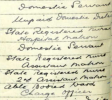
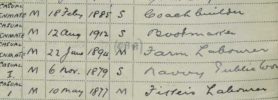
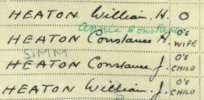
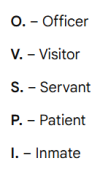
I found this thread because I'm also looking for information about the Western Road House. My great-great Aunt Kate was an inmate according to the 1921 census along with her toddler daughter. She was married but no sign of her husband and her son aged 5 was not with her but in an orphanage (though recorded as 'both parents alive'). The little girl died in 1921, but Kate lived till 1929. She died at Sparkhill Women's Hospital of a pulmonary embolism and was described as a domestic worker. Her employer registered the death. So obviously at some point she left the institution and got a job.
I understand that Western Road House was not a workhouse as such but was for poor or ill people. Could Kate have gone there because her husband had abandoned her and left her destitute? Why was her son not with her, I wonder.
Lastly, is there any way of accessing the institution's records? A visit is not possible since I live abroad.
Thank you.
Bev
 
hi i have never heard of a western road house only the workhouse in western road with the infirmary attached which as you say was for poor destitute people and also orphan children..are you able to give us the name of gt gt aunt and when born so that i can check the 1921 census to see what it says but i would think that westernn road house and western road workhouse are one and the same....thanks

lyn
 
Last edited:
I found this thread because I'm also looking for information about the Western Road House. My great-great Aunt Kate was an inmate according to the 1921 census along with her toddler daughter. She was married but no sign of her husband and her son aged 5 was not with her but in an orphanage (though recorded as 'both parents alive'). The little girl died in 1921, but Kate lived till 1929. She died at Sparkhill Women's Hospital of a pulmonary embolism and was described as a domestic worker. Her employer registered the death. So obviously at some point she left the institution and got a job.
I understand that Western Road House was not a workhouse as such but was for poor or ill people. Could Kate have gone there because her husband had abandoned her and left her destitute? Why was her son not with her, I wonder.
Lastly, is there any way of accessing the institution's records? A visit is not possible since I live abroad.
Thank you.
Bev
Hi Bev. When we was looking for Wife's Mother her Birth Certificate said 88(think) Dudley Road in 1923 but a few years later a Cert for sibling said Weston Road.
To view records we had to go to Library of Birmingham and join up to book an appointment. The record books were awesome and we found her Mother entered and had baby almost straight away and stayed for a out 10 days in the infirmary section.
 
Thank you very much for your replies.
Astoness, she's Kate Vetter (though the record looks like Veller) née Elmer. Born in Deal, Kent, in 1881 (more or less - bapt. 24th August 1881).
Baby Annie b. 1919 d. 1921, son Norman b. 1916 was in Selly Oak Workhouse in 1921.
I can't find the husband in 1921, he was a bad lot, married three or four times, reputedly a bigamist and he obviously abandoned the family. He didn't die till 1951.
I suppose no amount of wondering will explain why the children were split up. Sadly there's nobody left to ask now.
 
Thank you very much for your replies.
Astoness, she's Kate Vetter (though the record looks like Veller) née Elmer. Born in Deal, Kent, in 1881 (more or less - bapt. 24th August 1881).
Baby Annie b. 1919 d. 1921, son Norman b. 1916 was in Selly Oak Workhouse in 1921.
I can't find the husband in 1921, he was a bad lot, married three or four times, reputedly a bigamist and he obviously abandoned the family. He didn't die till 1951.
I suppose no amount of wondering will explain why the children were split up. Sadly there's nobody left to ask now.
hi bev i will take a look on ancestry for you i maybe able to find something out if i can i will get back to you..the more info you have the better...was kate kate louise and was her husband called john occupation piano tuner ? if this is the correct man did you know his army service records are on ancestry ?

you ask why the children were split up but you only say only had the 2 children annie who died in 1921 and norman who was in the workhouse in 1921...so could it be that annie was not in good health after losing annie and could not cope with norman by herself so he was placed in the workhouse..that would be my best guess

lyn
 
Last edited:
Back
Top