• Welcome to this forum . We are a worldwide group with a common interest in Birmingham and its history. While here, please follow a few simple rules. We ask that you respect other members, thank those who have helped you and please keep your contributions on-topic with the thread.

    We do hope you enjoy your visit. BHF Admin Team

Highcroft Hall Aston Union Workhouse Erdington House

  • Thread starter Thread starter elizabeth
  • Start date Start date
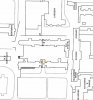
Using Mike’s 1939 plan in post #26 it looks like “P” probably became part of Block C - see my yellow dot. Or it might have been a little bit lower than the dot.

So whatever it was it’s quite likely it would have been incorporated into that block (and so in a covered in area by that time ?). I notice there’s a very small oblong feature marked next to my yellow dot. Was this the “P” ? Or was it lower ?

The earlier map with “P” marked seems to have been maked with a black dot alongside a small building, and so at that time “P” was possibly outside. Be interesting to know what the small building to the left of “P” was. Might give a clue as to what “P” was.

Viv.D0CE3360-FD01-4253-B228-7C712D124AF8.jpeg
D1B5DE0F-36FD-4AF1-A942-29BF2C325339.jpeg
 
Last edited:
I expect the best we can do at the moment then Janice is note that whatever it was it was close to/inside/alongside Block C. Viv.
 
Last edited:
Roughly but think it might be a bit above the green as I think it was where the black walls are on that map - yes Lyn. As Viv says - probably best we can do for now.
 
Last edited:
Good Day, I am joining this thread more by coincidence as a very occasional visiting member. Highcroft Road replaced Union Road in 1932, at the time Birmingham City Council replaced the Poor Law Unions and started to rename the former workhouses as institutions , nursing homes, infirmaries etc. for which it took responsibility

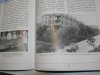
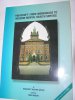
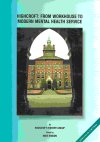
Lockdown has given me time to bring back for sale, brand new copies of the book HIGHCROFT:FROM WORKHOUSE TO MODERN MENTAL HEALTH SERVICE published in 2001. Edited by the late Mike Hinson and produced by a group of us, former colleagues at Highcroft its history is described in 72 pages ( A4 binding )and over 30 photos or illustrations. Price reduced to £5 plus £2.50 postage I would be happy to post a copy. Proceeds will continue to go to the Mental Health Trust charitable funds.
I will prepare a separate post with more detail and a picture. Sorry I don't have more detail about the 'P' which may have served as an external pump for the gardening teams.
Julian C.
also on [email protected]
 
The assumption that the Pump (P) represents a main water supply comes from the 1867 description. Water obtained from a deep well on the premises by means of rotary pumps. (Post 37)
 
I remember the water tower at Highcroft Hospital, it was in the vicinity of the laundry. The tank on the top was a Braithwaite tank, they were a sectional bolt together tank to the size you want.

There were quite a few of them around Birmingham, there was one on Goosemore Lane for the laundry too.

The hospital may have had their own well and pumped from that. Most certainly a hospital would need a reliable water supply. Around the time the workhouse was built, there may not have been a constant water supply in Birmingham.

The early water supplies were not constant and often only operated on certain days or over limited hours of the day. Therefore, lots of houses and factorise had a water storage tank in the roof or up a tower. This would allow the storage volume to build up and even out demand.

The problems with this intermittent supply were when the water was cut off there was a tendency for polluted ground water to be sucked into the water supply pipes. People were still useing cesspits, therefore constant water supplies eventually became the norm.

There were of course problems associated with water tanks in lofts too. Dead birds and rats often found their way into these tanks and could cause problems. This is actually the reason why mixer taps were not very common in the UK early on; they were seen as a possible source of mains water pollution.

Most older houses would have a single drinking water tap on the kitchen sink. The other cold-water taps being supplied by the cold-water header tank in the loft. This tank then fed the hot water cylinder too. Its why your parents would say don’t drink form the hot water taps.

I did a lot of work modifying water supplies to houses and multi-story blocks of flats around Birmingham.
 
Affordable history of Highcroft still available.
Published in 2001, HIGHCROFT:FROM WORKHOUSE TO MODERN MENTAL HEALTH SERVICE
describes the beginning of the Aston Union Workhouse to the present day, 72 pages in bound A4 with approx 30 photos and illustrations, this work was edited by the late Mike Hinson and has many references and footnotes for further delving into public records. With a preface by Prof. Carl Chinn this has an easy, readable, concise style compiled by a group of former staff.
New copies of the book are still available at the reduced price of £5 plus £2.50 postage. Proceeds to the charitable funds of Birmingham & Solihull Mental Health NHS Trust.
Enquiries here or by email to [email protected].
 

Attachments

  • Highcroft war damage.JPG
    Highcroft war damage.JPG
    746.6 KB · Views: 25
  • Highcroft book cover.JPG
    Highcroft book cover.JPG
    591.7 KB · Views: 27
Trying to find the history of what happened to Highcroft Hall and its demise or name change etc
OWERKID.. If you are still interested in the history of Highcroft further down this thread i have posted details about the book we produced in 2001 which gives an illustrated history from WORKHOUSE TO MODERN MENTAL HEALTH SERVICE with all the name and status changes from 1936 to 2000. Best wishes.. I have been out of the Forum lately.. Julian
 
My brother went into mental health nurse training in the 80s at high Croft he always carried a lighter with him to light their cigarettes but he decided it was not for him as he found it quite dangerous he said you could never turn your back on the patients .He was assaulted a few times mainly by patients throwing things at him he was hit at the back of the head with a flower pot and bruised his neck.He stayed in nursing but ended up a district nurse for 30 years.I am sure in the 80s he stayed in high Croft where they had nurses accomodation in the same grounds.
 
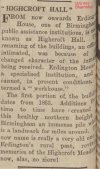
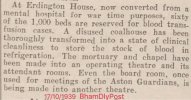
In my post #33 the press cutting describes the site of the laundry, drying area etc. And it’s marked on the 1939 map as above Block D. Somewhere thereabouts is another potential location for a well/water source. Viv.
 
Not sure if you will pick this up but we could never find a birth certificate for my grandma in London took 40 years to work it out with help and suggestions. I looked under Annie Mary Whitbread nothing her Uncle George had a middle name Morley he adopted (who knows why!) however it was randomly suggested I look under Annie Mary Morley bingo there she was the daughter of Elizabeth Morley nee whitbread the "spinster" Aunt who bought her up with her sister Mary. Never in this wide world would I have found it with out help I still dont know how this person knew to advise me to check this. I know Elizabeth did not marry so the certificate was a fabrication to cover my grandmothers illegitimacy.
 
Just off the top of my head, it was Aston Union Workhouse and then became Highcroft Hospital. I am wondering if highcroft Hall was a local name?

I do know it was a geriatric ward for the elderly, and it was also home to a lot of people with both mental and physical disabilities. There were a lot of ‘stories’ associated with the site. Some say it used to home quite dangerous inmates in padded cells etc. I was asked to develop and print a set of photos from an exhibition showing some of the restraint devices used at the hospital.

With changes in medical care and new drugs, these practices fell out of use.
My mum was a nurse probationer there in the early 1950's and always referred to it as Highcroft Hall. Had some very interesting stories about her experiences too

Just off the top of my head, it was Aston Union Workhouse and then became Highcroft Hospital. I am wondering if highcroft Hall was a local name?

I do know it was a geriatric ward for the elderly, and it was also home to a lot of people with both mental and physical disabilities. There were a lot of ‘stories’ associated with the site. Some say it used to home quite dangerous inmates in padded cells etc. I was asked to develop and print a set of photos from an exhibition showing some of the restraint devices used at the hospital.

With changes in medical care and new drugs, these practices fell out of use.
 
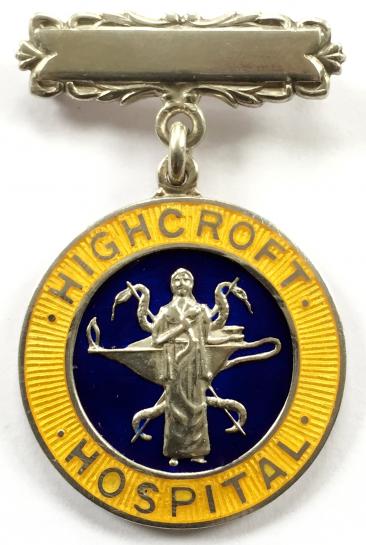
Highcroft Hospital 1959 silver psychiatric nurses badge

Highcroft Hospital 1959 silver psychiatric nurses badge​


An extremely well designed scarce badge from the 'Highcroft Hospital'; from an ornate floral decorated bar depends a circular medal, bearing fine quality guilloche translucent yellow enamel title suround, the centre depicts 'Asclepius god of medicine and healing' superimposed over crossed staffs and lamp, the reverse impressed with Birmingham silver hallmarks for 1959 to both parts, maker's details "M&B" (Marples & Beasley). Very good condition, retaining original pin fittings, enamel perfect, an excellent example.
Height 50mm.

Situated in Birmingham it was originally named 'Aston Union Workhouse', renamed 'Erdington House' and then 'Highcroft Hall Hospital' in the early 1940's, later to become known as 'Highcroft Hospital' until in 1996 it was closed.
 
My aunt was a resident at Highcroft Hall. As a child I remember sometimes seeing and talking to her when I visited
my Nan. She periodically spent a weekend at home (Nans)
A lovely, sweet young woman who to me at least showed no signs of mental illness. Her death certificate in 1972 showed
she had died of pneumonia, she was 27 years old, so bloody sad....
 
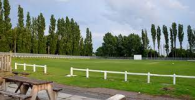
My mother worked as a psychiatric nurse at Highcroft during the early 50s. I too remember the patients asking children to buy cigarettes for them, through the railings on Slade Road (the shop on the corner of Kings Road, I think charged 6d for two loose fags). I also went to a couple of the summer fairs that were held in the 60s on and around the cricket field there (see below).

1652178078307.png
 
Just a reminder for those reading this thread, I still have copies of the Book HIGHCROFT:FROM WORKHOUSE TO MODERN MENTAL HEALTH SERVICE for sale.
Published in 2001, by Highcroft History Group and edited by Mike Hinson, it has 72 pages on A4 size, with many photos and illustrations, and reference to historical documents and events. Price now reduced to £7.50 including UK 2nd class postage. Proceeds to the charitable funds of the Birmingham & Solihull Mental Health NHS Trust.
contact: Julian Cleaver member of group (retired) [email protected] Sorry the scan is so large! Highcroft Book cover 2.jpg
 
My grandmother died there in 1949. I was always told she died from cancer, and her death certificate mentions pneumonia and myocarditis, but I'm now wondering if she had a psychiatric disorder. Would they have placed cancer patients there then?
 
My grandmother died there in 1949. I was always told she died from cancer, and her death certificate mentions pneumonia and myocarditis, but I'm now wondering if she had a psychiatric disorder. Would they have placed cancer patients there then?
Highcroft hospital had a geriatric ward, it did treat people who did not have psychiatric disorders. My grandfather died there after suffering several strokes. Does it mention cancer on the death certificate? Myocarditis is inflammation of the heart.
 
Help!

I am looking for a bit of help trying to locate any potential details of my great grandmother and my grandmother and her siblings. Forgive the drawn out expanation. On the 1911 census they were living at Erdington.

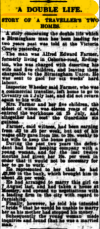
My great grandmother (Julia Reece) was married to a 'right charmer' Alfred Edward Farmer. He managed to make the papers in 1913 for deserting his wife and family and tricking another woman! The family ended up in the workhouse and him in prison. I have put the news article below and a transcription as it's hard too read.

What I am keen to find out is what workhouse they would have gone to (I assume Erdington) and if records exist where I can get some more details.

I'd be grateful for any help/ideas.

Malcolm

1657700777857.png
Article Birmingham Gazette July 1913
A story concerning the double life a Birmingham man has been leading for two years past was told at the Victoria Courts yesterday.
The man was Alfred Edward Farmer, formerly living in Osborne Road, Erdington was charged with deserting his wife and five children, and leaving them chargeable to the Birmingham Union. He was sent to gaol for six weeks hard labour.
Inspector Wheeler said Farmer, who was a commercial traveller, left home to go to Coventry on 2nd July last and did not return again to his wife.
Mrs Farmer and her five children, the eldest of whom was eleven years of age entered the Workhouse on the 25th July, and all together had cost the guardians six guineas.
Farmer, said witness, had been earning between £3 and £5 per week, but out of his wages only gave 18s to 20s weekly to his wife to keep the house going.
During the past two years the defendant had been keeping company with a young woman and for the last twelve months had given her 10s per week in order that it would not be necessary for her to go to work.
He represented to her that he had £8000 in the bank, which bought him in £5 per week.
He had arranged to marry this girl on 7th August last and had taken a house at Moseley and opened up negotiations with a leading firm in the city with regard to furnishings.
Finally, however, he told his intended ‘bride’ that he would be unable to marry her because his mother had stopped his money.
Subsequently the young woman made enquiries and found out he was a married man.
 
Off the top of my head, the workhouse may have been Aston Union Workhouse, later known as Highcroft Hall. It sits within the boundary of Revivor Road, Slade Road, Fentham Road and Highcroft Road, so I believe it is in Erdington B23.

There were some Alms Houses at the top of Station Road and Sutton (New?) Road Erdington too.
 
Off the top of my head, the workhouse may have been Aston Union Workhouse, later known as Highcroft Hall. It sits within the boundary of Revivor Road, Slade Road, Fentham Road and Highcroft Road, so I believe it is in Erdington B23.

There were some Alms Houses at the top of Station Road and Sutton (New?) Road Erdington too.
Thank you very much. I am hunting through the thread to see what else I can pick up. Ideally, I would like to hunt down some records. I never meet my greatgrandmother and I was only 3 when my grandmother passed away. My mother never spoke of it. I only found out doing family history research.

Malcolm
 
Back
Top