
-
Welcome to this forum . We are a worldwide group with a common interest in Birmingham and its history. While here, please follow a few simple rules. We ask that you respect other members, thank those who have helped you and please keep your contributions on-topic with the thread.
We do hope you enjoy your visit. BHF Admin Team
You are using an out of date browser. It may not display this or other websites correctly.
You should upgrade or use an alternative browser.
You should upgrade or use an alternative browser.
Wake Green Road
- Thread starter Vivienne14
- Start date


superdad3
master brummie

Just came across this fascinating postcard for sale on ebay which set me off thinking as it does. The building looks Georgian perhaps and the postcard was postmarked in 1903. The building is long gone.
If you look carefully above the roof of the building you can see a cupola with a weather vane on it and a "tower" to the left of it. My wife recognised it straight away; "It's Gracie Hall!" She's right as well. Here's a street view from Wake Green Rd & you can just see the cupola/tower.

This is another Moseley building I'd like to research further when time allows but this is what I know at present:
1893: Designed by John Bowen & Son, the famous Birmingham architects. Called the Dingle.
1914: Used as an Auxilary Hospital.
1932: Dingle Nursing Co-operation & Nursing Home [from at least 1927 & continuing after WW2 [thanks Mike Gee etc]
1960s: Student accommodation for Aston University. Renamed Gracie Hall [after Sir James Gracie]
2021: ??


A c1905 view of WGRd. Viv.

A house in Wake Green Road with an important role during the 1947 fuel crisis (coal shortage) and it's impact upon electricity supplies.

Source: British Newspaper Archive
Source: British Newspaper Archive


BrummieGeoff
Sparkhill Lad
An earlier photo of 53 Wake Green Road .... I think when it was a residence called The Grange.

53 Wake Green Road, known as “The Grange’ was the home of Barry Jackson (later Sir Barry Jackson) the noted Director of the Birmingham Repertory Theatre. He is recorded as living there (with his widowed mother and others, including servants) in the 1911 census, when he was 32. He was similarly recorded in the 1921 census. On each occasion the name of his partner, Harry Scott-Sunderland, film and theatre actor, is recorded as a ‘visitor’. Sir Barry was later one of the founders of the Malvern Festival.
Last edited:
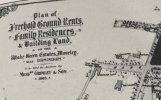
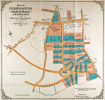
The house in the photo posted by Vivienne on 24.1.21(near the start of this thread) appears to be ‘Charlton Lodge’ on the site of what is now 40 Wake Green Road (a Grade II Listed Building) according to a 1903 plan of the Wake Green Estate. (See photo). ‘The Dingle’, later the James Gracie Centre and now private flats is not shown on the plan but is on the opposite side of Cotton Lane.
Attachments
BrummieGeoff
Sparkhill Lad
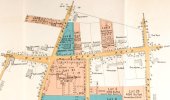
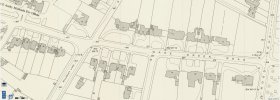
Maps from 1903 and the 1950s showing the section of Wake Green Road between Cotton Lane and Yardley Wood Road (called Stoney Lane in 1903). The 1903 map gives the house names, and many of these houses survived into the 1950s. I assume that "Shelbourne" on the corner of Yardley Wood Road became Moseley College at Number 72.
BrummieGeoff
Sparkhill Lad
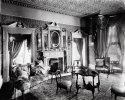
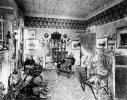
A couple of interior photos showing the amazing period decor of "Glenroy" (shown in the 1903 map above) .... dated August 1891.
So was "Wake Green House" on the 1903 map an existing house and therefore demolished for new buildings? It looks like new properties are there by the 1950s map. I ask this as I wondered if it's the house in our "Somewhere in Saltley" thread. Could be barking up the wrong tree as the footprint looks different !!
BrummieGeoff
Sparkhill Lad
Wake Green House appears in Kelly's in 1903, but has disappeared by the 1904 edition .... so I assume it was demolished as part of the Wake Green Estate development.So was "Wake Green House" on the 1903 map an existing house and therefore demolished for new buildings? It looks like new properties are there by the 1950s map. I ask this as I wondered if it's the house in our "Somewhere in Saltley" thread. Could be barking up the wrong tree as the footprint looks different !!
superdad3
master brummie
I think Wake Green House was possibly Georgian. It featured in the Priestly Riots when it was wrecked. Was the home of Joseph Dyott and the Willmott family for many years at the centre of the Wake Green Estate on Wake Green Road. The house and much of the estate was sold by auction in 1903. The house was demolished shortly afterwards and the row of villas built shortly afterwards [still there]. Here's a full copy of the 1903 map shown in post 40 above.So was "Wake Green House" on the 1903 map an existing house and therefore demolished for new buildings? It looks like new properties are there by the 1950s map. I ask this as I wondered if it's the house in our "Somewhere in Saltley" thread. Could be barking up the wrong tree as the footprint looks different !!
So it was demolished before our 'Somewhere in Saltley' house. Thanks.