Lady Penelope
master brummie
I know there probably wasn't much choice or fashion for the youngsters pictured in Northwood St but they've all managed to look virtually the same. Was it wearing what was available or were they in a gang?


Of course there were religious beliefs amongst the non conformists that the camera was a thing to avoid and there were those who believed that the camera would see into your soul, well that is my excuse for avoiding cameras!! No who wants a fat ugly old pensioner on their film. I make them scan in my photoshopped Poldark with the Calvin Klein underpants and with the miracles of modern computers a pensioner with a Chippendales body....or is that just the legs?Presumably it was placed there for photographic reasons (was in the way beforehand) or that is where it was usually kept, when not in use, and I guess secured to the wall.
I believe I saw this before and noted how reluctant the little boy was to be photographed. I think that today, with half the world wandering around with mobile phones being used as cameras it is difficult to appreciate how rare photographers, outside of their studios, were and how reluctant many were to be photographed.

I thought, when initially seeing this photo, that they were working. I know some are young but maybe it was Saturday and they were able to do work. Maybe the wheeled basket has a clue - laundry? or some other easily carted items. Maybe they were washerwomen? It was once, until fairly recent times, quite common, for women, often widows, to take in laundry.I know there probably wasn't much choice or fashion for the youngsters pictured in Northwood St but they've all managed to look virtually the same. Was it wearing what was available or were they in a gang?


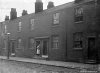
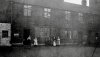

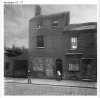
woo its like fagans gang.In another thread we wondered about this lady standing with the group of lads by No 42, Northwood Street. Were there any stories in old newspapers about that street ?

from https://birminghamhistory.co.uk/for...our-old-street-pics.41947/page-99#post-580529

from https://birminghamhistory.co.uk/forum/index.php?threads/old-street-pics.38737/page-242#post-580577
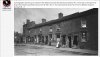



 solihulllife.wordpress.com
Sir, where did you find the info from regarding D Worrall Laquers Ltd. The reason being my uncle was married to one of the Worralls and actually ran the business until he sold it off in the 1970’s his name was Sidney JonesView attachment 133636View attachment 133637View attachment 133638
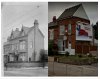
The pictures above were posted by Phil under the Thread “Then and Now” and show the corner of Coventry Road and Gladys Road. Phil also posed the question as to why such a nice substantial house had been vandalised in such a way. The reason has not yet been found, but a few bits of interesting information can be unearthed about its past and one of the owners. The old picture shows a man and woman standing behind the garden wall, could this be David Worrall and his wife?
The thumbnails show Kelly’s from 1900 and the 1903 OS Map. It can be seen that the house in question was A.B. House and the owner being a David Worrall. There are also four villas, A B villas, at the side of the house. Looking at the 1901 census shows David (58) and his wife living at the house with eight children of 12 years old and above, his occupation is given as lacquer manufacturer. David died in 1908, and the head of the household in the 1911 census was his wife.
The house, and other property came up for sale around 1918, and was described as 213 Coventry Road, 5 bedrooms, bathroom, dining and drawing rooms, kitchen, scullery and usual outbuildings, together with a first class motor house and stabling, with double-door gate entrance from Gladys Road. The house was double-fronted and stood well back from the road. The Villas are described in twos as a pair of 7 roomed freehold villas.
In 1891 David was at Green Lane and would have taken possession of the house sometime before 1901. He was the main man in the firm D Worrall and Sons Ltd, established in 1874, and situated in 1939 at AB Lacquer Works, 30a Garrison Lane. It was still going in 1972.
The house existed before David’s occupation, but did he bring the name A B House?
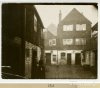
The site, Solihull Life, says that his son William John Worrall was killed in action in the Great War. He followed his father into the lacquer business....David Worrall married in 1862 had 14 children. Business listed in 1884 and 1888 Directories at 1 AB Row. The site also gives link to a Birmingham Live article with picture of children in AB Row, being reputably the shortest street name in Birmingham. On this picture is also a stone set in a building showing A+B with date 1764
11th October 1917
Two local men from Shirley were killed in action in Belgium on 11th October 1917. Private James Edwards, aged 41, died serving with the 1st Battalion, Coldstream Guards and Private William John Wor…
David was born around 1848 and in 1861 was living with his father William, who was a pearl button maker, and was one of at least 10 children living in Hawkes Street, Aston. Later he is recorded as a pear button maker, a brass founder and a lacquer manufacturer.