• Welcome to this forum . We are a worldwide group with a common interest in Birmingham and its history. While here, please follow a few simple rules. We ask that you respect other members, thank those who have helped you and please keep your contributions on-topic with the thread.

    We do hope you enjoy your visit. BHF Admin Team

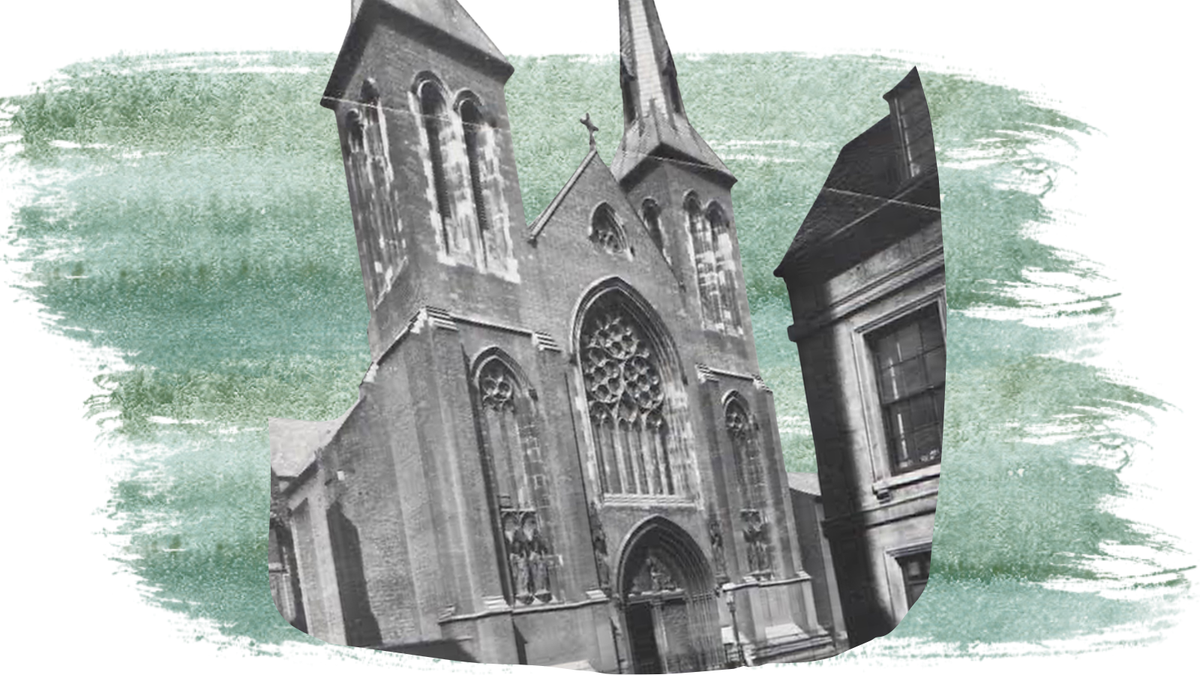
St Chads Cathedral

  • Thread starter Thread starter kenh
  • Start date Start date
This reminds me of a time, about 20 years ago, when the Women' Day of Prayer (held annually) was held at my church. The only men expected to be present were the Parish Priest and his assistant, me. One man, who accompanied his wife, thought he should be there but was told, by some of the ladies that he was surplus to requirements, or words to that effect and he promptly left. Incidentally there is a Birmingham connection as that has been his home town. :)
 
“A small tributary from a spring Shadwell Street is said to have been called St. Chad’s Well, and a doubtful legend relates that it still exists near the altar of the cathedral.”

1901 Birmingham and Warks Archaeology Society.
There are several small altars in the crypt as well as the ones in the cathedtal
But I have never heard about the spring - will ask at work if anyone knows
 
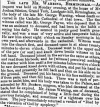
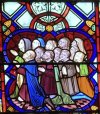
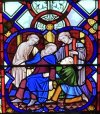
I've been researching St Chad's since I discovered a 2xgreat uncle John Douglas Payne who was married to Lucy Wareing, daughter of George Wareing. George was a tailor in New Street, and he died in St Chad's during mass on 24th March 1844 (‘The Late Mr. Wareing, Birmingham’ Sun (London), 28 March 1844, p. 4 - article below) George's widow had The Wareing window commissioned in his memory which depicts the event. There are some photos of this window and others in St Chad's at https://victorianweb.org/art/stainedglass/pugin/10.html
 

Attachments

  • 1746875677229.png
    1746875677229.png
    175.6 KB · Views: 3
I've been researching St Chad's since I discovered a 2xgreat uncle John Douglas Payne who was married to Lucy Wareing, daughter of George Wareing. George was a tailor in New Street, and he died in St Chad's during mass on 24th March 1844 (‘The Late Mr. Wareing, Birmingham’ Sun (London), 28 March 1844, p. 4 - article below) George's widow had The Wareing window commissioned in his memory which depicts the event. There are some photos of this window and others in St Chad's at https://victorianweb.org/art/stainedglass/pugin/10.html
I can take some closer photographs for you - all the children are individually depicted in the window and I think in the crypt there may be some burial plaques but not 100 % until I can check next week
Bev
 
“A small tributary from a spring Shadwell Street is said to have been called St. Chad’s Well, and a doubtful legend relates that it still exists near the altar of the cathedral.”

1901 Birmingham and Warks Archaeology Society.
I have been given a book today which is an 1877 guide to the cathedral - it mentions a well at the back of the cathedral …‘ and it is thought by some that this well was previously called St Chad’s well and gave the name to Shadwell street and at chads chapel - there is no foundation for this latter supposition for according to a paper in the handwriting of Fr Peach it was at first called St Austin’s chapel Shadwell street’

This book has some interesting pictures in it - will share
 
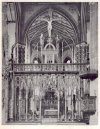
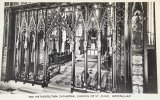
Re the Pugin Rood Screen at St Chads (Source: Pugin Society newslatter):
The rood screen was removed from St Chad’s in a controversialreordering of the Cathedral in 1967.

A spokesman for those in favour of the screen’s removalstated that the arrangement of the church would then “conform more closely to the liturgical requirements resulting from the recent Vatican Council” by removing the divide between the priest and congregation, and that the “proposed changes would make the cathedral brighter and more attractive”.

The leading opponent of the reordering was the Victorian Society. One of its Council members, Nicholas Taylor, believed those changes to be “extremely unsympathetic to the qualities of Pugin’s design”. The Society especially objected to the removal of the rood screen. Mr Taylor continued: “The rood screen is an excellent example of Pugin’s work and incorporates late 15th century German statues collected by Pugin and his patron the Earl of Shrewsbury”.

Regardless of opposition, the removal of the rood
screen went ahead in June 1967. The Birmingham
Branch of the Victorian Society requested to be given
the screen in order to ensure its preservation. However, when in possession of the screen, they discovered that they
really had nowhere to store such a large item, which was nearly 30 feet square and weighed more than two tons. They
were delighted when Roderick Gradidge, a member of the London branch of the Victorian Society, proposed that it be moved to Holy Trinity, an Anglican church in Oxford
Road, Reading.

 
Re the Pugin Rood Screen at St Chads (Source: Pugin Society newslatter):
The rood screen was removed from St Chad’s in a controversialreordering of the Cathedral in 1967.

A spokesman for those in favour of the screen’s removalstated that the arrangement of the church would then “conform more closely to the liturgical requirements resulting from the recent Vatican Council” by removing the divide between the priest and congregation, and that the “proposed changes would make the cathedral brighter and more attractive”.

The leading opponent of the reordering was the Victorian Society. One of its Council members, Nicholas Taylor, believed those changes to be “extremely unsympathetic to the qualities of Pugin’s design”. The Society especially objected to the removal of the rood screen. Mr Taylor continued: “The rood screen is an excellent example of Pugin’s work and incorporates late 15th century German statues collected by Pugin and his patron the Earl of Shrewsbury”.

Regardless of opposition, the removal of the rood
screen went ahead in June 1967. The Birmingham
Branch of the Victorian Society requested to be given
the screen in order to ensure its preservation. However, when in possession of the screen, they discovered that they
really had nowhere to store such a large item, which was nearly 30 feet square and weighed more than two tons. They
were delighted when Roderick Gradidge, a member of the London branch of the Victorian Society, proposed that it be moved to Holy Trinity, an Anglican church in Oxford
Road, Reading.
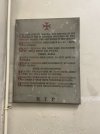
There are some
Items which used to be on the rood screen still in possession at st chads
Two paintings now in St Edwards chapel, and some of the wooden statues which were attached to the screen.
 

Attachments

  • IMG_1062.jpeg
    IMG_1062.jpeg
    375.7 KB · Views: 3
Back
Top