• Welcome to this forum . We are a worldwide group with a common interest in Birmingham and its history. While here, please follow a few simple rules. We ask that you respect other members, thank those who have helped you and please keep your contributions on-topic with the thread.

    We do hope you enjoy your visit. BHF Admin Team

Muntz George Frederick (1794-1857)

Muntz was involved, but as a political champion, not the inventor.
1852, Mr. Muntz (MP for Birmingham) moved for a select committee to examine Henry Archer’s new perforating machine for postage labels and the way the Inland Revenue had dealt with Archer. The debate text names Muntz and summarises his case for adopting perforation.
 
from Hansard 16 March 1852
MR. MUNTZ
said, he rose to move for a Committee to inquire into the agreement entered into between the Commissioners of Inland Revenue and the patentee of the machine for perforating the sheets of postage labels. In the year 1847 a Mr. Archer discovered and patented an invention for perforating the interstices of postage stamps, which did away with the use of a knife or scissors in separating them, and offered his invention to the Post Office, the Commissioners of Stamps, and the Board of Inland Revenue,

After a lot of debate
Select Committee appointed, "to inquire and report upon the present mode of engraving, printing, and gumming the Postage Label Stamps; and likewise whether and how the perforating machine, invented by the Patentee, could be applied to the same with advantage to the Public."

If you want to read it all then
 
Last edited:
Just a late addition to this conversation. In 1837 Muntz was accused of riot and assault during a vestry meeting at St. Martin's Church. The confrontation revolved around the choosing of a church warden - whether a dissenter whom Muntz and others supported, or an Anglican as the rector Thomas Moseley and local Tories were in favour of. Also, there was the issue of church rates which had not been collected since 1831 but which Moseley was attempting to reintroduce. Reformers had demanded the records of a previous meeting which supported the right of attendees to vote, the authorities had refused, nd an attiempt was made to take them by force. Muntz was said to have climbed along the pews wielding his walking cane like a shelleigliegh, and when accosted by the chief of police, Muntz was said to have tried to wrestle his staff of office from his hand. He, and three other accused, including the Co-operator William Pare, attended court the following year. I'm researching this for an article. Muntz was undoubtedly guilty as charged but with caveats. He DID clim along the pews - but so what? Lots of other people did the same. It was hardly a capital offence. He was 'wielding' his cane in one hand but in his other he held his hat. There was no report of him striking anyone, so it was probably just to keep his balance. (His cane, like his beard, was an affectation he always had). He did wrestle with the chief of police - but the chief of police started it, was in plain clothes and once proof of his identity was provided Muntz sat down. The affair was grossly overstated, and (in my opinion) was likely to be pre-planned by the pro-rate party, who were denying entrance to non-poor rate payers (against their own legal advice) to prevent them losing the vote. Muntz was found guilty of a lesser charge and the church rate dropped a few years alter.

 
Last edited:
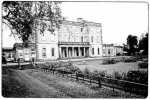
Fascinating contributions on Muntz family. I was interested to learn that they resided at Umberslade Hall near Tanworth in Arden

Before the sad demise of BSA in 1973, Umbersalde Hall was the BSA/TRIUMPH Motorcycle Cycle Division Research Establishment working hard on several new models to compete with the Japanese bikes for USA market, alas to no avail - the rest is history
 
Fascinating contributions on Muntz family. I was interested to learn that they resided at Umberslade Hall near Tanworth in Arden

Before the sad demise of BSA in 1973, Umbersalde Hall was the BSA/TRIUMPH Motorcycle Cycle Division Research Establishment working hard on several new models to compete with the Japanese bikes for USA market, alas to no avail - the rest is history
1790782540219.png
I wonder why BSA selected such a grandiose site for their research establishment - it must have been expensive to run - was it awkward to work in or was it all wheel spins in the ballroom!!?
 
View attachment 229817
I wonder why BSA selected such a grandiose site for their research establishment - it must have been expensive to run - was it awkward to work in or was it all wheel spins in the ballroom!!?
For a few years around 1960 Umberslade was the R&D home of Wilmot Breeden Ltd. I was bussed out there daily by Eatonways from the Yew Tree Yardley
 
Last edited:
I agree this is a very interesting thread but returning to May 20th 1905, when Frederick Ernest Muntz (grandson of George Frederic) donated three acres of land including a former clay pit known as "The Dell" in Selly Oak to the district council to establish a public park.

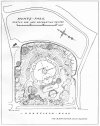
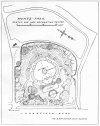
Birmingham Civic Society reported: "It has the unusual feature of a large Dell in which music, dancing and games are held. The unsatisfactory condition of the grounds for this kind of recreation having been brought to our notice [we prepared a scheme] at the request of the City Parks Department ... [and gave] a grant of £300 towards the cost of carrying it out".

1790796234946.jpeg
xxxxxxxxxxBirmingham Civic Society scheme

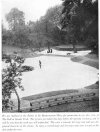
On June 27th 1923 the Birmingham Mail reported " This evening the Lord Mayor of Birmingham ...officially opened the Dell in Muntz Park..a striking transformation has been wrought... which, while preserving the charm of the location and contour, has changed it into a delightful open-air amphitheatre. In the centre is a paved dancing area, all round the Dell are fine wide spreading trees which provide welcome shade...facing the amphitheatre is a raised platform and in front of this is provision for erecting a Maypole. The platform has a superb setting of trees and in the background is another dais....which can be utilised as a bandstand.... when completed it will have a most charming sylvan setting...As an experiment it will be watched with keen interest."

1790796071750.jpeg
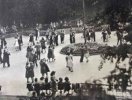
In the 1950s they were still dancing....

1790796129964.jpeg

These generous, straightforward and kindly times seem sadly lost but it would be interesting to know just what was the "experiment" the newspaper mentioned and who was conducting it - but perhaps it was just a hope, left standing unresolved for all to see and make up their own minds in new times.

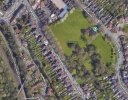
And this is how things stand today:

1790800412410.jpeg

See: Hayward, W. The Work of The Birmingham Civic Society from June 1918 to June 1946, pp 48-50
 

Attachments

  • 1790796006753.jpeg
    1790796006753.jpeg
    110.9 KB · Views: 3
Last edited:
Back
Top