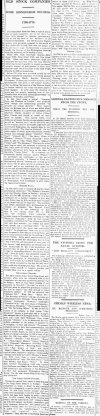
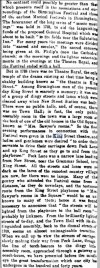
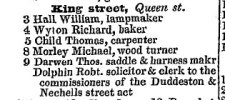
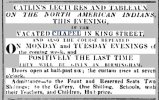
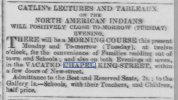
I came across this theatre after learning that Stephenson Street was once named King Street (see Stephanson Street thread). I've extracted a few snippets of information from Wikipedia, summarised below. It would be great if we could add any other information to this, once important, Birmingham Theatre.
* It was the first purpose-built theatre to open in Birmingham - it had earlier theatres, but King Street was an ambitious project based on established London patent theatres
* Opened on 25 September 1751 with its first performance being a "Shakespeare Night and Concert of Vocal and Instrumental Musicians". Box seats were 3 shillings, pit was 2 shillings, and gallery 1 shilling.
* Performances started at 7pm, season ran from June to September.
* King Street was built for actor-manager Richard Yates – then at the peak of fame at London's Theatre Royal, Drury Lane - after a highly successful company visit to Birmingham the previous year
* 1760 theatre was under the direction of Thomas Hull. (Regular patrons included William Shenstone, a recognised leader of local society in the era of the Midlands Enlightenment).
* By June 1762, Hull maintained the theatre company with Joseph Younger, who retained his connection with the theatre until 1779
* It closed its doors in 1780, the building sometime thereafter was put to use as a Methodist chapel
* It was the first purpose-built theatre to open in Birmingham - it had earlier theatres, but King Street was an ambitious project based on established London patent theatres
* Opened on 25 September 1751 with its first performance being a "Shakespeare Night and Concert of Vocal and Instrumental Musicians". Box seats were 3 shillings, pit was 2 shillings, and gallery 1 shilling.
* Performances started at 7pm, season ran from June to September.
* King Street was built for actor-manager Richard Yates – then at the peak of fame at London's Theatre Royal, Drury Lane - after a highly successful company visit to Birmingham the previous year
* 1760 theatre was under the direction of Thomas Hull. (Regular patrons included William Shenstone, a recognised leader of local society in the era of the Midlands Enlightenment).
* By June 1762, Hull maintained the theatre company with Joseph Younger, who retained his connection with the theatre until 1779
* It closed its doors in 1780, the building sometime thereafter was put to use as a Methodist chapel
Last edited: