
-
Welcome to this forum . We are a worldwide group with a common interest in Birmingham and its history. While here, please follow a few simple rules. We ask that you respect other members, thank those who have helped you and please keep your contributions on-topic with the thread.
We do hope you enjoy your visit. BHF Admin Team
You are using an out of date browser. It may not display this or other websites correctly.
You should upgrade or use an alternative browser.
You should upgrade or use an alternative browser.
Colmore Row
- Thread starter fergie
- Start date


ellbrown
ell brown on Flickr
On the left is 110 Colmore Row (aka One Ten)
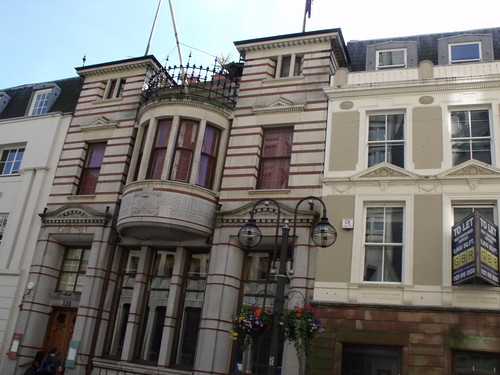
One Ten - 110 Colmore Row by ell brown, on Flickr
From Pevsner Architectural Guides: Birmingham by Andy Foster
On Heritage Gateway 110 Colmore Row is a Grade II listed building.
One Ten - 110 Colmore Row by ell brown, on Flickr
From Pevsner Architectural Guides: Birmingham by Andy Foster
No. 110 is a picturesque and original piece of 1903-4 by Henman & Cooper for the Scottish Union and National Insurance Co. Aberdeen granite, appropriately, and limestone, with inset bands of red brick. Two-storey centre with big semicircular oriel and fine original railing, clamped between three-storey towers with tapering tops, ogee caps and tall finials.
On Heritage Gateway 110 Colmore Row is a Grade II listed building.
COLMORE ROW
1.
5104
City Centre B3
No 110
SP 0686 NE 33/15
II GV
2.
1902, by William Henman and Thomas Cooper. Granite with irregularly spaced red
jointing bands. Facade and plan are alike complicated. Three bays, the outer ones
like square turrets with battered sides, bobbin-like finials at the corners and
shallow domes sprouting flag-staffs, the centre one with a large ground floor
tripartite window and a 1st floor bow window welling out from the facade and carrying
a spiky iron railing. The turrets each have a tall ground noon frame with battered
sides and dentilled undulating pediments. In the frames, on the left, the entrance
with window above and, on the right, a tall window. Above these, each turret has a
simple sash window with detached pedimented cornice and a window set within deeply
splayed reveals and behind 'mullions'. The plan with, towards the back, an almost
completely circular shape to the left and an octagonal shape to the right.
Listing NGR: SP0680686954
ellbrown
ell brown on Flickr
112 Colmore Row
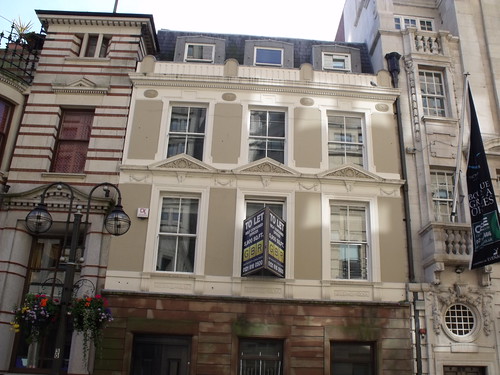
GBR Properties - 112 Colmore Row by ell brown, on Flickr
From Pevsner Architectural Guides: Birmingham by Andy Foster
Heritage Gateway - 112 Colmore Row is Grade II listed.
GBR Properties - 112 Colmore Row by ell brown, on Flickr
From Pevsner Architectural Guides: Birmingham by Andy Foster
No. 112 of c. 1823 has a crisp stucco front with delicate detail: pediments with anthemion decoration, garlands, and oval discs. Stepped-up lugged architraves.
Heritage Gateway - 112 Colmore Row is Grade II listed.
1. COLMORE ROW
5104 City Centre B3
SP 0686 NE 33/16 No 112
II
2.
Early C19, altered. Painted stucco. 3 storeys plus modern attic; 3 bays. Ground
floor with a modern shop front. 1st and 2nd floors each with 3 sash windows later
given frames, those ofthe 1st floor with pediments that project into the 2nd floor
region. An apparent altered parapet.
Listing NGR: SP0679886952
ellbrown
ell brown on Flickr
118 - 120 Colmore Row - The Co-Operative Bank (in 2009 not sure if it is still that though)

118 - 120 Colmore Row - The Co-Operative Bank by ell brown, on Flickr
From Pevsner Architectural Guides: Birmingham by Andy Foster
Heritage Gateway - 118 - 120 Colmore Row is a Grade II listed building.
118 - 120 Colmore Row - The Co-Operative Bank by ell brown, on Flickr
From Pevsner Architectural Guides: Birmingham by Andy Foster
Nos. 118-120 is entertaining but mongrel stucco Italianate of c. 1875.
Heritage Gateway - 118 - 120 Colmore Row is a Grade II listed building.
COLMORE ROW
1.
5104
City Centre B3
Nos 118 and 120
SP 0686 NE 33/18
II GV
2.
Late C19. Stucco. Three storeys; 6 bays, the outer 2 broader and slightly advanced.
Ground floor with arched entrances with flanking coupled pilasters and, centrally,
4 segment-headed windows. First and second floors with arched window except those
of the 2nd floor outer bays. Coarse detailing and listed for group value only.
Listing NGR: SP0678286932
ellbrown
ell brown on Flickr
126 Colmore Row - Caffe Uno - Ristorante Italiano
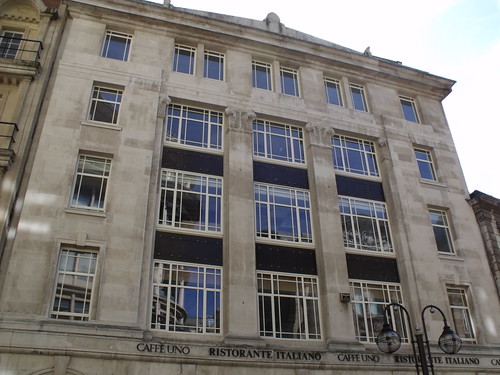
126 Colmore Row - Caffe Uno - Ristorante Italiano by ell brown, on Flickr
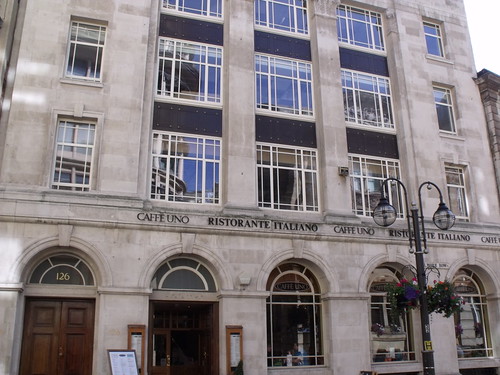
126 Colmore Row - Caffe Uno - Ristorante Italiano by ell brown, on Flickr
From Pevsner Architectural Guides: Birmingham by Andy Foster
126 Colmore Row - Caffe Uno - Ristorante Italiano by ell brown, on Flickr
126 Colmore Row - Caffe Uno - Ristorante Italiano by ell brown, on Flickr
From Pevsner Architectural Guides: Birmingham by Andy Foster
No. 126 of 1926 by S.N. Cooke for the North British and Mercantile Insurance. Cleanly articulated, with giant Ionic pilasters.
ellbrown
ell brown on Flickr
I made a panoramic of 126 Colmore Row using the above two photos (and cropped it for this result). It seems to work (didn't expect it would, but it did)
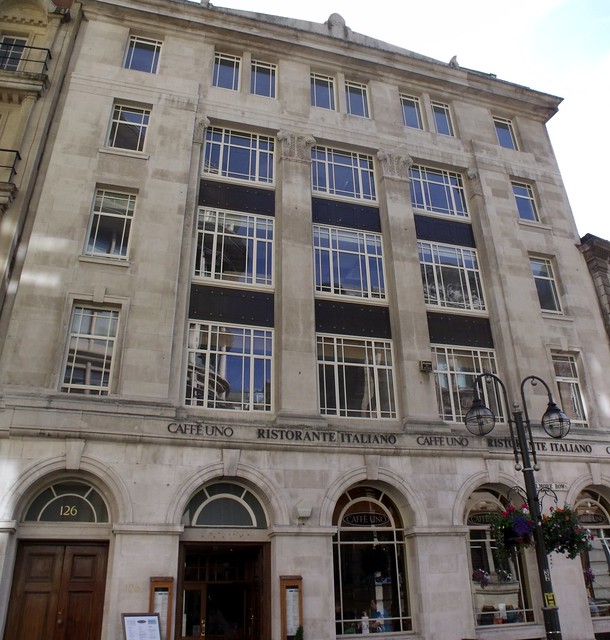
126 Colmore Row - Caffe Uno - Ristorante Italiano - panoramic by ell brown, on Flickr
126 Colmore Row - Caffe Uno - Ristorante Italiano - panoramic by ell brown, on Flickr
S
Stitcher
Guest
a nice 1960s photo of Colmore Row.

Looks like the Grand Hotel (centre). The trees seem to take up much more of the road, or have these now been rmoved altogether? Viv.
S
Stitcher
Guest
I have just had a peep on Street View and the trees are still there but appear much smaller so they may have been uprooted and replaced with a smaller variety.
Always thought the 1800s description of the area around St, Philip's sounded delightful with it's avenues of lime trees on all sides. Glad some trees are still there even if they're not lime trees. Viv.
S
Stitcher
Guest
Actually Colmore Row and the Cathedral grounds is a very green area.
S
Stitcher
Guest
How peaceful is that scene, and how relaxed and at ease everyone seems to be.
The Cathedral grounds in 1960.
This 1896 Francis Firth photo of Colmore Row is one I've seen before. But what I hadn't realised was that it shows Christ Church on the right. Not a view of Christ Church that you normally see. You can see how very plain the Church architecture was, especially compared with the more elaborate victorian Council House. And it gives a good view of the georgian houses along Waterloo Street behind Christ Church which, surprisingly, I think, are still there. Viv

paul stacey
master brummie
Hi Viv, what wonderful photo, of an iconic place, "and time", in Birmingham's history, I am puzzled though, wether it is a snowy scene, or in bright summer sunshine. !!?
paul
paul
Hi Paul. Well spotted, it's hard to tell isn't it? Looking at the road, it seems to have track marks and the trees don't have any leaves, so maybe it was a sunny winter's day. The track marks could be dirt I suppose, but I would have thought the road was made up by 1886, especially as it's a roadway leading to the Council House. Must be snow. Viv.
guilbert53
master brummie
Another Frith photo of Christ Church here, and you can see the "plain" side of the church seen in your photo.
Probably taken on the same day
https://www.francisfrith.com/birmingham/photos/christ-church-1896_37276/
Probably taken on the same day
https://www.francisfrith.com/birmingham/photos/christ-church-1896_37276/
Thanks Guilbert. Am I right in thinking that nothing has been built on the site of Christ Church? Is it effectively open ground still, well I mean landscaped ? Seems a pity to have taken it down in the first place. Looking at this one and the earlier Francis Firth photo makes me think the 'snow' might have been a trick of the lens. Viv.
This is, I think, about 1930s/40s? A nice view down Colmore Row which includes not one, but TWO motorbikes with sidecars. Viv.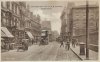
paul stacey
master brummie
I would say a cracking photo Viv, but I think the date around the mid twenty's. Paul
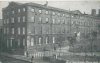
Thanks for that Paul. I wasn't too sure. And it's good to see the old Bluecoat School in the photo too. Viv.
Found another of the Bluecoat School, dated 1909. The footpath outside the school on Colmore Row looks much narrower than I remember. Wonder if when the school was demolished they built the replacement building (I remember it as the Halifax) a little further back. Lots of railings around the churchyard which seem to border each of the churchyard walkways. Viv.
S
Stitcher
Guest
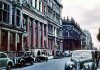
Colmore Row
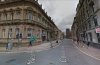
A few more Colmore Row, about the turn of the century / Edwardian.
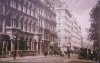
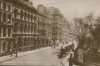
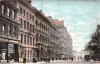
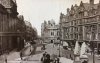
This one is labelled c1909 but is it later ?
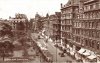
This one is labelled c1909 but is it later ?

Radiorails
master brummie
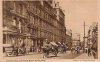
Certainly few motor vehicles in the first three pictures and shows the hansom cabs positioned where buses would be some years later. The final pic is later, bus shelters in place (no buses however) and looks rather like the early 1930's.
I agree Alan, looks much later than early 1900.
This one is 1948.
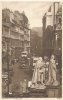
This one is 1948.
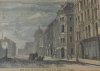
This drawing (sorry no date, but around when Ann Street disappeared ?) must have been made from about the Bennett's Hill junction. Viv.
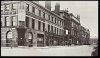
Carolina, That side of the street seems to have escaped development, whilst the other side has few early buildings. There's a modern building next to the Council House which has been fairly sympathetically (mentioned on another thread) so hope the new developments on that side of the road follow suit. Viv.