
Ben Rudder
New Member
Rudder Timber Merchants — company ledgers
I am wondering if anyone might find a use for some company records
My family moved away from the Birmingham area when I was 6 years old, but I recently inherited a stack of old ledgers and wage books, the oldest of which date back to at least 1904. Although I don’t think they are entirely continuous, they include the 2nd World War and run through the 50s and 60s.
They relate to two associated companies
FW Rudder, (Frederick Williiam), with a business address at 38 Sutherland St, Aston, and
CJ Rudder, (Charles John), Cambridge St, and/or Aston Hall Rd
I understand the two yards were adjacent but probably with separate access.
Earlier family historians suggest that there were in fact three Rudder brothers in the timber trade in the early 1900s, all sons of WD Rudder (William Daniel), who had established himself in the timber business in Birmingham in the mid-late 1800s. (The family originated in Gloucestershire and had fallen on hard times during the mechanisation of the weaving trade.)
The eldest brother was Harry, who took on his father’s company and I believe it must have been WD’s original firm which Harry then combined to the Payne family (see the thread on the Rudders and Payne's fire).
CJ was my great grandfather, and FW his brother sadly took his own life in 1925, and CJ took on supervision of the FW business. The two companies weren’t directly competitive, with FW Rudder dealing with imported timber, and CJ manufacturing wooden packing cases.
I have a very dim recollection of visiting the yard when I was about 4. The business had its own petrol pump and I was encouraged to fill up my father’s car. When petrol eventually came squirting out all over me, a couple of onlooking men burst out laughing. I’ve been more careful since
My understanding is that the businesses had been struggling during the 1950s, and that the land on which the two yards stood were potentially affected by new road proposals. Both properties were eventually put up for auction in 1963, following a decade of complicated probate issues following the death of CJ’s son Stanley Victor, my grandfather, who passed away the year before I was born.
The wage books contain surnames of a dozen or so employees, while the ledgers list names of dozens of local businesses that bought timber off them.
The surnames in the wages ledger for 1951, for example, and if I have read the handwriting correctly, are: Nash, Edginton, Hunt, Clamp, Kovacs, Hodges, Hubbard, Hales, Francis, Hughes, Cornock, Tibbitts, Guerin, Butler, Ansell, Owen, Mawby, Dukes, Watson, Mortiboy, Skerrington, and Mrs Budd.
Their weekly take-home pay after deductions ranged between £5 0s 10d and £8 1s 1d.
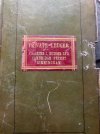
I am loathe to simply throw these on a bonfire — my own children’s likely destiny for them — in case there are researchers who might find them of interest. The photo below is the best preserved of the ledgers.
If there are members of the forum with any advice, I’d be extremely grateful.
I am wondering if anyone might find a use for some company records
My family moved away from the Birmingham area when I was 6 years old, but I recently inherited a stack of old ledgers and wage books, the oldest of which date back to at least 1904. Although I don’t think they are entirely continuous, they include the 2nd World War and run through the 50s and 60s.
They relate to two associated companies
FW Rudder, (Frederick Williiam), with a business address at 38 Sutherland St, Aston, and
CJ Rudder, (Charles John), Cambridge St, and/or Aston Hall Rd
I understand the two yards were adjacent but probably with separate access.
Earlier family historians suggest that there were in fact three Rudder brothers in the timber trade in the early 1900s, all sons of WD Rudder (William Daniel), who had established himself in the timber business in Birmingham in the mid-late 1800s. (The family originated in Gloucestershire and had fallen on hard times during the mechanisation of the weaving trade.)
The eldest brother was Harry, who took on his father’s company and I believe it must have been WD’s original firm which Harry then combined to the Payne family (see the thread on the Rudders and Payne's fire).

Hi All,
Astonian is peerfectly right. The fire at Rudder and Payne, Chester Street was in 1953. I was on duty at Aston Police Station at the time and I did not join until 1952.
Old Boy
Astonian is peerfectly right. The fire at Rudder and Payne, Chester Street was in 1953. I was on duty at Aston Police Station at the time and I did not join until 1952.
Old Boy
CJ was my great grandfather, and FW his brother sadly took his own life in 1925, and CJ took on supervision of the FW business. The two companies weren’t directly competitive, with FW Rudder dealing with imported timber, and CJ manufacturing wooden packing cases.
I have a very dim recollection of visiting the yard when I was about 4. The business had its own petrol pump and I was encouraged to fill up my father’s car. When petrol eventually came squirting out all over me, a couple of onlooking men burst out laughing. I’ve been more careful since
My understanding is that the businesses had been struggling during the 1950s, and that the land on which the two yards stood were potentially affected by new road proposals. Both properties were eventually put up for auction in 1963, following a decade of complicated probate issues following the death of CJ’s son Stanley Victor, my grandfather, who passed away the year before I was born.
The wage books contain surnames of a dozen or so employees, while the ledgers list names of dozens of local businesses that bought timber off them.
The surnames in the wages ledger for 1951, for example, and if I have read the handwriting correctly, are: Nash, Edginton, Hunt, Clamp, Kovacs, Hodges, Hubbard, Hales, Francis, Hughes, Cornock, Tibbitts, Guerin, Butler, Ansell, Owen, Mawby, Dukes, Watson, Mortiboy, Skerrington, and Mrs Budd.
Their weekly take-home pay after deductions ranged between £5 0s 10d and £8 1s 1d.
I am loathe to simply throw these on a bonfire — my own children’s likely destiny for them — in case there are researchers who might find them of interest. The photo below is the best preserved of the ledgers.
If there are members of the forum with any advice, I’d be extremely grateful.


