• Welcome to this forum . We are a worldwide group with a common interest in Birmingham and its history. While here, please follow a few simple rules. We ask that you respect other members, thank those who have helped you and please keep your contributions on-topic with the thread.

    We do hope you enjoy your visit. BHF Admin Team

Birmingham Workhouse Dudley Road Western Road opened 1852

Re: Old street pics..

I went to visit the old workhouse in Western Road last Sunday, and couldn't believe the state of it. Why has it been allowed to fall in to such disrepair? I think it deserves to be restored, and for us to all remember the sad lives that passed through that arch of tears.
 
Re: Old street pics..

I think they did some work on the roof a while ago but if they don't do something soon I expect they will say it's not worth bothering!
It's such a shame as it's a symbol of the thing previous generations dreaded..."Don't let them put me in the Workhouse!" was one of Nan's sayings. I didn't know at the time that my 3x Great Grandfather died there in the Workhouse Infirmary and that was why she was so worried.
I wonder if the Plaque is still there??
rosie.
 
Re: Old street pics..

Rosie, I also remember old people who were very frightened of going into Western Road Infirmary. It was always considered to still be the workhouse. It wasn't possible to get too close to the building, as there were metal standings around it, hiding most of it from view. The chimney stacks still look in reasonable order, and at the stage it is now it could be restored. I could just about see the Arch of Tears, and it was still possible to walk all around the outside of the building. I can't believe the Birmingham City Council have allowed this piece of history to be so neglected. Where was the plaque Rosie?
 
Surely it has nothing to do with the City Council as it would have transferred to the NHS upon its founding? I could be wrong but would not like Birmingham Council to be blamed if not their fault.

I seem to recall that listed status was refused for it?
 
Thanks Brumgum - I had seen that but so far have failed to find anything more up to date on the likely outcome.
 
Hi

the library as above told me the same about records of Individual patent details
about entry dates etc.
The census records are fine you can confirm where your relative was at a point in
time. Mine are covered great GF in 1901 and 1911.
Wrote to the freedom of Information on mr great GF
got the following E Mail back

Dear Michael


Thank you for your email.

In general, The National Archives does not hold hospital records. However we do have access to a list of the repositories where you might find them. You can find details of records held on individual hospitals by searching either through the institution's name or the town or city via this database:

https://www.nationalarchives.gov.uk/hospitalrecords/search.asp

Please note that if this infirmary formed part of the workhouse system, there may be further records either here or locally, although your dates are very much at the end of this system:

https://www.nationalarchives.gov.uk/records/looking-for-place/workhouses.htm


Yours sincerely

Sarah Hutton

It looks like a brick wall

Mike Jenks
 
I was looking for a birth in Western Rd Infirmary and Workhouse in 1883. I was told at the Birmingham Library that this is one of the years that is missing. Either lost, destroyed by fire and water. Very disappointed.
 
I remember in my early days in the ambulance service taking elderly people into Summerfield hospital and seeing the look of fear on their faces when they realised where they were. Relatives were reluctant to tell them which hospital they were going to and although we were never allowed to mislead patients they very rarely asked. We used to drive through the archway and reverse up to the reception centre and take them into bare brick lined room . Having said that two of my grandparents were in-patients there in the early sixties and both received wonderful care.Unfortunately the stigma of the workhouse remained .The hospital was also well known for its staff canteen it was one of the best in the city.
 
Pedrocut, I've now had time to read this thread in more detail and in your post 21 it mentions 'Workhouse and Cape' any idea what 'Cape' is please?
 
Hi Lady P. Maybe it's connected to the children. 'Cape' being a form of protection, hence shelter ? Bit of a wild guess, but never heard of it before. Viv.
 
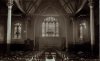
Sad to hear of the chapel being demolished. I was a choirboy during the early sixties, from memory '62 - 65. My mother nursed at Summerfield hospital and I was cajoled into joining the choir. Sunday morning services were held at the old chapel and Sunday evening service held at the more modern chapel within the Dudley Road hospital.
We had regular attendees for the morning service and part of the choirboy role was to go out on the wards and collect patients. Some patients enjoyed being raced in their wheelchairs across the hospital grounds and we boys were happy to oblige! Obviously the more delicate church goers were treated gently.
The evening service at Dudley road was quite different with patients being more mobile and changing regularly as their stay in hospital was usually short term.
I seem to remember choir practice was on Tuesday evenings and attendance at practice and the 2 services on Sunday went towards your points score for payment. Again from memory, I think we were paid every quarter - a small brown wages envelope with £3 or £4 odd, depending on attendance.
Living in New Spring Street, the hospital grounds were on the doorstep and going through the old archway was like entering into another world.
We used to watch the football games held on the pitch within the grounds and eventually I played for a team which seemed to consist of a mix of young medics and ambulance service.
Looking back, seems odd to have had a football pitch within the grounds but thought nothing of it at the time.

 
Sad to hear of the chapel being demolished. I was a choirboy during the early sixties, from memory '62 - 65. My mother nursed at Summerfield hospital and I was cajoled into joining the choir. Sunday morning services were held at the old chapel and Sunday evening service held at the more modern chapel within the Dudley Road hospital.
We had regular attendees for the morning service and part of the choirboy role was to go out on the wards and collect patients. Some patients enjoyed being raced in their wheelchairs across the hospital grounds and we boys were happy to oblige! Obviously the more delicate church goers were treated gently.
The evening service at Dudley road was quite different with patients being more mobile and changing regularly as their stay in hospital was usually short term.
I seem to remember choir practice was on Tuesday evenings and attendance at practice and the 2 services on Sunday went towards your points score for payment. Again from memory, I think we were paid every quarter - a small brown wages envelope with £3 or £4 odd, depending on attendance.
Living in New Spring Street, the hospital grounds were on the doorstep and going through the old archway was like entering into another world.
We used to watch the football games held on the pitch within the grounds and eventually I played for a team which seemed to consist of a mix of young medics and ambulance service.
Looking back, seems odd to have had a football pitch within the grounds but thought nothing of it at the time.
Hello Roger and a hearty welcome to The Birmingham History Forum. I well remember the football pitch within the grounds. I played for Birmingham (D Division) in the MIdland Police league whose matches were held in midweek. The home ground of C Division was the one at Dudley Road and we played them there. I too wondered what a football pitch was doing in hospital grounds and assumed that it was probably used by hospital teams at the weekend. Mostly the police teams used pitches borrowed from local firms. D Divisions home ground was at Metro Cammell in Washwood Heath
Chris Beresford (Old Boy)
 
I started my nursing career at Dudley Road Hospital. I did not have the qualifications at that time to commence my RGN training, but pasted to start my SEN training. Out of the 2 years of that training I spent 3 months of each year at Summerfield Hospital as a pupil nurse. The years 1967 to 69.
The old saying then was if you were admitted you never came out, and more often than not that was true.
If my memory serves me right at that time there were around 1000 patients .
I worked my first Christmas Day there under a very enlightened Sister Clay. She was ahead of her thinking in older people's care.
That Christmas on a 30 bedded ward the nursing staff managed to get everyone up, washed, dressed and in new clothes that somehow Sister Clay had acquired . She also brought every patient a small gift. I remember everyone was up by 10, had their Christmas dinner at 12, and by 2 we started to put patients back to bed.
This was the days before electronic beds, and hoists lol.
I would like to say all the wards were like that at Summerfield unfortunately that was not the case, and often even the basics like flannels, and soap were not available. Wipes and gloves that are second nature today did not exist for cleaning patients then.
On a more cheerful note in 1998 I became a RGN, and when I retired 2007 was working in elderly care in a hospital trying to keep the elderly out and not in,
 
hello diane and thank you ever so much for that insight into summerfield hospital...what a wonderful lady sister clay was...i am sure we have many members on this forum that will be glad to know that it was not everything was lacking at the hospital and that there were staff like yourself and sister clay that really did care

thank you

lyn
 
Hi I am wondering if any one knows about the Union workhouse and infirmary in Dudley Road,I have had just had a pdf email from Gov uk regarding my grandfathers death,luckily this time it’s the right one after three try’s ,any way he lived at 55 Bissell Road but apparently died at 88 Dudley Road,I’m guessing that was the union work house.
 
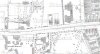
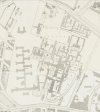
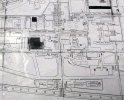
I have done a quick map search and can't find 88 Dudley Road - looks as if even numbers were opposite the workhouse/hospital. The maps with numbers may be more modern but the numbers jump from 84 (a pub) to 92 on the maps I saw.
 
No 88 post 1878 would correspond to the Old Windmill Inn from 1880. However, between 1878 and 1879 the numbering changed from consecutive to odd numbers one side of the street, even the other side of the street. I did think it might refer to this earlier time, but , as can be seen from the map, there do not seem to be any number 88 , unless Heath Green cottage or Summerfield Cottage were numbered that way
map c 1889 showing dudley road around Summerfield park.jpg
 
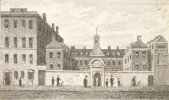
The original workhouse was built in 1733 in Lichfield Street round about were the Victoria Law Courts are today.The Picture shown in Reply 3 the wing on the left (built 1766)was the Infirmary and the wing on the right (built 1779)was a place for labour,both of the wings built at a later date.
Hutton wrote "The stranger would rather suppose it was the residence of a gentleman than of Six Hundred paupers"
This was knocked down when the new workhouse was built at Western Rd (Dudley Rd) in 1852 in 1889 the Infirmary was built.
Marston Green Orphanage was part of the Birmingham Workhouse and opened in 1880 which could house 466 children drafted from the Birmingham Workhouse, the boys learnt a trade and the girls household work. It was erected by the Birmingham Board of Guardians which ran the Workhouse till 1929 were it was transferred to the local authority and transferred to Regional Hospital in 1946
We no longer seem to have an image on this thread of the early Birmingham Workhouse on Lichfield Street. Here it is.

Screenshot_20230827_150959_Chrome.jpg
 
lichfield st has for some reason always interested me...we have a thread here with some great photos

 
I remember an entrance in Western Road to the Workhouse and it doesn't look inviting at all , how those poor misfortunes felt all those years ago entering there it's not worth thinking about . I know that it was converted to the geriatric unit to City Hospital , years ago in my youth it was feared by the elderly, the saying among them was "if you go in there , you won't be coming out" . I often wondered as I grew up if this was a possible heirloom of the old workhouse sad days indeed .
 
Yes we always heard and said " if you go in there you wont come out"......always thought they meant Selly Oak Hospital as it always happened to relatives.
 
Back
Top