
Jayell
master brummie
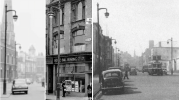
Church of the MessiahCould someone please remind me of the name of the church in the background behind the no. 7 bus. I was thinking Church of the Redeemer but that was on the Hagley Road near the Ivy Bush.

Church of the MessiahCould someone please remind me of the name of the church in the background behind the no. 7 bus. I was thinking Church of the Redeemer but that was on the Hagley Road near the Ivy Bush.
View attachment 213215View attachment 213217View attachment 213219View attachment 213221
Just above Reeve and Stedeford was an extension of the City of Birmingham School of Arts and Craft, the Graphic Design and Illustration Dept.

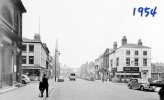
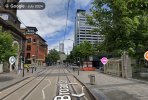
Viv that was probab;y due to the fact Parker Winder & Achurch lay back about 20 or 30 foot from the kerb, unlike the other outlets which were only a pavement width from the kerb ,An unrecognisable view compared with today. Some may remember the Philip Fyne car outlet (right). For some reason the road looks wider in the 1954 photo, probably the angle or lens used. Or perhaps it was because the road was less dominated by high rise buildings. Everything in view, except for the church (left), seems to have been replaced.
View attachment 230461View attachment 230463

The right-hand pavement now comes about 1/3 of the roadway further out, so it is narrower.An unrecognisable view compared with today. Some may remember the Philip Fyne car outlet (right). For some reason the road looks wider in the 1954 photo, probably the angle or lens used. Or perhaps it was because the road was less dominated by high rise buildings. Everything in view, except for the church (left), seems to have been replaced.
View attachment 230461View attachment 230463
Not necessarily so. Broad Street was a mixture of shops, offices and trades. There was even a BBC radio studio! Car parts outlets were in various parts of town and the suburbs, depending on vehicle make or parts type.So perhaps Broad Street, having once had several car/car parts/accessories related businesses, a place to go if you were a car enthusiast/mechanic looking for parts. And offering a choice of outlets all in one place ?
 xxxxxxxxxxxxxxx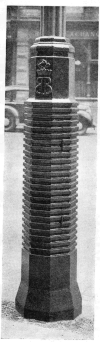
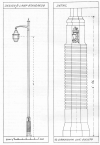
Perhaps they were more interested in the lamps than the posts!They look like very tall lamps!

