Thanks devonjim it's a very good photograph. Just trying to orientate . Looks like the front row of houses is Sydney rd and on the 1920 map the large brickworks would be on the site of Globe Brick and Tiles? The land looks totally scarred by workings.From the web site that Mikejee suggested 1934 Photograph. Factory is The Whitworth works(Pugh's)

-
Welcome to this forum . We are a worldwide group with a common interest in Birmingham and its history. While here, please follow a few simple rules. We ask that you respect other members, thank those who have helped you and please keep your contributions on-topic with the thread.
We do hope you enjoy your visit. BHF Admin Team
You are using an out of date browser. It may not display this or other websites correctly.
You should upgrade or use an alternative browser.
You should upgrade or use an alternative browser.
Brickworks
- Thread starter RobertS
- Start date
jim1uk2001
master brummie
There was a brickworks in the area now occupied by camberbest building products is now, just off garrison lane.Questions about Bricks.
I am having trouble locating the Brick Industry!
In the victorian expansion there must have been a huge demand for bricks. I have Irish ancestors who were employed as brickmakers, brickburners, brick carties and brickyard labourers. They lived in central Birmingham so where were they at work?
I have read that mechanisation in the Brick Industry was patchy up to World War 1 and only faily universal in the 1930's. Was Birmingham making bricks with steam power fairly early?
Apparently brickmaking was often seasonal. Was this the case in Birmingham where the demand was so high? If it was, what did the workforce do in the winter?
Anyone know of any work that has been done on this?
Thanks
Attachments
Janet Hunt
master brummie
This site lists many brick works around the UK Part 4 is Birmingham:

 uknamedbricks.blogspot.com
Birmingham Brickworks - part 4
In part 4 of Birmingham Brickworks I cover these areas ;- Selly Oak, Kings Heath, Kings Norton, Sparkbrook, Greet & Tyseley. E. Boylin, ...
uknamedbricks.blogspot.com
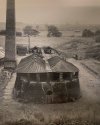
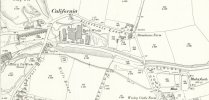

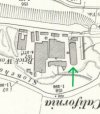

could be stonehouse lane houses in the distance mikeBelow is a photo of Smart's brickworks, in Stonehouse Lane, California, together with a map of them from 1901. I am not sure exactly where the photo was taken.
View attachment 211597View attachment 211599
lyn
Richard Dye
master brummie
What a wonderful atmospheric photo that is!Below is a photo of Smart's brickworks, in Stonehouse Lane, California, together with a map of them from 1901. I am not sure exactly where the photo was taken.
View attachment 211597View attachment 211599
Richard Dye
master brummie
Just now reading this, what a very interesting article this is. I always wondered where are of the bricks came from. Now I know part of it.This site lists many brick works around the UK Part 4 is Birmingham:
Birmingham Brickworks - part 4
In part 4 of Birmingham Brickworks I cover these areas ;- Selly Oak, Kings Heath, Kings Norton, Sparkbrook, Greet & Tyseley. E. Boylin, ...

Burbury Brckworks
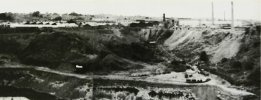
This photo is of Burbury Brickworks in the 1930s.
 .
.
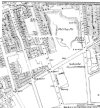
In fact this was not, as might be expected by Burbury Street. The original burbury Sttreet brickworks was presumably where the clah pit was that is marked on the 1886 map
The history of the works is given at https://uknamedbricks.blogspot.com/2019/03/birmingham-brickworks-part-4.html as follows:
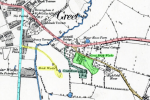
With the demand for bricks to build the many terraced houses in the Aston / Lozells areas of Birmingham in the 1860's, John Lewis & Son established a temporary brickworks on Burbury Street to extract the onsite clay to make the bricks needed for the building of these houses in this area. The 1861 census records Brick Manufacturer John Lewis was born in Erdington in 1810 & aged 51, married to Elizabeth aged 54 & son James aged 23, born in 1838, unmarried & also recorded as a Brick Manufacturer, with the family all living on Great King Street. John Lewis & Son are listed as brick manufacturers in Kelly's 1867 & 1868 editions on Burbury Street, then James Lewis (son) is next listed on Burbury Street in Kelly's 1872 & White's 1873 editions, so it appears James was now running the Burbury Street brickworks. The 1871 census records Brick Manufacturer, James Lewis now aged 33, was married to Elizabeth, aged 37 & they had a three year old boy named Arthur who was born in 1868 in Aston Juxta, Birmingham & the family where living at Aston Manor, Aston. So it appears James was making good living from brickmaking with the family living at such a prestigious address. We then find that James Lewis is listed in Kelly's 1876, 78 & 79 editions at Burbury Street & Greet (coloured yellow on the 1887 OS map below). There are no more listings for James Lewis at either Burbury Street or Greet after 1879, so it appears that James had finished brickmaking & both works had closed after this date with the Greet works standing idle & more than likely derelict until 1895/6.
We then find in 1895/6 Arthur Lewis son of James Lewis & grandson to John Lewis built a new brickworks on the site of his father's small brickworks in Greet (coloured yellow on the 1902 map below). Arthur named his new works, The Burbury Brick Works, which more than likely was named after Burbury Street in honour of his family's brickmaking past.
The 1891 census records that Arthur Lewis aged 23 was born in 1868 & a Brick Manufacturer. Married to Lillian aged 27 ; abode, Newton Road, Sparkhill & they had a son called James who is listed as being 10 months old.
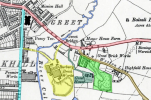
Kelly's 1896 edition lists Arthur Lewis at The Burbury Brick Works, Percy Road, Greet. The 1902 map below shows that a new Staffordshire Kiln & various drying sheds had been built. The works was still accessed via Bridge Road from Percy Road (coloured turquoise), but by this 1902 OS map a new access road from Warwick Road (red) had been built into the works. From Stephenson's account of this works he says, "at first, bricks were still being hand moulded until a wire-cut machine was installed in the early 1900's & this was quickly followed by the installation of a second wire-cutting machine. "
Kelly's 1897 edition now lists Arthur Lewis with two brickworks, Burbury Brick Works, Percy Road & Warwick Road brickworks, so Arthur had taken over the "Greet Brickworks" on Warwick Road previously owned by Mrs. Hannah Evans. The 1901 census records Arthur & Lillian where now living at a house called Willoughby on Stoney Lane, Sparkhill. We then find in the 1911 census Arthur & Lillian had moved again & where living at The Grange, Tyseley. So the move to the "Grange" indicates Arthur was doing well out of making bricks. Today this grand house does not exist, but if you ever go into the Nissan car showrooms on Warwick Road, you are walking over where this house once stood in the car park. Back to Arthur Lewis & he continues to be listed as owning two brickworks at Greet until Kelly's 1912 edition.
Kelly's 1913 edition only lists Arthur Lewis at the Burbury Brickworks, Percy Road. So it appears the Warwick Road works (coloured green on the 1913 OS map below) had closed sometime in 1913 with this map still showing it operational at this date. From studying this map it's closure may have been due to the clay pits being exhausted of workable clay or it may have been with the advent of WW1 ?
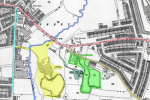
Kelly's 1915 edition again records Arthur Lewis at the Burbury Works, but we find that Stephenson writes in his book, "at the start of the Great War (1914) the whole plant stopped working & the first consequence of this complete stoppage was, with the pumps not working, the claypit soon filled up with water & the yard became derelict." So was the closure of this works in 1914 or was it still operational as per Kelly's directory in 1915 & closed sometime in 1915 ?
It's at this point that I tell you that Arthur Lewis died on the 14th of June 1917. His Probate Notice dated 31st August 1917, found on Ancestry, records his abode as Rugged Elm Cottage, Yardley Wood, Moseley. A sum of £12,696 pounds 6 shillings was left to his wife, Lillian. Today (9.3.2019), this equates to around £880,000 pounds or for my readers on the other side of the Pond, it equates to 1 million,1 hundred & 45 thousand dollars. Wow !
A "For Sale by Private Contract Notice" in the Birmingham Daily Post dated 4th of October 1917 advertises that the Executors of the Estate of Mr. Arthur Lewis deceased, had instructed the Auctioneers to sell both the Burbury Brickworks & the Greet Brickworks as one Lot & as a going concern. This newspaper article & the following two newspaper notices in this entry were found on this website, British Newspaper Archive.
We then find that Albert H. Stephenson, owner of the Globe Brickworks & writer of the later 1933 Birmingham Brickmakers book, purchases the Burbury Brickworks off Arthur Lewis's Executors in 1917. This information came from Stephenson's 1933 book.
With this For Sale Notice saying both works would be sold as one Lot, it is unknown if Stephenson purchased both works with him saying in his book that he purchased the Burbury Brick Works. What I can tell you that another For Sale Notice in the Birmingham Daily Post dated nearly a year later on the 6th of August 1918, advertises the "Sale of Ripe Valuable Freehold Land suitable for large factories, known as the Greet Brickworks Estate of about 15 acres, an excellent site with good main road frontage. Special attention to buyers, there is a large marlhole with 30 years free tip. Would sell in Lots to suit Purchasers." Apply Fred Screen, Bancroft House, Dudley Road, Oldbury. So was this Fred Screen selling the Greet Brickworks on behalf of Albert Stephenson or had he purchased the works directly from Arthur Lewis' Executors ?
We then find that a Notice in the Birmingham Daily Mail dated 31st October 1918 advertises that on the 20th of November 1918 there was to be a "Dismantling Sale" at the Greet Brickworks on Weston Lane off Warwick Road, Greet & everything was to be sold. There is a long list of items for sale & it included, two horizontal steam engines, plugmill, a Lancaster boiler, a Grinding Machine & four 150 feet long drying sheds. I have to note that this works had stood idle since 1914/15, so I don't think that some of the Lots up for sale would have been in tip-top condition.
The information here is entirely from the website listed previously that has been so methodically researched . Presumably this means that the photo was of the site of the Burbury brickworks, but that in 1930s it was no longer operating
This photo is of Burbury Brickworks in the 1930s.
.In fact this was not, as might be expected by Burbury Street. The original burbury Sttreet brickworks was presumably where the clah pit was that is marked on the 1886 map
The history of the works is given at https://uknamedbricks.blogspot.com/2019/03/birmingham-brickworks-part-4.html as follows:
With the demand for bricks to build the many terraced houses in the Aston / Lozells areas of Birmingham in the 1860's, John Lewis & Son established a temporary brickworks on Burbury Street to extract the onsite clay to make the bricks needed for the building of these houses in this area. The 1861 census records Brick Manufacturer John Lewis was born in Erdington in 1810 & aged 51, married to Elizabeth aged 54 & son James aged 23, born in 1838, unmarried & also recorded as a Brick Manufacturer, with the family all living on Great King Street. John Lewis & Son are listed as brick manufacturers in Kelly's 1867 & 1868 editions on Burbury Street, then James Lewis (son) is next listed on Burbury Street in Kelly's 1872 & White's 1873 editions, so it appears James was now running the Burbury Street brickworks. The 1871 census records Brick Manufacturer, James Lewis now aged 33, was married to Elizabeth, aged 37 & they had a three year old boy named Arthur who was born in 1868 in Aston Juxta, Birmingham & the family where living at Aston Manor, Aston. So it appears James was making good living from brickmaking with the family living at such a prestigious address. We then find that James Lewis is listed in Kelly's 1876, 78 & 79 editions at Burbury Street & Greet (coloured yellow on the 1887 OS map below). There are no more listings for James Lewis at either Burbury Street or Greet after 1879, so it appears that James had finished brickmaking & both works had closed after this date with the Greet works standing idle & more than likely derelict until 1895/6.
We then find in 1895/6 Arthur Lewis son of James Lewis & grandson to John Lewis built a new brickworks on the site of his father's small brickworks in Greet (coloured yellow on the 1902 map below). Arthur named his new works, The Burbury Brick Works, which more than likely was named after Burbury Street in honour of his family's brickmaking past.
The 1891 census records that Arthur Lewis aged 23 was born in 1868 & a Brick Manufacturer. Married to Lillian aged 27 ; abode, Newton Road, Sparkhill & they had a son called James who is listed as being 10 months old.
Kelly's 1896 edition lists Arthur Lewis at The Burbury Brick Works, Percy Road, Greet. The 1902 map below shows that a new Staffordshire Kiln & various drying sheds had been built. The works was still accessed via Bridge Road from Percy Road (coloured turquoise), but by this 1902 OS map a new access road from Warwick Road (red) had been built into the works. From Stephenson's account of this works he says, "at first, bricks were still being hand moulded until a wire-cut machine was installed in the early 1900's & this was quickly followed by the installation of a second wire-cutting machine. "
Kelly's 1897 edition now lists Arthur Lewis with two brickworks, Burbury Brick Works, Percy Road & Warwick Road brickworks, so Arthur had taken over the "Greet Brickworks" on Warwick Road previously owned by Mrs. Hannah Evans. The 1901 census records Arthur & Lillian where now living at a house called Willoughby on Stoney Lane, Sparkhill. We then find in the 1911 census Arthur & Lillian had moved again & where living at The Grange, Tyseley. So the move to the "Grange" indicates Arthur was doing well out of making bricks. Today this grand house does not exist, but if you ever go into the Nissan car showrooms on Warwick Road, you are walking over where this house once stood in the car park. Back to Arthur Lewis & he continues to be listed as owning two brickworks at Greet until Kelly's 1912 edition.
Kelly's 1913 edition only lists Arthur Lewis at the Burbury Brickworks, Percy Road. So it appears the Warwick Road works (coloured green on the 1913 OS map below) had closed sometime in 1913 with this map still showing it operational at this date. From studying this map it's closure may have been due to the clay pits being exhausted of workable clay or it may have been with the advent of WW1 ?
Kelly's 1915 edition again records Arthur Lewis at the Burbury Works, but we find that Stephenson writes in his book, "at the start of the Great War (1914) the whole plant stopped working & the first consequence of this complete stoppage was, with the pumps not working, the claypit soon filled up with water & the yard became derelict." So was the closure of this works in 1914 or was it still operational as per Kelly's directory in 1915 & closed sometime in 1915 ?
It's at this point that I tell you that Arthur Lewis died on the 14th of June 1917. His Probate Notice dated 31st August 1917, found on Ancestry, records his abode as Rugged Elm Cottage, Yardley Wood, Moseley. A sum of £12,696 pounds 6 shillings was left to his wife, Lillian. Today (9.3.2019), this equates to around £880,000 pounds or for my readers on the other side of the Pond, it equates to 1 million,1 hundred & 45 thousand dollars. Wow !
A "For Sale by Private Contract Notice" in the Birmingham Daily Post dated 4th of October 1917 advertises that the Executors of the Estate of Mr. Arthur Lewis deceased, had instructed the Auctioneers to sell both the Burbury Brickworks & the Greet Brickworks as one Lot & as a going concern. This newspaper article & the following two newspaper notices in this entry were found on this website, British Newspaper Archive.
We then find that Albert H. Stephenson, owner of the Globe Brickworks & writer of the later 1933 Birmingham Brickmakers book, purchases the Burbury Brickworks off Arthur Lewis's Executors in 1917. This information came from Stephenson's 1933 book.
With this For Sale Notice saying both works would be sold as one Lot, it is unknown if Stephenson purchased both works with him saying in his book that he purchased the Burbury Brick Works. What I can tell you that another For Sale Notice in the Birmingham Daily Post dated nearly a year later on the 6th of August 1918, advertises the "Sale of Ripe Valuable Freehold Land suitable for large factories, known as the Greet Brickworks Estate of about 15 acres, an excellent site with good main road frontage. Special attention to buyers, there is a large marlhole with 30 years free tip. Would sell in Lots to suit Purchasers." Apply Fred Screen, Bancroft House, Dudley Road, Oldbury. So was this Fred Screen selling the Greet Brickworks on behalf of Albert Stephenson or had he purchased the works directly from Arthur Lewis' Executors ?
We then find that a Notice in the Birmingham Daily Mail dated 31st October 1918 advertises that on the 20th of November 1918 there was to be a "Dismantling Sale" at the Greet Brickworks on Weston Lane off Warwick Road, Greet & everything was to be sold. There is a long list of items for sale & it included, two horizontal steam engines, plugmill, a Lancaster boiler, a Grinding Machine & four 150 feet long drying sheds. I have to note that this works had stood idle since 1914/15, so I don't think that some of the Lots up for sale would have been in tip-top condition.
The information here is entirely from the website listed previously that has been so methodically researched . Presumably this means that the photo was of the site of the Burbury brickworks, but that in 1930s it was no longer operating

Dinger
master brummie
I'd say its looking in the exact opposite direction - the houses are the older houses that line Alwold Road - with the "Rifle Range" field in between - That was built on with maisonettes during the 1960s, now mostly replaced with other housing. The "Green Hill" with Weoley Castle Square at the top rises behind that, mostly to the left, and behind that is the Northfield Ridge.- Stonebrook Way would now be just be beyond the trees in the foreground. It's not obvious in the photo, but there was quite an incline between those trees, which were next to the Stonehouse brook - a brook that runs along there - and the canal at the bottom - The photo is important in showing where the canal entered the famous Lapal tunnel - The top of the tunnel parapet is just visible on the right. The brickworks were at the bottom of the quarry. The quarry was filled in with refuse in the 70s-80s and is now "Quarry Park" - I just hope they capped the entrance to the Lapal tunnel well - Otherwise it will now be full of methane from all that decaying rubbish!could be stonehouse lane houses in the distance mike
lyn
There used to be another Brickworks and quarry the other side of the Barnes Hill road - Where the old RSPCA Dogs home used to be - Now a big Asda Store. That was all filled in with Rubbish as well, but in the 40s/50s.