• Welcome to this forum . We are a worldwide group with a common interest in Birmingham and its history. While here, please follow a few simple rules. We ask that you respect other members, thank those who have helped you and please keep your contributions on-topic with the thread.

    We do hope you enjoy your visit. BHF Admin Team

Birmingham, the British Empire and far afield.

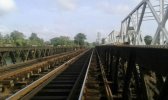
E. C. & J. Keay, Ltd. (Darlaston, Birmingham) supplied/contracted steel spans for the Ceylon “Kelani” railway bridge associated with the Kelani Valley Railway, around the time the first section to Avissawella opened (1902)

There is a thread for E. C. & J. Keay


IMG_0278.jpeg
 
Joseph Sturge and Sturge Town, Jamaica.

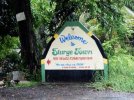
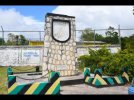
Sturge Town, in the Parish of St Ann, Jamaica, is directly connected to the Birmingham reformer and abolitionist Joseph Sturge (1793-1859). It is a small rural village about 10 miles from Brown's Town.

Slavery was abolished in the Empire (1834-1838) but enslaved people often remained economically dependent on plantation owners. On 17 November 1836 Joseph Sturge travelled from Falmouth to the Caribbean on the “Skylark” to investigate the conditions after emancipation. On 12 December he arrived in Barbados and went on to Antigua. He obtained his first glimpse of the apprentice system on Barbados and he told the story in a book published on his return, the result of 3 months labour and travel.

To encourage real independence, abolitionists and Baptist missionaries promoted the creation of “Free Villages” and Sturge helped to raise funds in Britain to purchase land in Jamaica specifically for free settlements. Land purchases took place 1838/9 and one of the settlements was named Sturge Town in his honour.

In October 2025 a Category-5 hurricane (Hurricane Melissa) struck Jamaica, causing island-wide devastation and declaring disaster areas across affected parishes. St Ann parish, including Sturge Town, experienced severe rainfall, flooding, damage to homes and community infrastructure, power outages, transport disruption. Emergency shelter and relief operations were coordinated through parish command centres. By January 2026 efforts were still ongoing. Sturge Town Primary and Infant School had suffered damage and was under reconstruction, operating while repairs progressed.

 
Joseph Sturge and Sturge Town, Jamaica.

Sturge Town, in the Parish of St Ann, Jamaica, is directly connected to the Birmingham reformer and abolitionist Joseph Sturge (1793-1859). It is a small rural village about 10 miles from Brown's Town.

Slavery was abolished in the Empire (1834-1838) but enslaved people often remained economically dependent on plantation owners. On 17 November 1836 Joseph Sturge travelled from Falmouth to the Caribbean on the “Skylark” to investigate the conditions after emancipation. On 12 December he arrived in Barbados and went on to Antigua. He obtained his first glimpse of the apprentice system on Barbados and he told the story in a book published on his return, the result of 3 months labour and travel.

To encourage real independence, abolitionists and Baptist missionaries promoted the creation of “Free Villages” and Sturge helped to raise funds in Britain to purchase land in Jamaica specifically for free settlements. Land purchases took place 1838/9 and one of the settlements was named Sturge Town in his honour.

In October 2025 a Category-5 hurricane (Hurricane Melissa) struck Jamaica, causing island-wide devastation and declaring disaster areas across affected parishes. St Ann parish, including Sturge Town, experienced severe rainfall, flooding, damage to homes and community infrastructure, power outages, transport disruption. Emergency shelter and relief operations were coordinated through parish command centres. By January 2026 efforts were still ongoing. Sturge Town Primary and Infant School had suffered damage and was under reconstruction, operating while repairs progressed.
 

Attachments

  • Sturge Town 1.jpg
    Sturge Town 1.jpg
    48.3 KB · Views: 6
  • Sturge Town 2.jpg
    Sturge Town 2.jpg
    35.5 KB · Views: 6
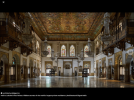
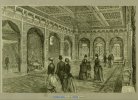
The Patent Enamel Company Limited of Selly Oak is said to have “Decorated ceilings were supplied to the Gaekwar of Baroda, for the Durbar Hall in India.” (Street Jewelry)

[The statement in Street Jewelry may not be wholly correct. The picture below shows the modern Durbar Hall, but also there was a Durbar Hall constructed for the Colonial Exhibition in India in 1886. It may be that they supplied the ceiling for the one at the exhibition ! also shown is the one created for the exhibition from the Illustrated London News]

IMG_1304.png

IMG_1306.jpeg
 
Last edited:
March 1894, The Engineer.

“Much satisfaction has been occasioned this week in Birmingham at the announcoment that the distinction of K.C.S.I. has been conferred upon Mr. Thomas Salter Pyne, of Birmingham, engineer to the Ameer of Afghanistan, who has been opening up that country to Western civilisation. Much of the machinery which Mr. Payne has erected at Cabul has been from Birmingham workshops, as well as from the Lancashire machinery establishments, and further orders are certain to be received. Mr. Pyne, though born in Kidsgrove, is by training, residence and connections a Birmingham man. He served as apprentice at Messrs Tangyes and about ten years ago was engaged with Mr. T. Bernard Hall, a Birmingham engineer, to proceed to Calcutta, to fill an appointment in the engineering establishment of TA Martin of that city, also a Birmingham man.”
 
Brown Marshalls & Co. (See Thread) made a great amount of wagons to be shipped abroad before amalgamation with the Met.

Below is a clip from March 1894 from the Engineer giving details of exports for…
Assam Bengal Railway
Indian State Railway
Perak State Railway (Malaysia)
Indian Peninsular Railway
Ceylon Government Railway
Transvaal

From Grace Guide we can add the Buenos Aires Great Southern Railway, and Egypt.

IMG_1836.jpeg
 
November 1894, The Engineer.

“Birmingham manufacturers are hoping that subscriptions to the new Chinese war loan will continue to come in well. The last Chinose loan issued some years ago was subscribed eleven times over, China is spending money freely in the Midlands.

The war in the East is indeed making the Birmingham gun and amunition trade just now more busy than for many yoars past. Since the outbreak as many as 150,000 guns are believed to have been exported to the East by a roundabout route, being consigned first to South Africa, and then trans-shipped, according to arrangement, in mid-ocean. Some of these were, however, antiquated weapons which were used in the Franco-Gorman war by the two countries then engaged. They were bought up at that time at a low price from the German Government by a Birmingham firm, who had spent a good deal of money in efectual attempts to modernise them, and are now glad to get thom off their hands. It would be amusing to know whether tho Chinamen or Japs imagine they are using the latest English inventions in this line.

Negotiations are also reported for another consignment of 20,000 rifles and bayonets, and the number of military cartridges turned out in Birmingham during the past two months is estimated at the enormous aggregate of over ten millions.”
 
Earlier the Birmingham gun trade sent their rejects to Africa. Here they seem to be doing a similar thing with China and Japan
 
Back
Top