-
Welcome to this forum . We are a worldwide group with a common interest in Birmingham and its history. While here, please follow a few simple rules. We ask that you respect other members, thank those who have helped you and please keep your contributions on-topic with the thread.
We do hope you enjoy your visit. BHF Admin Team
You are using an out of date browser. It may not display this or other websites correctly.
You should upgrade or use an alternative browser.
You should upgrade or use an alternative browser.
Aston Almshouses Aston Lane
- Thread starter Astoness
- Start date


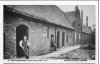


Betty Hopper
master brummie
Hello Peoples.
As you probably know I live in an Almshose Flat.
Don't know anything about the 2 chaps in the picture but thought you may be interested to know,
We are NOT ALLOWED MEN in our homes overnight ! ! ? ?
Wonder what they think we can do at night but can't do during the day ? ? ? { if you so wish of course }
Some of the rules are archaic but then they were made in Victorian days. Time for an up date I think.
Betty
As you probably know I live in an Almshose Flat.
Don't know anything about the 2 chaps in the picture but thought you may be interested to know,
We are NOT ALLOWED MEN in our homes overnight ! ! ? ?
Wonder what they think we can do at night but can't do during the day ? ? ? { if you so wish of course }
Some of the rules are archaic but then they were made in Victorian days. Time for an up date I think.
Betty

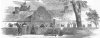
Thought I'd help replace a lost photo (i.e. Lyn's first photo of the almhouses - hope that's OK Lyn!). And I'm adding a nice 1858 engraving of the almshouses too. I like the dutch gable on the building, they reflect the design of the Holte's Aston Hall and is a feature found on a number of buildings around the Aston/Perry Barr area. Viv.
And a little info.....
The Almshouses were founded in 1655-1656 by Sir Robert Holte Bart. His grandfather, Sir Thomas Holte, left £300 for their building
and endowed them with £127.12s yearly, charged on his estates in Erdington and Aston. It was invested in the names of trustees and ground rents. The houses maintained five men and five women.
And a little info.....
The Almshouses were founded in 1655-1656 by Sir Robert Holte Bart. His grandfather, Sir Thomas Holte, left £300 for their building
and endowed them with £127.12s yearly, charged on his estates in Erdington and Aston. It was invested in the names of trustees and ground rents. The houses maintained five men and five women.
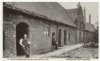
A view of Holte Almshouses. Viv
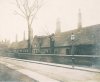
Think this might have been the image that was recently lost Lyn. The almshouses by Benjamin Stone photographed in 1897. Viv.
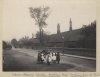

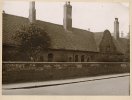
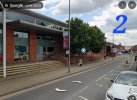
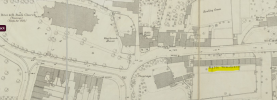
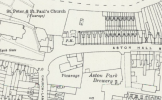
Anyone know where this was exactly ? The view in post #9 is annotated with 'looking from the tavern', Would the Tavern have been the Witton Arms ? So is #1 Streetview below the correct position for post #9 ?And was post #11 the #2 Streetview today ? Not too sure, can't make it out other than the Almshouses were somewhere on Aston Lane.
Attachments


pjmburns
master brummie
Found this historysite
suggests the original building was demolished in 1930 and replaced by almshouses at Erdington which still operate today.
suggests the original building was demolished in 1930 and replaced by almshouses at Erdington which still operate today.
Thanks Janice. That link says they were next to the vicarage. Does anyone have a map, please ? Thanks.
Last edited:
pjmburns
master brummie
I haven't found a vicarage or almshouses on Aston Lane but hadn't realised what Pedro has posted.Thanks Janice. That link says they were next to the vicarage. Does anyone have a map, please ? Thanks.
Will look again.
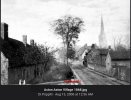
Hopefully Ive got this right. Here's another view (1868) of the Almshouses (left) with the church in the distance, behind the Aston Tavern. And the modern, corresponding view. The Almshouses must have been to the left on the modern view with the church just in view behind Aston Tavern. It's difficult to get more of the Almshouses site (to the left) into the modern view without losing the church as reference (which becomes obscured by the modern flyover).