
-
Welcome to this forum . We are a worldwide group with a common interest in Birmingham and its history. While here, please follow a few simple rules. We ask that you respect other members, thank those who have helped you and please keep your contributions on-topic with the thread.
We do hope you enjoy your visit. BHF Admin Team
You are using an out of date browser. It may not display this or other websites correctly.
You should upgrade or use an alternative browser.
You should upgrade or use an alternative browser.
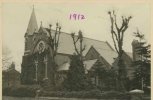
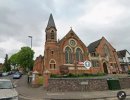
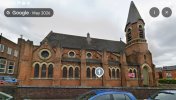
Acocks Green Wesleyan Chapel Methodist Church
- Thread starter Pedrocut
- Start date

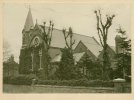
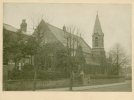
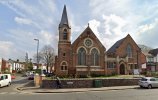
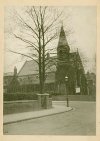

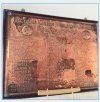
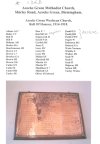
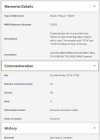
A well-kept church on Shirley Road, corner of Botteville Road. The chapel/church must have been extended/redeveloped at some point to the right along Shirley Road (possibly in the 1920s?). Inside is a copper memorial commemorating 47 men who served in WW1. 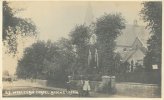
Last edited:

pjmburns
master brummie
Also in this thread - Edit posts now moved to this thread
https://birminghamhistory.co.uk/forum/threads/acocks-green.48269/post-867685
https://birminghamhistory.co.uk/forum/threads/acocks-green.48269/post-867685
Last edited by a moderator:
pjmburns
master brummie
See also here
 aghs.jimdofree.com
Acocks Green Methodist church, section one
A church's story: 130 years of Methodism in Acocks Green, by Margaret P. Bryan, 1986 Margaret P. Bryan's excellent book on the history of Acocks Green Methodist church is sadly no longer available in print. Margaret delved deeply into original records to create a fascinating and revealing...
aghs.jimdofree.com
Thanks Janice. Have moved posts from the Acocks Green thread to this thread. Consequently, there may now be earlier unseen posts.
pjmburns
master brummie
3 of those marked with a * on the names from the memorial are commemorated in a stained glass window
In 1919 the Trustees approved the plan to erect memorial windows in the church. Unfortunately, no records can be traced of their designer or installer. It is understood that initially the three windows were placed either in the back wall or the side wall of the church and moved to their present position in the chancel when the church was remodelled in 1927. They commemorate:
Lowson Brown. Not intimately connected with the church, but the son of William Lowson Brown, choir member and Trustee, who lived in Westley Road, Acocks Green.
Ernest Daw. Eldest son in the Daw family of five boys and two girls. He served in the Royal Warwickshire Regiment and was one of the thousands killed at Paschendaele.
Edward Malins. He was educated at King Edward's School, Birmingham. He had been a registrar in the Sunday School and was the son of Joseph Malins, first headmaster of Yardley Grammar School.
In 1919 the Trustees approved the plan to erect memorial windows in the church. Unfortunately, no records can be traced of their designer or installer. It is understood that initially the three windows were placed either in the back wall or the side wall of the church and moved to their present position in the chancel when the church was remodelled in 1927. They commemorate:
Lowson Brown. Not intimately connected with the church, but the son of William Lowson Brown, choir member and Trustee, who lived in Westley Road, Acocks Green.
Ernest Daw. Eldest son in the Daw family of five boys and two girls. He served in the Royal Warwickshire Regiment and was one of the thousands killed at Paschendaele.
Edward Malins. He was educated at King Edward's School, Birmingham. He had been a registrar in the Sunday School and was the son of Joseph Malins, first headmaster of Yardley Grammar School.
Last edited:
A wonderful way of remembering those three local men at home as it'd be rare and most unlikely for fallen soldiers' remains to have been brought home for burial At the same time, it must have been a painful reminder for the families of the other men (especially those who lost multiple members of their family), to see the three memorial windows on every church visit.
A bit more digging and it seems the tablet shows those who fought. They were volunteers from the church. Seems the three commemorated with stained glass windows were the ones who died. I didn't know such tablets showed those who fought and survived. You learn something new every day.
From the Acocks Green History site.
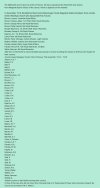
From the Acocks Green History site.
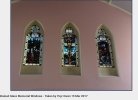
I think this must be the three memorial stained glass windows.
pjmburns
master brummie
That's what I thought as I couldn't find some (didn't look for all) of the other listrd on CWGC site)A bit more digging and it seems the tablet shows those who fought. They were volunteers from the church. Seems the three commemorated with stained glass windows were the ones who died. I didn't know such tablets showed those who fought and survived. You learn something new every day.
From the Acocks Green History site.
View attachment 229247
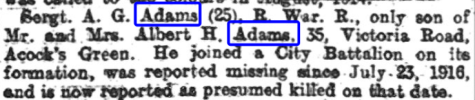
Only three men remembered on the window memorials: Malins, Brown and Daw. Re omission of Adams and Pardoe - I imagine the committee discussion about this was a very hard one if it was they who made the decision about who to include in the window memorial. Maybe the two men didn't die in combat and this influenced their decision despite having serving their country. And maybe they were no longer serving their country when they passed away? Seems a bit harsh.
Details of the three stained glass windows:
Three separate stained-glass windows. The left hand window shows a kneeling figure praying. The centre window shows the Crucifixation, and the window on the right shows an armed figure kneeling before a crucifix.
Inscription
Left-hand window: "HIS STRENGTH IS AS THE STRENGTH OF TEN, BECAUSE HIS HEART IS PURE." EDWARD FRANCIS MALINS, APRIL 12th 1918.
Centre window: "GREATER LOVE HAS NO MAN THAN THIS, THAT A MAN LAYS DOWN HIS LIFE FOR A FRIEND." LOWSON BROWN APRIL 12th 1917.
Right-hand window: "MEN THAT HAVE HAZARDED THEIR LIVES FOR THE NAME OF OUR LORD JESUS CHRIST." ERNEST WILLIAM DAW OCTOBER 26th 1917. (Line breaks unknown.)
Details of the three stained glass windows:
Three separate stained-glass windows. The left hand window shows a kneeling figure praying. The centre window shows the Crucifixation, and the window on the right shows an armed figure kneeling before a crucifix.
Inscription
Left-hand window: "HIS STRENGTH IS AS THE STRENGTH OF TEN, BECAUSE HIS HEART IS PURE." EDWARD FRANCIS MALINS, APRIL 12th 1918.
Centre window: "GREATER LOVE HAS NO MAN THAN THIS, THAT A MAN LAYS DOWN HIS LIFE FOR A FRIEND." LOWSON BROWN APRIL 12th 1917.
Right-hand window: "MEN THAT HAVE HAZARDED THEIR LIVES FOR THE NAME OF OUR LORD JESUS CHRIST." ERNEST WILLIAM DAW OCTOBER 26th 1917. (Line breaks unknown.)
Last edited:
That seems very likely.