
-
Welcome to this forum . We are a worldwide group with a common interest in Birmingham and its history. While here, please follow a few simple rules. We ask that you respect other members, thank those who have helped you and please keep your contributions on-topic with the thread.
We do hope you enjoy your visit. BHF Admin Team
You are using an out of date browser. It may not display this or other websites correctly.
You should upgrade or use an alternative browser.
You should upgrade or use an alternative browser.
The Gaskins
- Thread starter Dennis Williams
- Start date
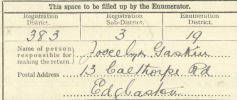
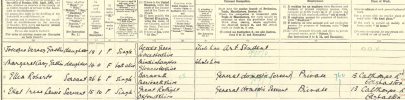

If we take what pjmburns has discovered and add in the information from https://aghs.jimdofree.com/notable-people-of-acocks-green/ , can we pencil in a provisional housing timetable? How about:
- 1894 Married. Arthur from 375 Coventry Road, Small Heath and Georgie from Marl Green, Tysley
- 1895 Richmond Villa, Warwick Rd, Olton
- 1899 Fairlea/Fairleigh, 7 Victoria Rd, Acocks Green
- 1902 Camden House, 5 Victoria Rd, Acocks Green
- 1911 Newlyn, St Bernard's Rd, Olton
- 1921 13 Calthorpe Road, Edgbaston
- 1924 Camperdene House, High Street, Chipping Campden
Last edited:
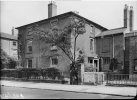
OK, thank you. Do you think this version is likely to be a correct final one as things now stand?
- 1894 Married. Arthur from 375 Coventry Road, Small Heath and Georgie from Marl Green, Tysley (about 2 miles apart)
- 1895 Richmond Villa, Warwick Rd, Olton
- 1899 Fairlea, 7 Victoria Rd, Acocks Green
- 1902 Camden House, 5 Victoria Rd, Acocks Green
- 1911 Newlyn, St Bernard's Rd, Olton
- 1919 13 Calthorpe Road, Edgbaston
- c1924 Camperdene House, High Street, Chipping Campden
Last edited:
The info on 5&7 Victoria Road comes from the Acocks Green History Society where the the Gaskins entry reads:
"This couple were well known Arts and Crafts jewellers, and their work is now highly prized. They were married in March 1894 and in the 1895 directory they were listed at Richmond Villa on the Warwick Road in Olton. They appear at Fairlea, Victoria Road, Acocks Green in the 1899 directory and also in the 1901 census. This was later number 7 (now the right hand side of Louise Court). Arthur describes himself as an artist, painter and sculptor working from home. Georgie gives herself no such description, but was most definitely co-designer with him. In fact she lost her hair as a result of working with chemicals. By the 1902 directory they were listed at Camden House (number 5, which was unoccupied in the 1901 census. This was a much wider plot, now occupied by Everene House). They were still at Camden House in the 1910 directory. According to the 1911 directory they had moved to Olton again, this time to Newlyn, St. Bernard's Road.............Details about pieces sold at auction refer to the cases being marked with "Mr and Mrs Arthur Gaskin, Jewellers, Acock's Green", and later with Olton instead of Acocks Green."
[See: https://aghs.jimdofree.com/notable-people-of-acocks-green/ ]
However no mention of Calthorpe Road address.
"This couple were well known Arts and Crafts jewellers, and their work is now highly prized. They were married in March 1894 and in the 1895 directory they were listed at Richmond Villa on the Warwick Road in Olton. They appear at Fairlea, Victoria Road, Acocks Green in the 1899 directory and also in the 1901 census. This was later number 7 (now the right hand side of Louise Court). Arthur describes himself as an artist, painter and sculptor working from home. Georgie gives herself no such description, but was most definitely co-designer with him. In fact she lost her hair as a result of working with chemicals. By the 1902 directory they were listed at Camden House (number 5, which was unoccupied in the 1901 census. This was a much wider plot, now occupied by Everene House). They were still at Camden House in the 1910 directory. According to the 1911 directory they had moved to Olton again, this time to Newlyn, St. Bernard's Road.............Details about pieces sold at auction refer to the cases being marked with "Mr and Mrs Arthur Gaskin, Jewellers, Acock's Green", and later with Olton instead of Acocks Green."
[See: https://aghs.jimdofree.com/notable-people-of-acocks-green/ ]
However no mention of Calthorpe Road address.

helpfulwords57
knowlegable brummie
Watching all this hard work with admiration. Georgie (married Gaskin) was from Shrewsbury Shropshire but baptised elsewhere, her family was (father) Wm. France + mother from quasi-aristocratic Cave-Browne-Cave clan [I taught some Cave Browne Caves at Shrewsbury School]. Georgie's father became a farmer and they lived at what is actually Marl-Pit Green, Tyseley, this is the full spelling, it's a hamlet, tends to get logged as Yardley. Rosie 
helpfulwords57
knowlegable brummie
Ooh, well done you for getting so far... there's no hurry at all - thorough research takes a lot of time.Hopefully - there will be an update tomorrow about the house in St Bernard's Road but I need to get a photo first to confirm something.
helpfulwords57
knowlegable brummie
Just by-the-by... a critic online likened some of Arthur Gaskin's work to the style of the Newlyn Painting School, I think it's in Cornwall? So I was wondering if 'Newlyn' might have been chosen as a house-name to reflect this possible influence? RosieIf we take what pjmburns has discovered and add in the information from https://aghs.jimdofree.com/notable-people-of-acocks-green/ , can we pencil in a provisional housing timetable? How about:
Is it possible that they owned Calthorpe Rd and Newlyn simultaneously rather than consecutively?? Apparently jewellery cases were still marked from the Olton workshop until about 1924 but I suppose that could be because there were earlier spares left over?!
- 1894 Married. Arthur from 375 Coventry Road, Small Heath and Georgie from Marl Green, Tysley
- 1895 Richmond Villa, Warwick Rd, Olton
- 1899 Fairlea/Fairleigh, 7 Victoria Rd, Acocks Green
- 1902 Camden House, 5 Victoria Rd, Acocks Green
- 1911 Newlyn, St Bernard's Rd, Olton
- 1921 13 Calthorpe Road, Edgbaston
- 1924 Camperdene House, High Street, Chipping Campden
helpfulwords57
knowlegable brummie
It's a very decent theory... many artists do like a Studio as well as a nice warm (paint-free) home...My research suggests that most people tended to rent at this period in time; the B'ham artist whose short biography I wrote was wealthy, and this family had a mortgage on a big house in Edgbaston (even they couldn't purchase it outright), but they were fairly unusual in 'owning'. Lots of families lodged, took rooms, it was normal. RWhile they lived in Olton, Arthur Gaskin was the Headmaster of the Vittoria Street School for Jewellers and Silversmiths at 82-86 Vittoria Street (still there in B1 3PA). So St Bernards Rd in Olton might indeed have been their primary residence whilst Calthorpe Road was a secondary property or perhaps rented for convenience. Well it's a theory!!
helpfulwords57
knowlegable brummie
'Team' - earliest known usage of this word [Old English] refers to 'family', related people. I don't know you very well yet, but without doubt you are all family in spirit, supportive, working towards the same goal. Very glad I found you and this forum. R

pjmburns
master brummie
Here we go:
If you just want to know which house we think was Newlyn then jump to the end of this post but here is our thought process.
Lyn and I have been working behind the scenes - doing our "Miss Marple Act". Working along different routes we have both arrived at the same conclusion about which house the Gaskin's lived in on St Bernard's Road.
I based my work on the assumption that Thomas Reev hadn't moved house between being listed at Charnwood and later at #16.
I worked along the lines of counting on from Charnwood on the list from the 1921 directory Thanks to Mikjee for providing this
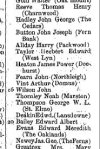
This led me to believe the house marked as #16 (Newlyn) formerly occupied by the Gaskins was now #32.
Then I had a bit of luck - doing a streetwalk I spotted a name on the gate of what I believed was 28 and it said "Northleigh" (or so I thought). If it did then 2 doors away had to be Newlyn now number 32
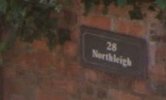
Not convinced? Try this taken less than 1hr ago
When I went I found a different clearer sign on the other gatepost
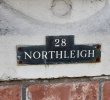
Meanwhile Lyn found a reference to the poet John Drinkwater visiting the Gaskin family and writing his poem "Olton Pools" after seeing Olton Mere from their house.
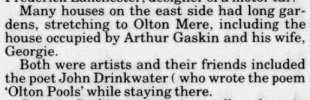
We quickly realised that the Mere was not visible from the present house numbered 16. Working from maps Lyn came to the conclusion that the house we wanted was between 30 and 38.
When we compared notes we decided 32 was the best fit.
So based on the view and the fact 28 was still called Northleigh we are convinced this was Newlyn two doors away.
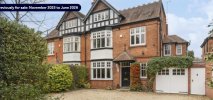
The view
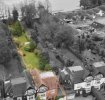
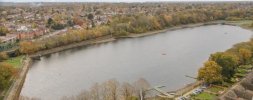
If you just want to know which house we think was Newlyn then jump to the end of this post but here is our thought process.
Lyn and I have been working behind the scenes - doing our "Miss Marple Act". Working along different routes we have both arrived at the same conclusion about which house the Gaskin's lived in on St Bernard's Road.
I based my work on the assumption that Thomas Reev hadn't moved house between being listed at Charnwood and later at #16.
I worked along the lines of counting on from Charnwood on the list from the 1921 directory Thanks to Mikjee for providing this
This led me to believe the house marked as #16 (Newlyn) formerly occupied by the Gaskins was now #32.
Then I had a bit of luck - doing a streetwalk I spotted a name on the gate of what I believed was 28 and it said "Northleigh" (or so I thought). If it did then 2 doors away had to be Newlyn now number 32
Not convinced? Try this taken less than 1hr ago
When I went I found a different clearer sign on the other gatepost
Meanwhile Lyn found a reference to the poet John Drinkwater visiting the Gaskin family and writing his poem "Olton Pools" after seeing Olton Mere from their house.
We quickly realised that the Mere was not visible from the present house numbered 16. Working from maps Lyn came to the conclusion that the house we wanted was between 30 and 38.
When we compared notes we decided 32 was the best fit.
So based on the view and the fact 28 was still called Northleigh we are convinced this was Newlyn two doors away.
The view
Last edited:

thanks jan you explain things far better than i could just to add that jan has already mentioned the newspaper article i found which said the poet drinkwater was inspired by the view from the gaskins house to write his poem oltons pools but when i looked at the map below the gaskins could not have lived at no 16 as its impossible to view the pool from there so their house had to have been no 30 or higher to be able to see the pool...below is the map showing no 16 then move the map down to see that views of the pool start at no 30..jans powers of deduction then led us to finding out that they lived at no 32. (explained on post 76).if you click on the map link below and move the blue dot to the left the map will fade out to show what is there now..i am also posting the newspaper article just as interest
lyn
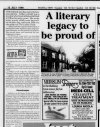
just to add that jan has already mentioned the newspaper article i found which said the poet drinkwater was inspired by the view from the gaskins house to write his poem oltons pools but when i looked at the map below the gaskins could not have lived at no 16 as its impossible to view the pool from there so their house had to have been no 30 or higher to be able to see the pool...below is the map showing no 16 then move the map down to see that views of the pool start at no 30..jans powers of deduction then led us to finding out that they lived at no 32. (explained on post 76).if you click on the map link below and move the blue dot to the left the map will fade out to show what is there now..i am also posting the newspaper article just as interestlyn
Last edited:
pjmburns
master brummie
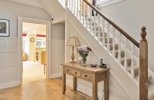
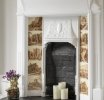
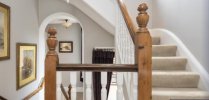
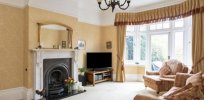
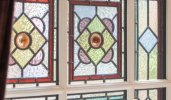
All thses pics are taken from "Right move". The house last sold June 2026 valued at £985,000.
Attachments
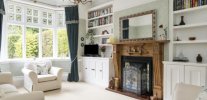
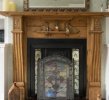
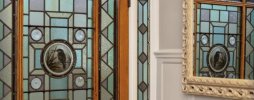
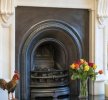
helpfulwords57
knowlegable brummie
What a fine set of discoveries, and I am always fascinated to see other people's thought-processes and deductions, you teach me a lot.
What I'd be wanting to know, at this point, is why the heck would a house formerly numbered as 16 be altered to e.g. 32? Roads do get re-numbered, absolutely, for all sorts of reasons but I'm stuck for a reason here... For a 16 to be kicked forward to 32, I'm trying to imagine what would have to happen... Could some new houses (a lot) have been built in among the old ones and given their own numbers? or a block of new ones put where a huge old one once was... but this would have had to have happened at the end where there was 4 ,6 ,8 etc, pushing 16 forwards a very long way...
I am happy to believe/accept that older houses do get demolished, but the renumbering of existing houses is a different thing altogether. I notice from the list you've kindly posted that a house is type-set as "West Lyn" (Mr Taylor), but it's not "Newlyn", so are these two different properties? There are mistakes in publications, sometimes; does 'Newlyn' appear anywhere else on the list or is it not there at all? What date was the list, does it say?
It's really helpful to know a poet stayed with the Gaskins and wrote a poem about the view - what luck! So the water must have been visible somehow... I know Mr Drinkwater wrote letters to the Gaskins, but there would be no use looking at the addresses he put on the envelopes, because they'd have said 16 wouldn't they, which doesn't assist.
I've been looking at the 1921 census and no. 16, Newlyn, is now in the use of (dead easy name to remember) Mr Harold Wilson who's an Art Teacher at the B'ham School... Another thought, was Newlyn in the possession of the School itself and leased out to teachers (inc. the Gaskins?)
Let me have another big think and then I will scribble again. Enormous thank you's to The Team. Rosie
What I'd be wanting to know, at this point, is why the heck would a house formerly numbered as 16 be altered to e.g. 32? Roads do get re-numbered, absolutely, for all sorts of reasons but I'm stuck for a reason here... For a 16 to be kicked forward to 32, I'm trying to imagine what would have to happen... Could some new houses (a lot) have been built in among the old ones and given their own numbers? or a block of new ones put where a huge old one once was... but this would have had to have happened at the end where there was 4 ,6 ,8 etc, pushing 16 forwards a very long way...
I am happy to believe/accept that older houses do get demolished, but the renumbering of existing houses is a different thing altogether. I notice from the list you've kindly posted that a house is type-set as "West Lyn" (Mr Taylor), but it's not "Newlyn", so are these two different properties? There are mistakes in publications, sometimes; does 'Newlyn' appear anywhere else on the list or is it not there at all? What date was the list, does it say?
It's really helpful to know a poet stayed with the Gaskins and wrote a poem about the view - what luck! So the water must have been visible somehow... I know Mr Drinkwater wrote letters to the Gaskins, but there would be no use looking at the addresses he put on the envelopes, because they'd have said 16 wouldn't they, which doesn't assist.
I've been looking at the 1921 census and no. 16, Newlyn, is now in the use of (dead easy name to remember) Mr Harold Wilson who's an Art Teacher at the B'ham School... Another thought, was Newlyn in the possession of the School itself and leased out to teachers (inc. the Gaskins?)
Let me have another big think and then I will scribble again. Enormous thank you's to The Team. Rosie
Last edited:
helpfulwords57
knowlegable brummie
More scribblings: in very recent years, no 16 St Bernards Road is stated to have been built before 1900. It's detached (not a v. big semi). So it's not one of those handsome big semis like no. 32 (whose insides are so lovely; all those period features.)
At the moment I am struggling to see why no. 16 on the 1921 census can't be the same no 16. as is there in 2026... ?
If the current house (no. 16) was built before 1900, then it hasn't been demolished and something else built where it was.
Regarding the view, and the comment in the newspaper: If Mr Drinkwater was able to see the mere, then maybe 100 years ago the mere was bigger/longer, more water there? There weren't all those trees obscuring it? Maybe those trees hadn't even been planted?
More thoughts shortly
Rosie
At the moment I am struggling to see why no. 16 on the 1921 census can't be the same no 16. as is there in 2026... ?
If the current house (no. 16) was built before 1900, then it hasn't been demolished and something else built where it was.
Regarding the view, and the comment in the newspaper: If Mr Drinkwater was able to see the mere, then maybe 100 years ago the mere was bigger/longer, more water there? There weren't all those trees obscuring it? Maybe those trees hadn't even been planted?
More thoughts shortly
Rosie
Certainly seems possible - see this from Sothebys about the picture in post #60 above: "The artist's later style brings together the influences of his earlier artistic career, where he admired the light and colour used by the Newlyn School of painters, and when he was introduced to William Morris and Edward Coley Burne-Jones, in the 1890s, who persuaded him to work in a more linear style and expand his interest in the Arts and Craft movement."Just by-the-by... a critic online likened some of Arthur Gaskin's work to the style of the Newlyn Painting School, I think it's in Cornwall? So I was wondering if 'Newlyn' might have been chosen as a house-name to reflect this possible influence? Rosie
https://www.sothebys.com/en/auctions/ecatalogue/2014/green-pleasant-land-british-landscape-painting-l14134/lot.161.html
pjmburns
master brummie
The present house numbered 16 has no real view of the Mere. So is unlikely to be the house the Gaskins lived in.
It says the list is 1921
It wasn't renumbering but numbering. All the houses had names before that so they must have started from the first house as 2.
It says the list is 1921
It wasn't renumbering but numbering. All the houses had names before that so they must have started from the first house as 2.
Last edited:
With all this amazing detective work unfolding at pace, I thought a moment of calm might be welcome with Drinkwater's poem which he dedicated to "G.C.G." (incidentally providing further indirect evidence of a visit to Georgie (and Arthur!) at St Bernard's Road) :
Olton Pools
(To G.C.G)
Now June walks on the waters,
And the cuckoo’s last enchantment
Passes from Olton pools.
Now dawn comes to my window
Breathing midsummer roses,
And scythes are wet with dew.
Is it not strange for ever
That, bowered in this wonder,
Man keeps a jealous heart?...
That June and the June waters,
And birds and dawn-lit roses,
Are gospels in the wind,
Fading upon the deserts,
Poor pilgrim revelations?...
Hist ... over Olton pools!
https://www.gutenberg.org/files/51575/old/51575-h/51575-h.htm
Olton Pools
(To G.C.G)
Now June walks on the waters,
And the cuckoo’s last enchantment
Passes from Olton pools.
Now dawn comes to my window
Breathing midsummer roses,
And scythes are wet with dew.
Is it not strange for ever
That, bowered in this wonder,
Man keeps a jealous heart?...
That June and the June waters,
And birds and dawn-lit roses,
Are gospels in the wind,
Fading upon the deserts,
Poor pilgrim revelations?...
Hist ... over Olton pools!
https://www.gutenberg.org/files/51575/old/51575-h/51575-h.htm
helpfulwords57
knowlegable brummie
There seems to be a gap where 2 would have been, but the other numbers seem intact?The present house numbered 16 has no real view of the Mere. So is unlikely to be the house the Gaskins lived in.
It says the list is 1921
It wasn't renumbering but numbering. All the houses had names before that so they must have started from the first house as 2.
It's good to have a friendly difference of opinion, as we tease this out. I always try to keep things 'loose' while details are collected and chewed over. I never take a 'firm position' and hang onto it..One other point. If I compare the 1911 census list with the 1921 list there have been extra houses built which could have thrown any original numbering out.
If no. 16 was built pre-1900, which it was, I still think there would have had to to be a lot of houses inserted before the original no. 16 to shove 16 down to e.g. 32...
A view of the mere, way back: views can be distant, partial, seen from upper floors - it's a lovely thought, to be able to see water! but in evidential terms it really doesn't fix a house at any particular position...
I will go back to the censuses and come back shortly with further details.
R
i agree jan here is the 1888 to 1915 map showing the mere did not change in sizeOlton Mere is actually a reservoir not natural.
Built in 2799 and extended in 1834 so is unlikely to have changed in size
lyn
Well, Drinkwater might have popped down the road for a cigarette and glimpsed the pools through a hedge but I'm a bit more poetic about stuff and like to imagine that "Now dawn comes to my window Breathing midsummer roses" supports the idea that he drew back his curtains and squinted at the scene with it's pools below. That is also, of course, why I'm such a poor detective!!
Last edited:
helpfulwords57
knowlegable brummie
Forgive me, but I'm going to withdraw from this discussion. You have very rapidly decided upon something, and you don't seem open to listening to anything else at all. I wouldn't normally share this on a Forum, but I was educated at Oxford University, I am a well-respected, many-times published biographer and also a finder of missing people, so my research skills are extremely fine. I'm a first-rate detective, and I also write detective novels. In the opinion of myself & colleagues, it is never wise nor appropriate to base decisions upon just a few guesses or imaginings; it is definitely highly unwise to come to a firm conclusion without the whole situation being thoroughly examined using archive sources, original maps, Post Office records, builders' plans and much, much more. Very sad, and I hadn't expected any potential hostility here? - friendliness is my creed - but best and safest if I close this down. I will delete my original Q if it's possible. Good wishes to Neil, I've enjoyed your own contributions enormously. END OF TEXT.