
-
Welcome to this forum . We are a worldwide group with a common interest in Birmingham and its history. While here, please follow a few simple rules. We ask that you respect other members, thank those who have helped you and please keep your contributions on-topic with the thread.
We do hope you enjoy your visit. BHF Admin Team
You are using an out of date browser. It may not display this or other websites correctly.
You should upgrade or use an alternative browser.
You should upgrade or use an alternative browser.

Pedrocut
Master Barmmie
“Albert Penfold spent the 1930s commuting between New York and the UK., building his business….By 1936, Penfold had made it necessary to set up a factory in the USA.”
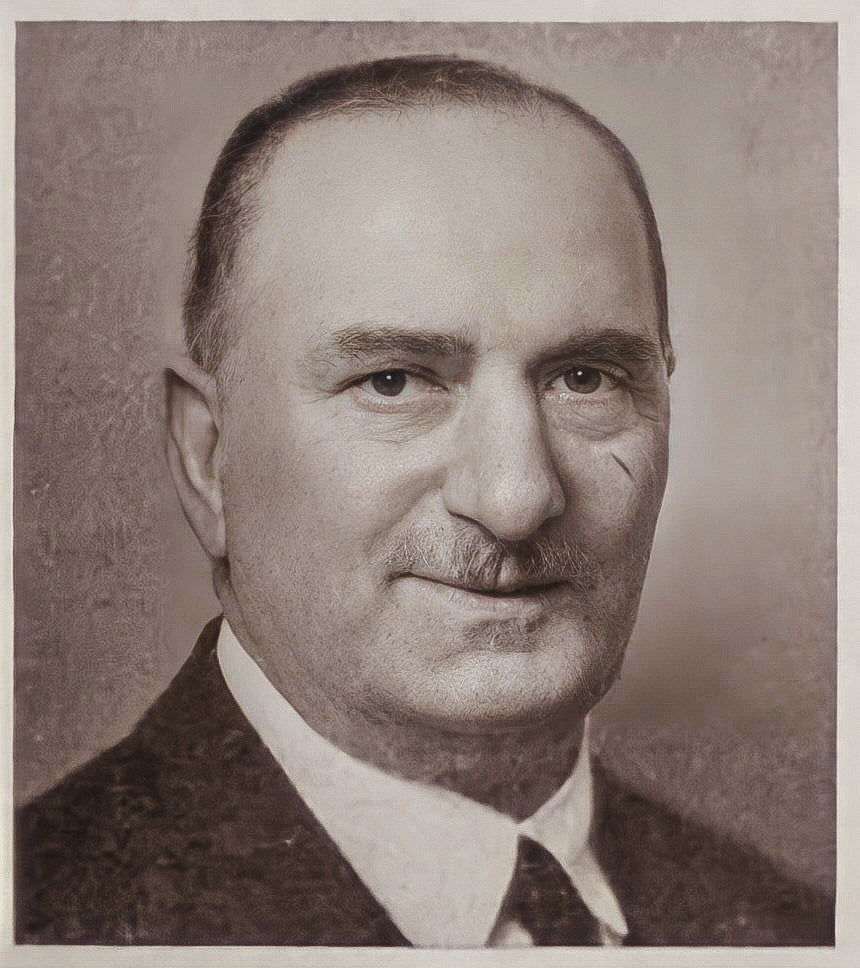
 penfoldgolf.net
The A.E.Penfold Story
In the annals of sports history, the story of A.E. Penfold emerges as a captivating narrative of innovation and passion that forever altered the landscape of golf. Albert Ernest Penfold, known by his initials A.E., was not merely a craftsman but a visionary who left an indelible mark on the game...
penfoldgolf.net

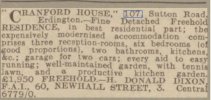

Lady Penelope
master brummie
Thank you all for solving the mystery. A lot of work has gone into that and it's really appreciated.
Penny
Penny
Very late to this thread, and it may have been mentioned already, but Herbert Austin was living at number 31 (St Anne's) on the 1901 census. This was before he bought the old printworks at Longbridge to make the car factory and became Lord Austin. In 1901 he was working with Wolesley in Adderly Park. Later the family moved to a big pile in the Lickies. I was quite surprised to see him turn up in Erdington though. He's probably one of the most notable former residents.
Hello, this is fascinating. I am going through old family photos and I found a postcard dated possibly July 1908 (postmark isn't clear.) It is addressed to my Great Great Grandmother Mrs Ash at Rockville, Erdington. I wonder if there are any photographs of the house. Has it been demolished like so many or is it still there??Hi jennyann, thank you for your interest in Sutton Road and the properties along there. I think we moved there in 1953. We moved from new housing at Shard End. The whole area had been farm land but it was gradually being eaten up by 'slum clearance' I think they called the movement.
We had the top floor of Rockville which consisted of four huge rooms which served as our sitting room, kitchen/diner and two bedrooms, although my parents had a bedroom that had a dressing room and that was where I slept leaving one vast empty bedroom.
All the rooms had marble fireplaces and ornate plaster ceilings and our kitchen, which consisted mainly of a sink and cooker held a table that would seat 12/14 people. We also had a bathroom with a bath big enough for a small child to slide down the sloping back into the bath water and a toilet with a cistern so high it looked tiny. The approach to our area of the house, which had no officially separate access, was up a flight of polished granite and probably 4' wide stairs which turned backed on itself after a half landing above which was an arched window. The bannister rail was great for sliding down being substantial and it ended in a newel post with a carved wood lion's claw at the base. The landing at the top was large enough for dances to be held. There was also a door leading to stairs to the servants quarters above us. I did go up once and found an abandoned gas mask.
Downstairs was the other flat occupied by Mr & Mrs Sleigh and their three children. Their accommodation mirrored our own except that where bedrooms became living rooms upstairs, downstairs living rooms became bedrooms, the two older children shared the room at the back of the house which had french doors leading out into the garden while the parents and baby shared the room beneath my parents. I shall stop here because I am not certain how this thread is being saved/posted and I've already tried to add to the threads and lost a considerable amount of work!
Attachments
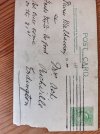

i think first of all we need to find out exactly where rockville was...could we have the full name of your gt gt grandmother and we can check the electoral rolls and census records for youHello, this is fascinating. I am going through old family photos and I found a postcard dated possibly July 1908 (postmark isn't clear.) It is addressed to my Great Great Grandmother Mrs Ash at Rockville, Erdington. I wonder if there are any photographs of the house. Has it been demolished like so many or is it still there??
lyn

MWS
from Bham
Her name was Emma Ash and she was the second wife of Thomas Freer Ash.
Rockville or Rock Villa as it is listed at times, doesn't appear to be marked on the maps but on the 1891 census it is four properties from Wilmot House, which is marked on the 1913 map, which is a couple away from the Abbey.
And I would say it is long gone, replaced by a block of flats or 'new' housing.
Rockville or Rock Villa as it is listed at times, doesn't appear to be marked on the maps but on the 1891 census it is four properties from Wilmot House, which is marked on the 1913 map, which is a couple away from the Abbey.
And I would say it is long gone, replaced by a block of flats or 'new' housing.

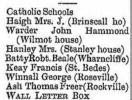

Perhaps you've already seen this, but if not, an extract from the Landed Familiies of Britain and Ireland site (link below)
Thomas Freer Ash (1823-1909), born 10 February and baptised at St Philip, Birmingham, 7 March 1823; railway agent in Scotland in the 1850s and 1860s and later a manufacturer in Birmingham; lived at "Rookwood", Erdington (Warks); paid for the provision of new pews in Erdington church, 1887; married 1st, Oct-Dec. 1846 at West Bromwich (Staffs), Harriet Hands (c.1820-87) but had no issue; married 2nd, 9 November 1889 at St George's Hanover Square, London, Emma (d. 1941), daughter of John Jackson of Bayswater (Middx) and widow of (Francis Philip) Adolphe Vicarino (d. 1876) of London and Paris, clock and watch importer; died 29 March and was buried at Erdington, 1 April 1909; will proved 15 May 1909 (estate £28,944);

 landedfamilies.blogspot.com
Thomas Freer Ash (1823-1909), born 10 February and baptised at St Philip, Birmingham, 7 March 1823; railway agent in Scotland in the 1850s and 1860s and later a manufacturer in Birmingham; lived at "Rookwood", Erdington (Warks); paid for the provision of new pews in Erdington church, 1887; married 1st, Oct-Dec. 1846 at West Bromwich (Staffs), Harriet Hands (c.1820-87) but had no issue; married 2nd, 9 November 1889 at St George's Hanover Square, London, Emma (d. 1941), daughter of John Jackson of Bayswater (Middx) and widow of (Francis Philip) Adolphe Vicarino (d. 1876) of London and Paris, clock and watch importer; died 29 March and was buried at Erdington, 1 April 1909; will proved 15 May 1909 (estate £28,944);
(199) Ash of Packwood House
Ash of Packwood In the early 20th century the genealogy of this family was traced back to Richard Ash of Ashby-de-la-Zouch (Leics), who...
landedfamilies.blogspot.com
And I have a vague recollection of the Ash family being somehow connected with Stanley House on Sutton Road which I mentioned in post #11 here

I think there's a G H Machin (farmer) connected with the Ash family of Packwood House. Warwickshire, but I'm not sure if it's the same line.And I think there was a connection between the Ash family with Stanley House in Erdington. Seem to remember coming across this on my internet travels, although I can't remember exactly where I read it.
Rockville (Rock Villa) was at #60 Sutton Road. Seems to have been demolished. But there is still a post box - sadly not the wall post box - but presumably one that replaced it close by.
Last edited:
This account of the house (memories from the 1950s) when it was divided into two flats might be of interest
Hi jennyann, thank you for your interest in Sutton Road and the properties along there. I think we moved there in 1953. We moved from new housing at Shard End. The whole area had been farm land but it was gradually being eaten up by 'slum clearance' I think they called the movement.
We had the top floor of Rockville which consisted of four huge rooms which served as our sitting room, kitchen/diner and two bedrooms, although my parents had a bedroom that had a dressing room and that was where I slept leaving one vast empty bedroom.
All the rooms had marble fireplaces and ornate plaster...
We had the top floor of Rockville which consisted of four huge rooms which served as our sitting room, kitchen/diner and two bedrooms, although my parents had a bedroom that had a dressing room and that was where I slept leaving one vast empty bedroom.
All the rooms had marble fireplaces and ornate plaster...

Hi Lyni think first of all we need to find out exactly where rockville was...could we have the full name of your gt gt grandmother and we can check the electoral rolls and census records for you
lyn
Thank you for your prompt response.
Emma Jackson married a Mr Vicarino and was widowed at the age of 32.
Some years later she remarried to Mr Thomas Frere-Ash. I have found the 1921 census when she was still living at Rockville.
Kind regards ,
Simon
Attachments

Thomas Frere Ash was related to the Packwood Ash family. They were cousins. Emma Ash as she became was my great great Grandmother, but I am descended from her first marriage. She was widowed at 32 and remarried Mr Ash some twelve years later.And I have a vague recollection of the Ash family being somehow connected with Stanley House on Sutton Road which I mentioned in post #11 here
I think there's a G H Machin (farmer) connected with the Ash family of Packwood House. Warwickshire, but I'm not sure if it's the same line.And I think there was a connection between the Ash family with Stanley House in Erdington. Seem to remember coming across this on my internet travels, although I can't remember exactly where I read it.