• Welcome to this forum . We are a worldwide group with a common interest in Birmingham and its history. While here, please follow a few simple rules. We ask that you respect other members, thank those who have helped you and please keep your contributions on-topic with the thread.

    We do hope you enjoy your visit. BHF Admin Team

ARP wardens Air Raid Precautions Wardens

Alan Gaunt

New Member
My wife's Grandfather, Frank Garratt, who lived in Cook Street, Nechells, was in the ARP during WW2. He was apparently a water carrier in a stirrup pump team. Does anyone know which ARP Unit (presumably close to where he lived) he would have joined? Thank you
 
Welcome Alan. I've only just seen your post, hopefully someone on the Forum will be able to help you.

Can anyone help please ? Viv.
 
I too have been seeking help regarding the ARP. Dad was a Warden in Sheldon. I have spent countless hours and written many emails trying to find any information relating to his service, only to be told there is little to nothing on record.

OldBrummie.
 
It seems to be hard for folk to find trace of ARP affairs.
I know that many APR wardens, who had a bucket and stirrup pump - maybe this was their total armoury?
I do remember seeming many houses - doors and walls marked with white 'SP' letters - and that, maybe is all there was to it in many areas. How it was set up I do not know, maybe just willing volunteers in each road with little recorded structure.
 
Last edited:
Think you may be right there R R, we had a lady warden in Tillingham St, think her name was Edna or the like.
After the war she always dressed in clothes of the same style and color (complete with Berry ) but without the badges. Maybe the War gave her the reason for living, who knows.
Cheers Tim.
Ps they did a great job and lets hope they were truly appreciated.
 
My grandfather William Rowe was a full time Head Warden in the ARP ( I think for the Villa Cross area )during WW2. He lived in Lozells so presumably this was the area in which he worked. My father used to tell me that his father rescued some people from bombed out cellars and that his picture was in the paper because of this . I have never been able to find this or indeed any more information about his service. Has anyone got any suggestions as to where I might start looking? Thanks
 
It is disappointing, Rebecca, that members are finding it difficult to give you any guidance on this. It all points to the fact that tracing members of WW2 Home Front services (volunteers or paid) and what they did is very difficult. Few records exist and I am certainly not aware of any for ARP personnel. (It's slightly easier for the Home Guard, but not much).

From what you have been told, it sounds likely that there is some newspaper article somewhere which makes reference to your grandfather. I'm no expert on newspaper searches but I think in this case, all you can do is keep trying within the online archives which are available to us (normally subject to a subscription, unfortunately). Bear in mind, though, that any report from that time will give no information about the location of the incident, for security reasons. With a bit of luck, though, your grandfather's name could well be mentioned.

In view of the absence of official records I think that the best thing for you to do is to approach the situation from the other direction – in other words, forget for the time being trying to track your grandfather himself down but, rather, look at the incidents where he might well have been involved, and in particular those adjacent to the area where he is known to have served.

One book I have in mind is Michael Minton's "Heroes of the Birmingham Air Raids. There are no doubt others. The trouble with any book of that sort is that many brave men are mentioned and commemorated; but beyond them there are many others whose own acts of bravery at the same time were either wholly unknown or were never recorded. Unfortunately your grandfather's name does not appear in the book I have mentioned. But it DOES provide a lot of information about what he and many others must have experienced. Perhaps members can suggest other sources.

Online research of course is another possibility. I have at least one page in my Home Guard website which gives a lot of detail about one Villa Cross incident, here: http://www.staffshomeguard.co.uk/DotherReminiscences40staffshg.htm . (There are others in the same website). There must have been many other similar incidents in the neighbourhood and there will be information about them, somewhere or other. Official incident reports survive. There can't have been many of these dreadful events in which your grandfather was not involved.

Keep at it – you may stumble across something which relates more specifically to your grandfather. Please let us know of any progress.

Chris
 
maybe some of our members who are subscribed to the british newspaper archives would kindly have a look to see if there was anything written about william rowe from lozells who save people from a cellar during a bomb blast...fingers crossed

lyn
 
Thanks, Lyn. It would also be useful to have members’ suggestions about the best books they have encountered on the subject of the Birmingham Blitz. This would be useful to Rebecca and no doubt other members in the future.

Chris
 
Of course, he might well have appeared but wasn’t named. Perhaps part of a group of rescue workers. The location would also have been unstated - and even which city (although the fact of its appearing in a Birmingham newspaper might have been a bit of a clue!)

If, as it seems, he wasn’t named this is going to be a bit of a needle in a haystack for Rebecca. And would need her to be able to recognise her grandfather in a grainy photograph.

Chris
 
Rebecca,

I'm sorry to say that an online newspaper search of Birmingham between September 1939 and December 1945 for William Rowe did not produce a single entry.

Maurice
 
A difficult one, Pete. You can specify the exact word Rowe, but it still churns out Colmore Row and Easy Row, both of which had suppliers of ARP-related gear from mattresses downwards. Asking it to exclude "Row " with the space, produces nothing. And there are hundreds of companies trying to recruit ARP people, such as factories and cinemas, so you get all that dross as well. Searching on the phrase ARP Warden produces nothing either. As Chris says above, the naming of individual wardens is as rare as hen's teeth.

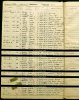
But (and there's always a but), if his wife's name was Florence and they lived at 188 Clifford Street, then here they are on the 1939 Register. He is shown as an assistant in a grocers, but if you look in the right hand margin, you will see that William is named as a Head ARP Warden and Florence as an ARP Warden. Frankly, I think this is as much as Rebecca is likely to find as the papers at the time did not tend to name rescuers for security purposes, as Chris has said. I've attached this as a file.

Maurice :cool:
 

Attachments

  • TNA_R39_5504_5504J_021.jpg
    TNA_R39_5504_5504J_021.jpg
    1.8 MB · Views: 7
maybe some of our members who are subscribed to the british newspaper archives would kindly have a look to see if there was anything written about william rowe from lozells who save people from a cellar during a bomb blast...fingers crossed

lyn
thank you. thats a good idea.
 
A difficult one, Pete. You can specify the exact word Rowe, but it still churns out Colmore Row and Easy Row, both of which had suppliers of ARP-related gear from mattresses downwards. Asking it to exclude "Row " with the space, produces nothing. And there are hundreds of companies trying to recruit ARP people, such as factories and cinemas, so you get all that dross as well. Searching on the phrase ARP Warden produces nothing either. As Chris says above, the naming of individual wardens is as rare as hen's teeth.

But (and there's always a but), if his wife's name was Florence and they lived at 188 Clifford Street, then here they are on the 1939 Register. He is shown as an assistant in a grocers, but if you look in the right hand margin, you will see that William is named as a Head ARP Warden and Florence as an ARP Warden. Frankly, I think this is as much as Rebecca is likely to find as the papers at the time did not tend to name rescuers for security purposes, as Chris has said. I've attached this as a file.

Maurice :cool:

 
Hello Rebecca, slightly off topic, but my Great Uncle was called William ('Bill') Rowe as was my Great Grandfather. Great Uncle William had 2 brothers - Leonard (Len) and Ernest (Ernie). The Rowes originated from Devon. I'm not sure if this is the same family.
 
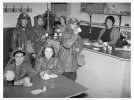
Possibly an ARP group of male and female wardens at an ARP kitchen in Sparkhill. No date but obviously during WW2 - might have been autumn given there's a chrysanthemum in a vase on the table!

They all seem to be wearing a standard issue mac. At the beginning of the war, ARP wardens had no uniform. They wore their own clothes, a steel helmet (early ones were unmarked), Wellington boots and an armband. Hard to tell if they're wearing the ARP uniform under the mac, later in the War a uniform was issued.

Or could they be other war services men and women ?

Wouldn't it be lovely to put names to some of these faces ?

Screenshot_20260109_095645_Chrome.jpg
 
Last edited:
An ARP group of male and female wardens at an ARP kitchen in Sparkhill. No date but obviously during WW2 - might have been autumn given there's a chrysanthemum in a vase on the table! They all seem to be wearing a standard issue mac. At the beginning of the war, ARP wardens had no uniform. They wore their own clothes, a steel helmet, Wellington boots and an armband. Hard to tell if they're wearing the ARP uniform under the mac, later in the Aar a uniform was issued.

Wouldn't it be lovely to put names to some of these faces ?

View attachment 216755
Nice Photo
They are all wearing Anti Gas Hoods & Capes
 
Thanks. I started to wonder if they were ARP personnel given the Red Cross on the helmet. Wondered if ARP wardens had a helmet marked with the cross ?
 
Maybe an ARP "Light Rescue Party". The ARP had both "Light" and "Heavy" rescue squads. The Light Rescue Parties were basically first-aiders who would also attempt to rescue people if it didn't involve heavy equipment to do so. - The "Heavy Squad" would be called in if buildings had to be propped up or demolished. - As Donbogen says, most big companies had their own teams. - Having said that, from what I can see the Rescue Squads had the letter "R" on their helmets. - Although that might have been standardised later. The St Johns Ambulance volunteers in WW2 did have a cross on their helmets, but it was the St John's "Maltese" cross . {EDITED] The Red cross on a white Shield was the symbol of the British Red Cross society who organised their own first aid parties - Like the St Johns ambulance. Again - Sometime they were within companies. - That seems most likely.

British Red Cross Society badge

St Johns Ambulance Helmet from the Rubery & Owen firm...

Some equipment used by the Light Rescue Parties is featured on this webpage.
 
Last edited:
There was an ARP canteen in Court Road Sparkhill, opened in October 1939.

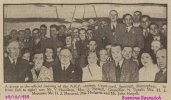
Must be Herbert Manzoni, City Engineer, in the photo.

Screenshot_20260109_145412_Chrome.jpg
Source: British Newspaper Archive
 
Found a detailed caption for the canteen photo in post #23 on Facebook - see quote below. This suggests they were ambulance drivers. Doubtless the ARP canteen was made available to various support services during the War. The photo is dated 26 October 1939 (Source: Media Storehouse).

"Ambulance Drivers with Tea at A.R.P. Depot, Sparkhill, 26th October 1939
A nice cup of tea. Ambulance drivers have a cup of tea at a canteen for A.R.P. workers at the Court Road depot, Sparkhill, which is open day and night. 26th October 1939. © Mirrorpix
Staff
Birmingham Post and Mail Archive Mirrorpix"
 
Back
Top